









©Copyright 2018 GEOSCIENCE RESEARCH INSTITUTE
11060 Campus Street • Loma Linda, California 92350 • 909-558-4548

All Galleries
All Images












Mogotes
Mogotes are landforms typical of karst terrains in tropical regions. They consist of steep-sided, often isolated hills surrounded by flat alluvial plains. Mogotes form in carbonate rocks that have undergone significant dissolution. This photo shows mogotes in the Viñales Valley, located in Pinar del Río Province, western Cuba. These mogotes are composed of Cretaceous and Paleocene limestone.
Rt139 MesaVerdeFmBurntOrganics
ENERGY SOURCES: Mesa Verde Formation, Rt.139 south of Rangely --- Coal seams in this formation ignite and burn, baking to a bright red nearby shale and sandstone layers.
Saurischia
Dinosaurs can be classified into two groups, based on the arrangement of their hip bones. One group is named Saurischia, and the pubic bone points forward, in the opposite direction of the ischium, which points backward. All carnivore (and some herbivore) dinosaurs were saurischian. The example in this photo shows the saurischian configuration of the pelvis (articulated with leg bones + vertebral column) of an Allosaurus skeleton, on display at the Denver Museum of Nature and Science.
Unconformity
The angular contact running diagonally across the photos (hammer for scale in the center of the image) is an unconformity between basaltic volcanics on the left (Fernazza Formation) and volcaniclastic sedimentary deposits on the right (Wengen Formation). Both units are Triassic in age. This outcrop records three dynamic, high-energy, geological processes: 1) Igneous: eruption and emplacement of basaltic volcanics, underlying the contact; 2) Tectonic: tilting and deformation producing the angular…
IdahoSpgsPhoenixVein
MINERAL RESOURCES: Phoenix gold mine, Idaho Springs --- A mineral vein colored blue-green by copper compounds.
Ornithischia
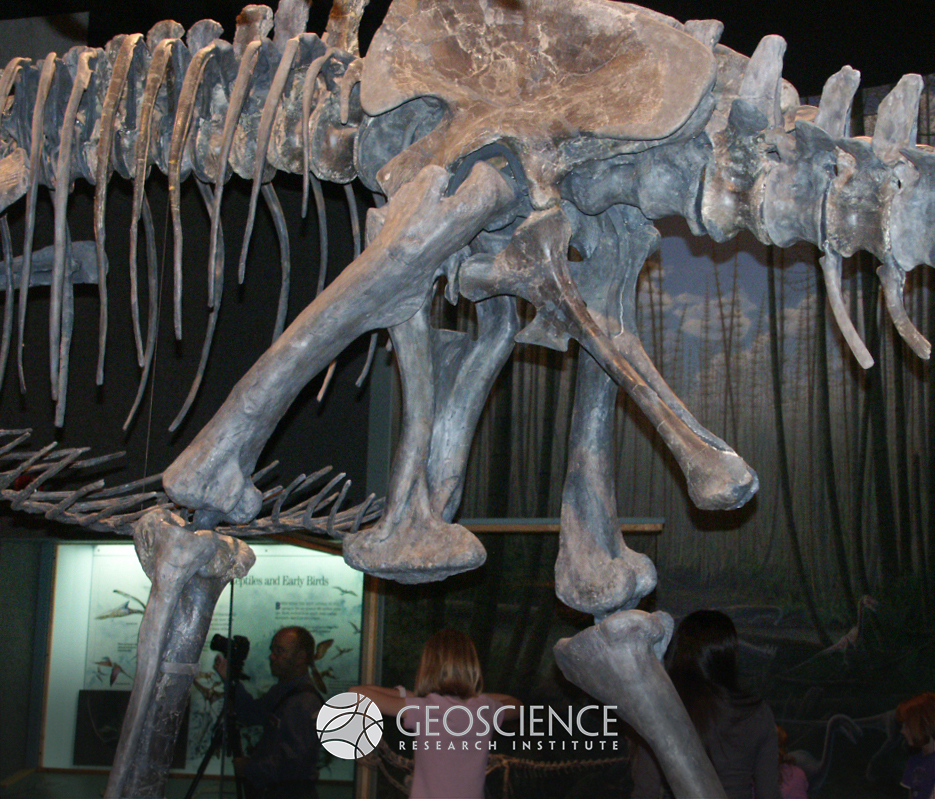
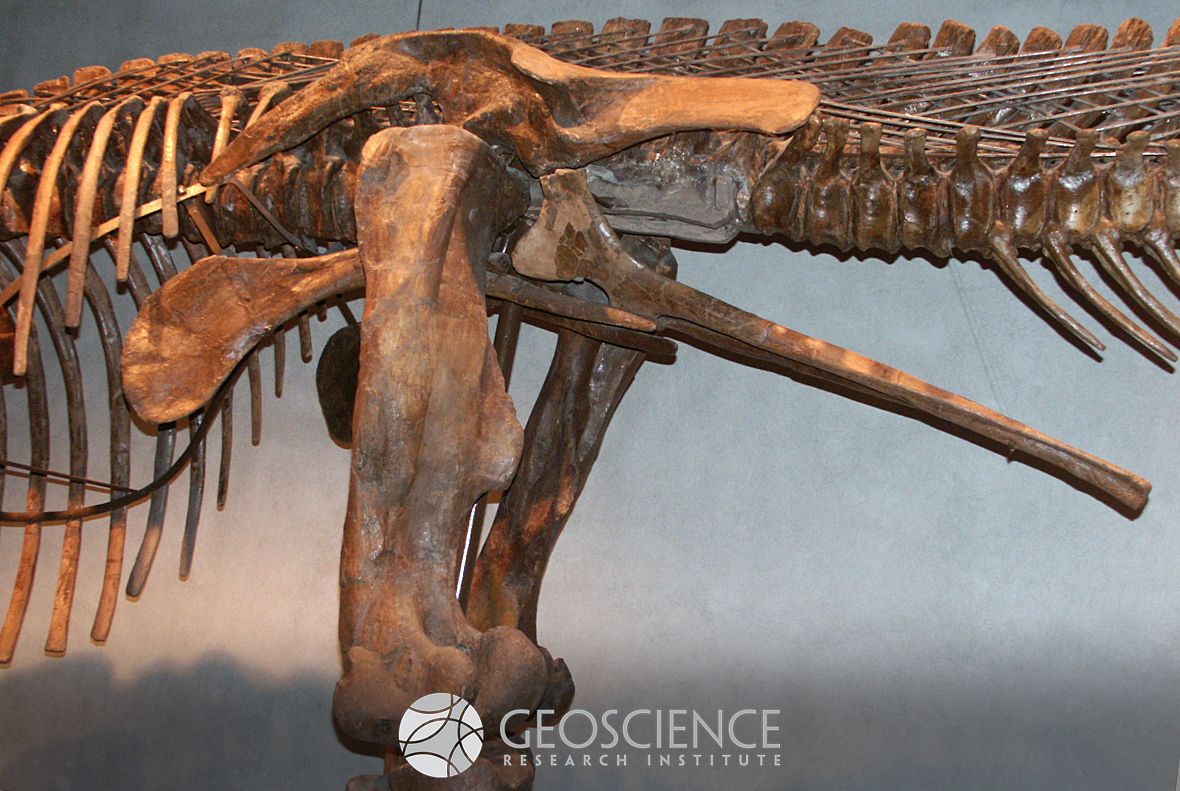
Dinosaurs can be classified into two groups, based on the arrangement of their hip bones. One group, named Ornithischia, is characterized by the pubic bone being parallel with the ischium, both pointing backward. The example in the photo shows the ornithischian arrangement of the pelvic bones (articulated with femurs and vertebral column) of an Edmontosaurus skeleton, on display at the Denver Museum of Nature and Science.
Xiphactinus audax
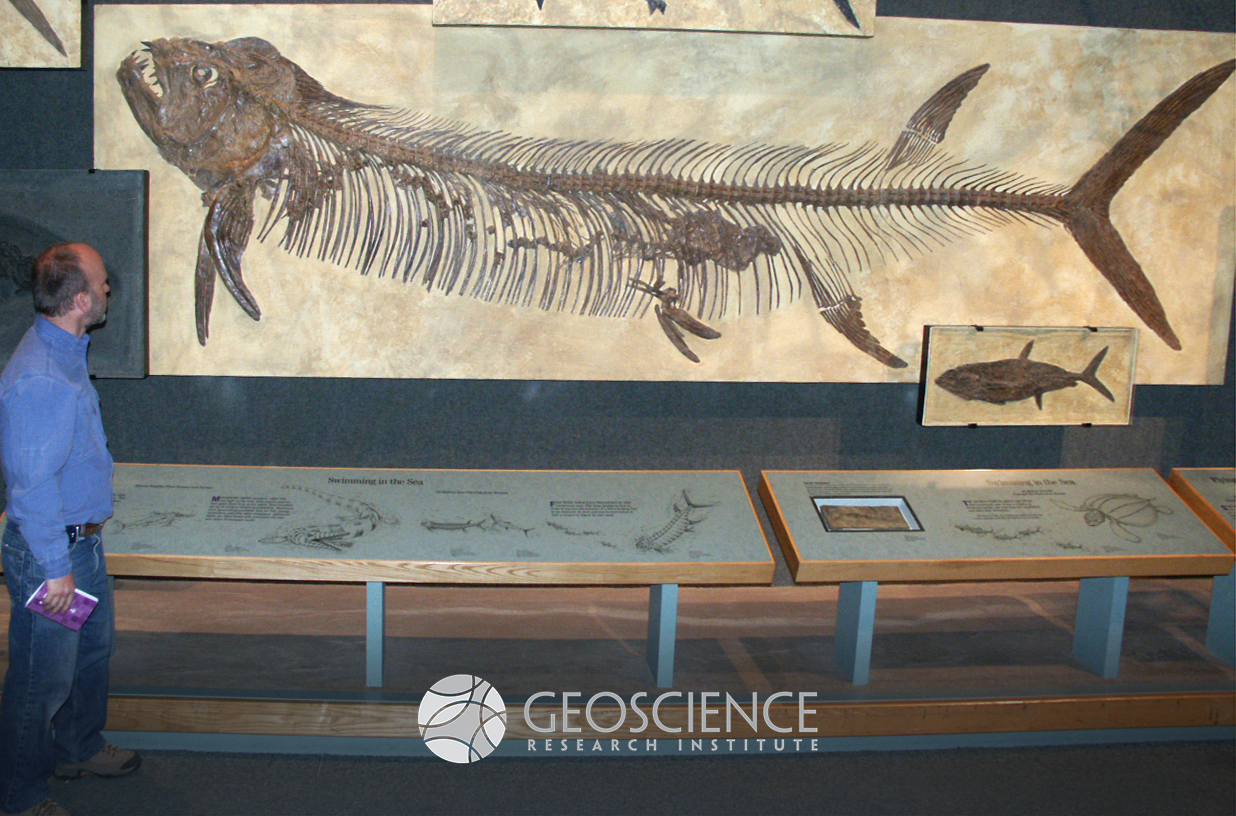
Predation is documented in the fossil record by exceptional specimens like this large fish from the Upper Cretaceous Niobrara Formation (KS, USA). When it died, the remains of its last meal (another large fish) were still partly undigested in its stomach. The incredible preservation of this fully articulated specimen (fins included) points to rapid burial and special taphonomic conditions. Photo taken at the Denver Museum of Nature & Science (CO, USA).
Punta Grohmann section
The iconic Punta Grohmann section, in the Dolomites of Italy, showcases Triassic (Ladinian to Carnian) basinal deposits visible in the grassy slopes at the center of the photo, overlain by the towering dolomitized limestone of the Cassian Dolomite Formation. The basinal deposits accumulated in troughs between carbonate platforms and preserve evidence of catastrophic processes, including volcanism, turbidity currents, and toe-of-slope deposits containing large limestone blocks that collapsed from…
DrumsRNDisplays
CATASTROPHE - EARTHQUAKE: National Earthquake Information Center, Golden (west Denver) --- United States Geological Survey center for real-time compilation of the world's earthquakes.
Engare Sero footprints
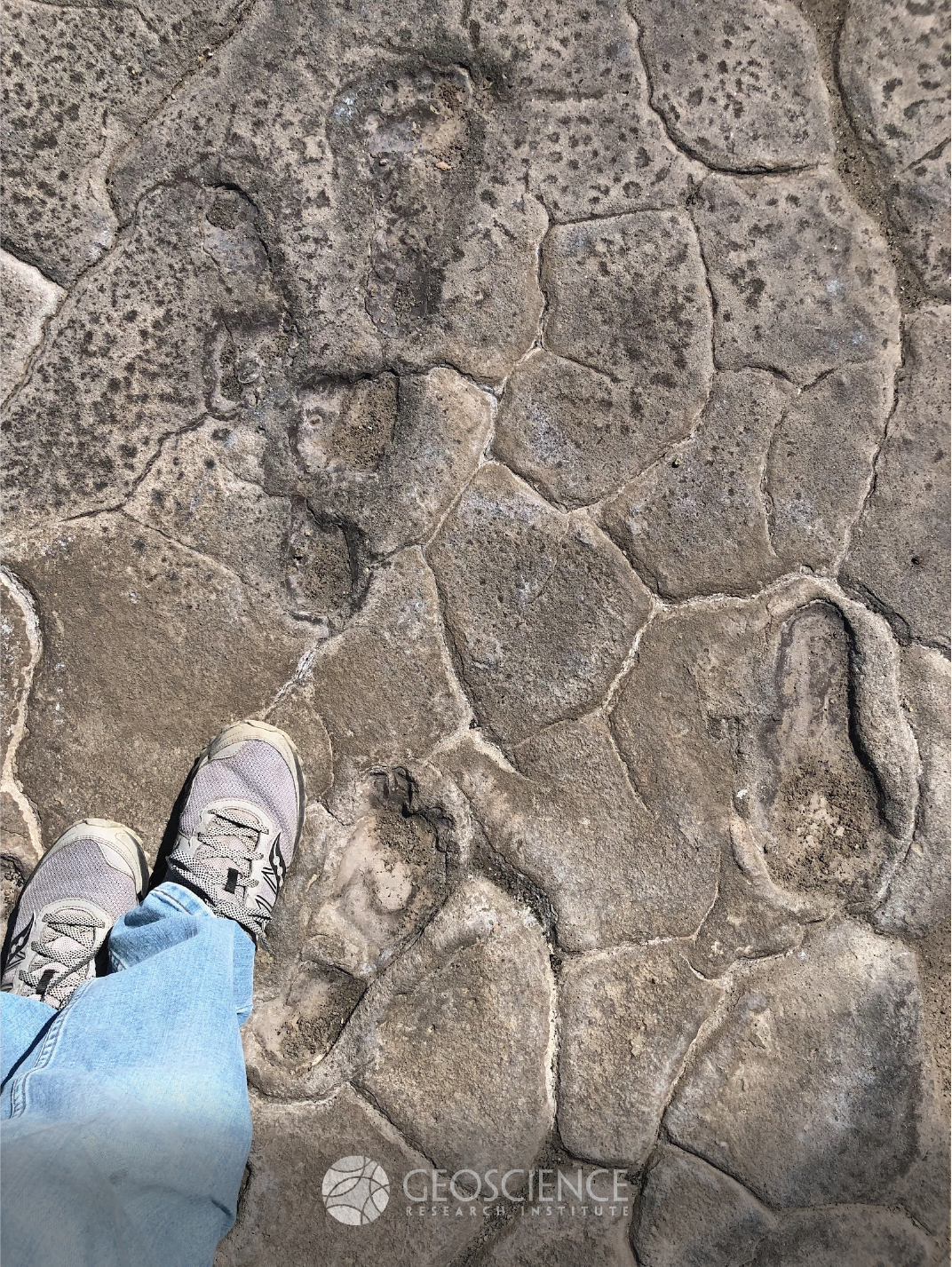
Well preserved human footprints are relatively uncommon in the rock record. On the southern shores of Lake Natron and near Oldoinyo Lengai in Tanzania, approximately 400 well-preserved human footprints are found in the mudflat called Engare Sero, said to be thousands of years old. This unique preservation of footprints was made possible by volcanic sediment that washed off Oldoinyo Lengai’s slopes. After the footprints were made in the wet soft sediment, they would have dried out in a cracked crust,…
RainbowCurveLawnLakeFloodOutwash
CATASTROPHE - FLOODING: Lawn Lake flood outwash from Rainbow Curve, Rocky Mountain National Park.
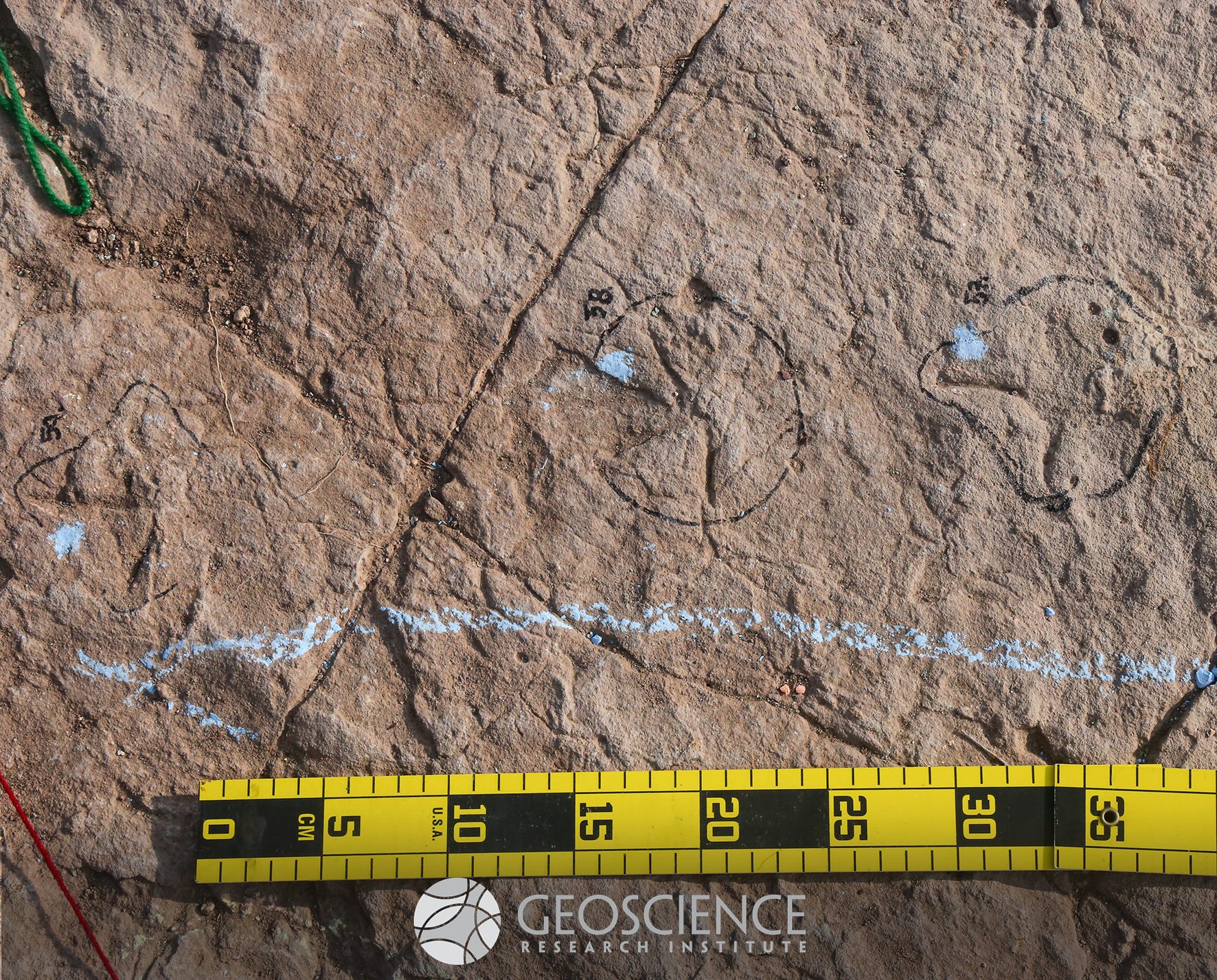
Bird tracks
Bird tracks are especially susceptible to erosion, and in modern environments they last only a short time before being destroyed by water currents, wind, or the activity of other organisms. Their fossilization is highly unusual, and their preservation strongly indicates that the trackbearing layer cemented relatively quickly. The bird tracks in the photos (marked with black circles) are from a recently discovered Cretaceous tracksite in Bolivia. Photo by Dr. Raul Esperante.