




©Copyright 2018 GEOSCIENCE RESEARCH INSTITUTE
11060 Campus Street • Loma Linda, California 92350 • 909-558-4548

All Galleries
All Images



Flamingos
Lake Natron, in Tanzania, is partially fed by springs that have absorbed alkaline minerals from the surrounding volcanic bedrock. High evaporation rates increase alkalinity of the lake to as high as ammonia, reaching a pH of 12, caustic enough to strip away human skin. Living creatures that enter the lake are typically killed quickly by the caustic water. Amazingly, in spite of these harsh conditions, about 75% of the world’s lesser flamingos nest at Lake Natron. They have tough skin and scales on…
Phosphate deposits
A number of small hills dot the eastern shore of Lake Manyara in Tanzania, along East Africa’s Rift System. Each of the hills are composed of granitic rocks called kopjes, surrounded by a valuable resource – abundant phosphate deposits. Geologists studying them have determined that in the past they were islands during a time when Lake Manyara was larger. Flamingos built their nests on them and their droppings built up around the islands to depths of tens of meters. Since the flamingo diet is mainly…
Ngorongoro
Ngorongoro Crater, a UNESCO World Heritage site in Tanzania, is said to contain one of the world’s greatest concentrations of large game animals. This crater can also be called a caldera, due to its large size and creation by the collapse of a volcano. Named by the Maasai after the sound produced by the cowbell (ngoro ngoro) the large volcanic caldera is evidence of a major eruption that ejected many cubic kilometers of magma out of the magma chamber underlying the volcano. This created a large cavity…
Tanzanite & tsavorite
Tanzanite and tsavorite are two very rare and valuable metamorphic minerals that formed during interaction with fluids rich in elements like vanadium, manganese, and chromium. Tanzanite occurs almost exclusively in a 7 km by 2 km zone in the Merelani Hills area near Mt. Kilimanjaro in Tanzania. It is a type of zoisite in the epidote mineral group with vanadium and chromium impurities giving it a blue or violet color. Tsavorite is in the garnet group, with the green color also coming from trace…
Geita gold mine
Large gold deposits are found in Precambrian Archean rocks of the Tanzania Craton. The Geita gold mine south of Mwanza and Lake Victoria is one of the largest in East Africa, being a type of deposit known as an orogenic gold deposit. Gold formed by a combination of geological events, in a region known as the Geita Greenstone Belt. As is often the case with mineral formation in rocks, hydrothermal fluid containing gold interacted with rocks in a fault zone, depositing the minerals. In Geita, sulphur…
Engare Sero footprints
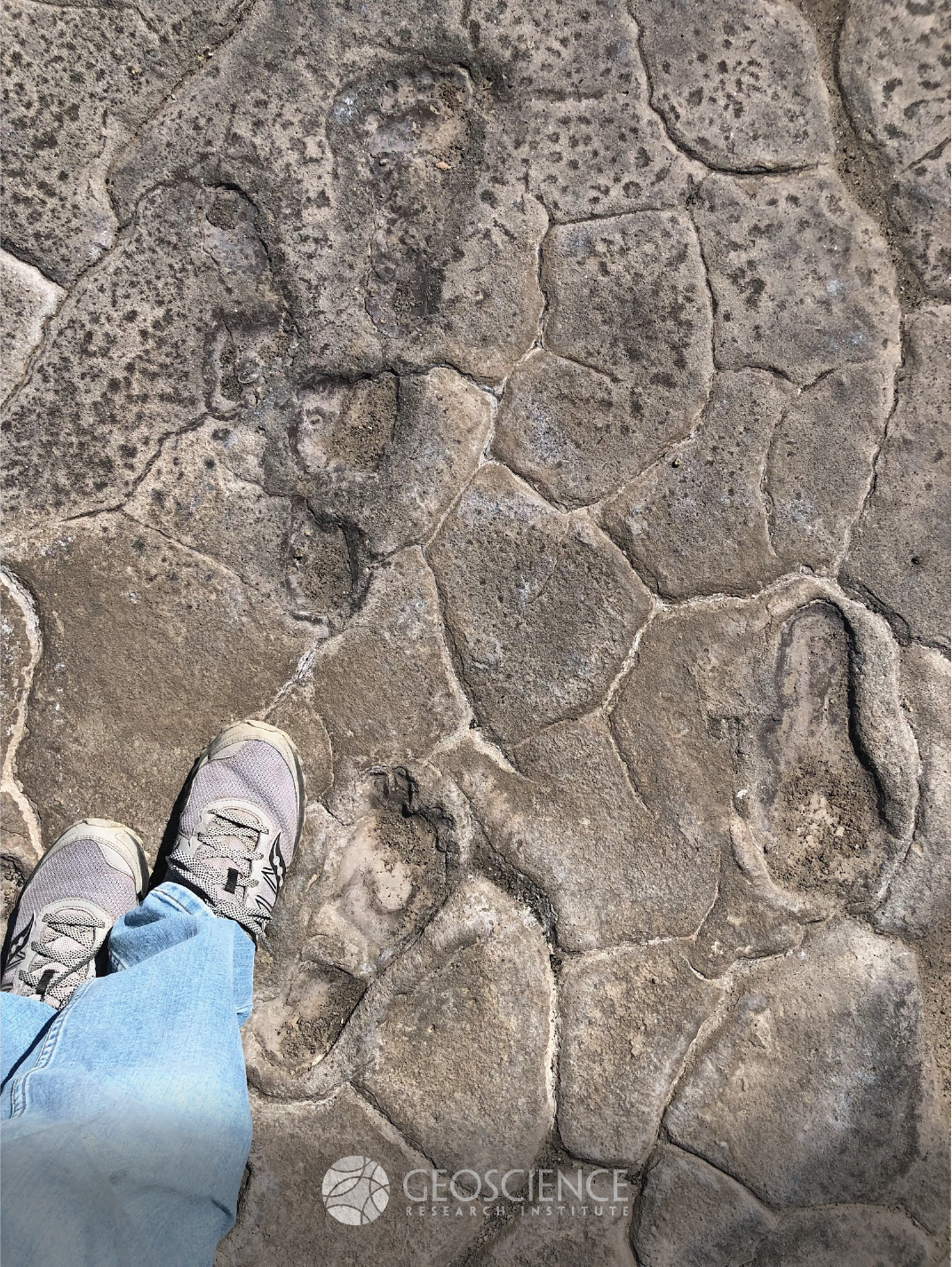
Well preserved human footprints are relatively uncommon in the rock record. On the southern shores of Lake Natron and near Oldoinyo Lengai in Tanzania, approximately 400 well-preserved human footprints are found in the mudflat called Engare Sero, said to be thousands of years old. This unique preservation of footprints was made possible by volcanic sediment that washed off Oldoinyo Lengai’s slopes. After the footprints were made in the wet soft sediment, they would have dried out in a cracked crust,…