



©Copyright 2018 GEOSCIENCE RESEARCH INSTITUTE
11060 Campus Street • Loma Linda, California 92350 • 909-558-4548

All Galleries
All Images



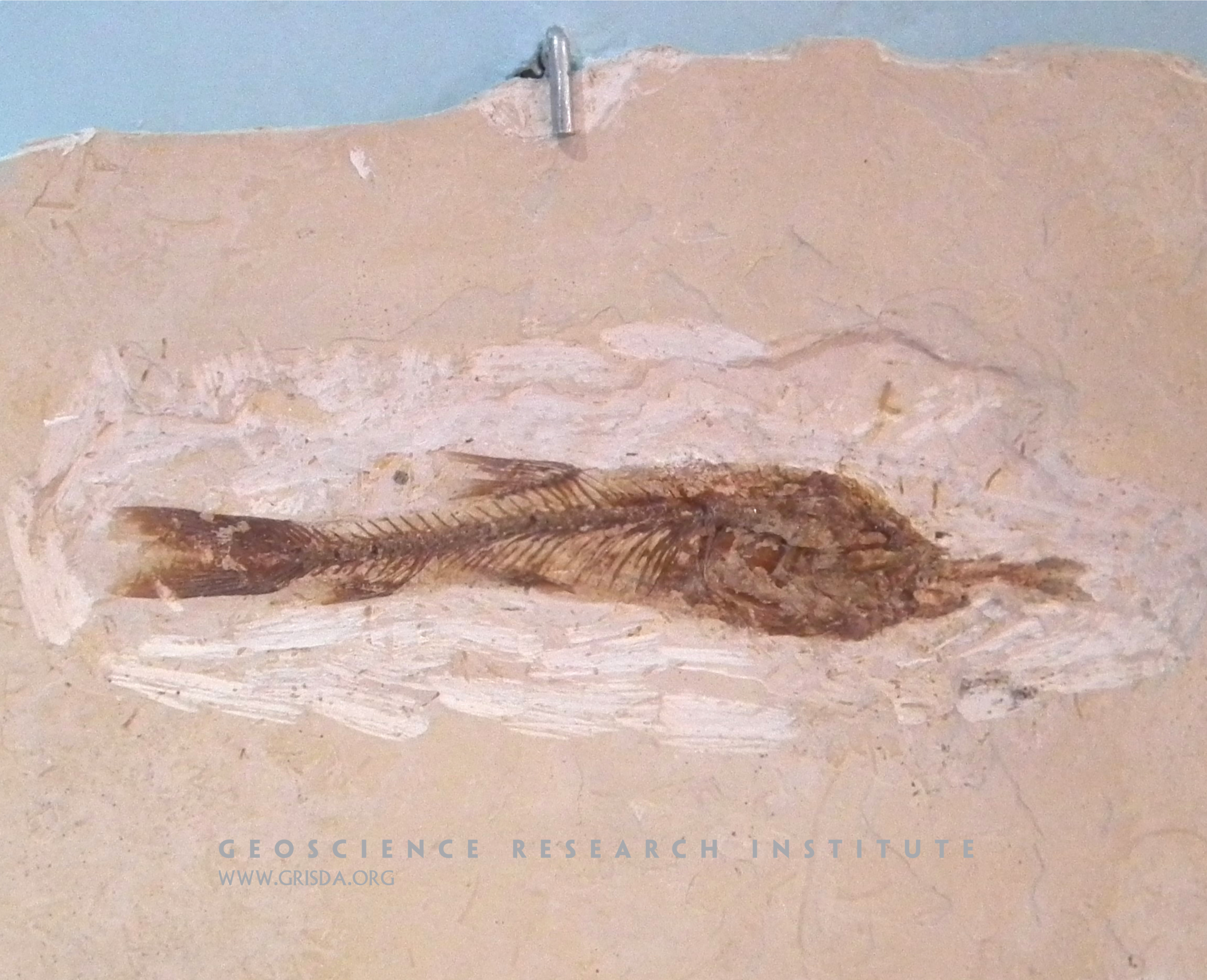
Dastilbe crandalli
A fossilized example of predation. This Cretaceous fish from the Crato Formation of the Araripe Basin, Brazil, died while ingesting another fish. Specimen on display at the Paleontological Museum in Santana do Cariri, few cm in size.
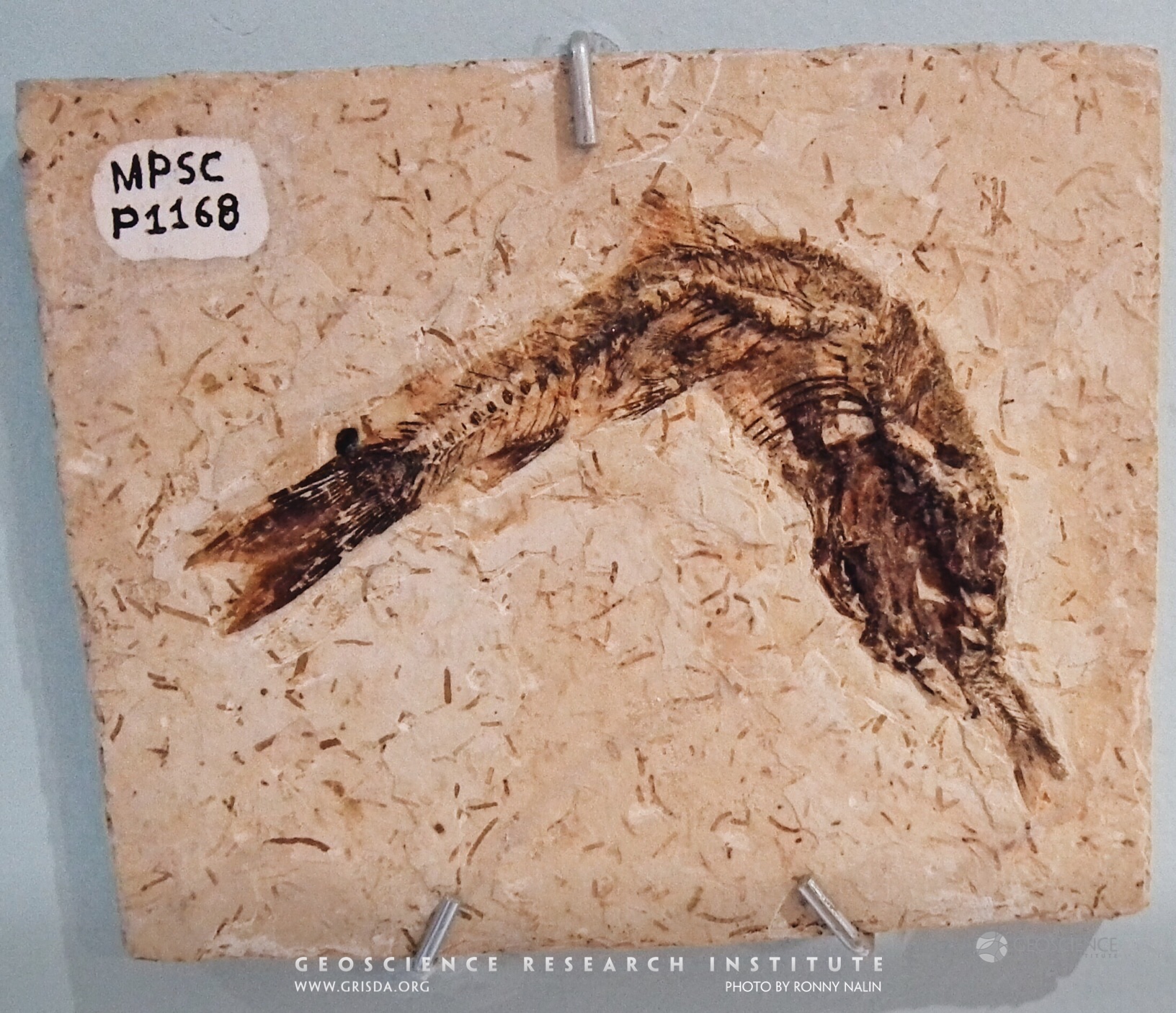
Cannibalism
Cannibalism exhibited by the fish Dastilbe crandalli, Cretaceous Crato Fm., Brazil. Specimen on display at the Paleontological Museum in Santana do Cariri. Larger fish is about 10 cm in size. Unique environmental conditions are required for such spectacular preservation of fossil fish. This form of cannibalism is also interpreted as indicative of stressful environmental conditions.
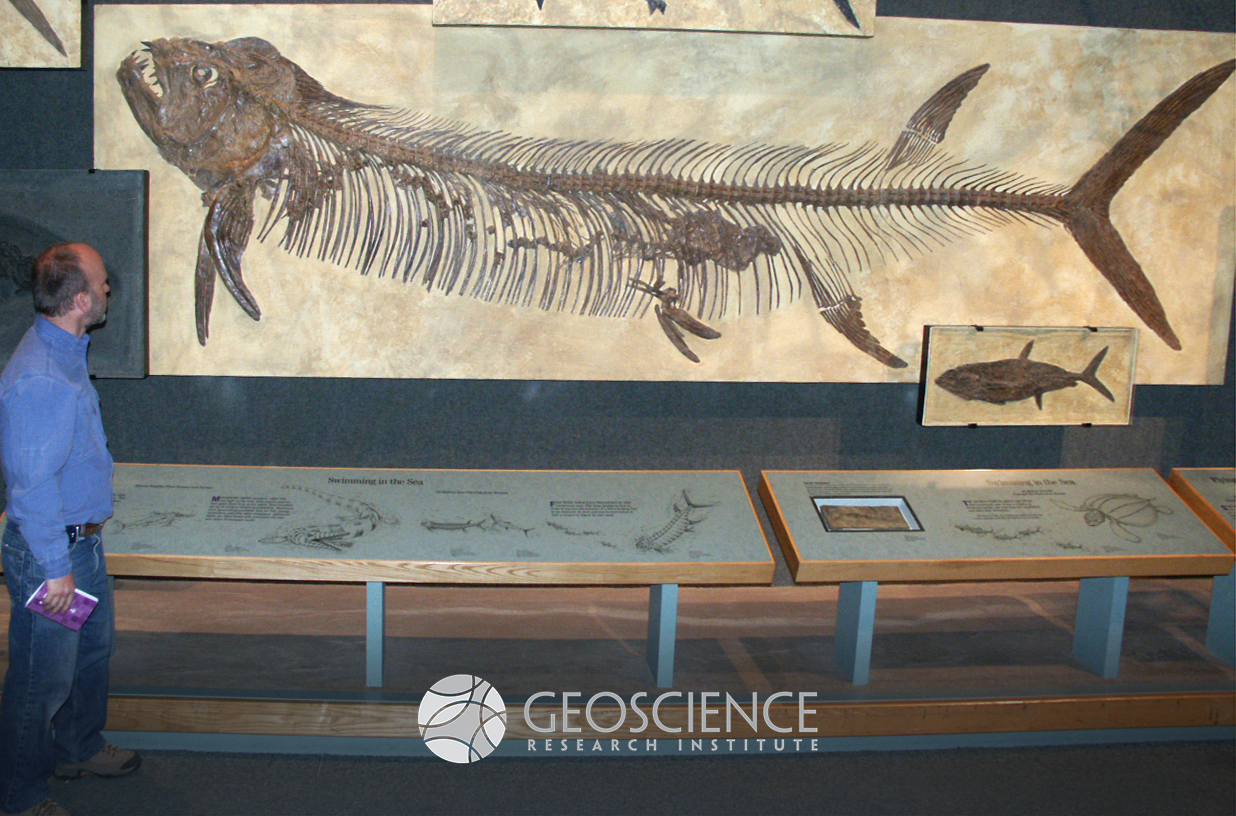
Xiphactinus audax
Predation is documented in the fossil record by exceptional specimens like this large fish from the Upper Cretaceous Niobrara Formation (KS, USA). When it died, the remains of its last meal (another large fish) were still partly undigested in its stomach. The incredible preservation of this fully articulated specimen (fins included) points to rapid burial and special taphonomic conditions. Photo taken at the Denver Museum of Nature & Science (CO, USA).