



©Copyright 2018 GEOSCIENCE RESEARCH INSTITUTE
11060 Campus Street • Loma Linda, California 92350 • 909-558-4548

All Galleries
All Images





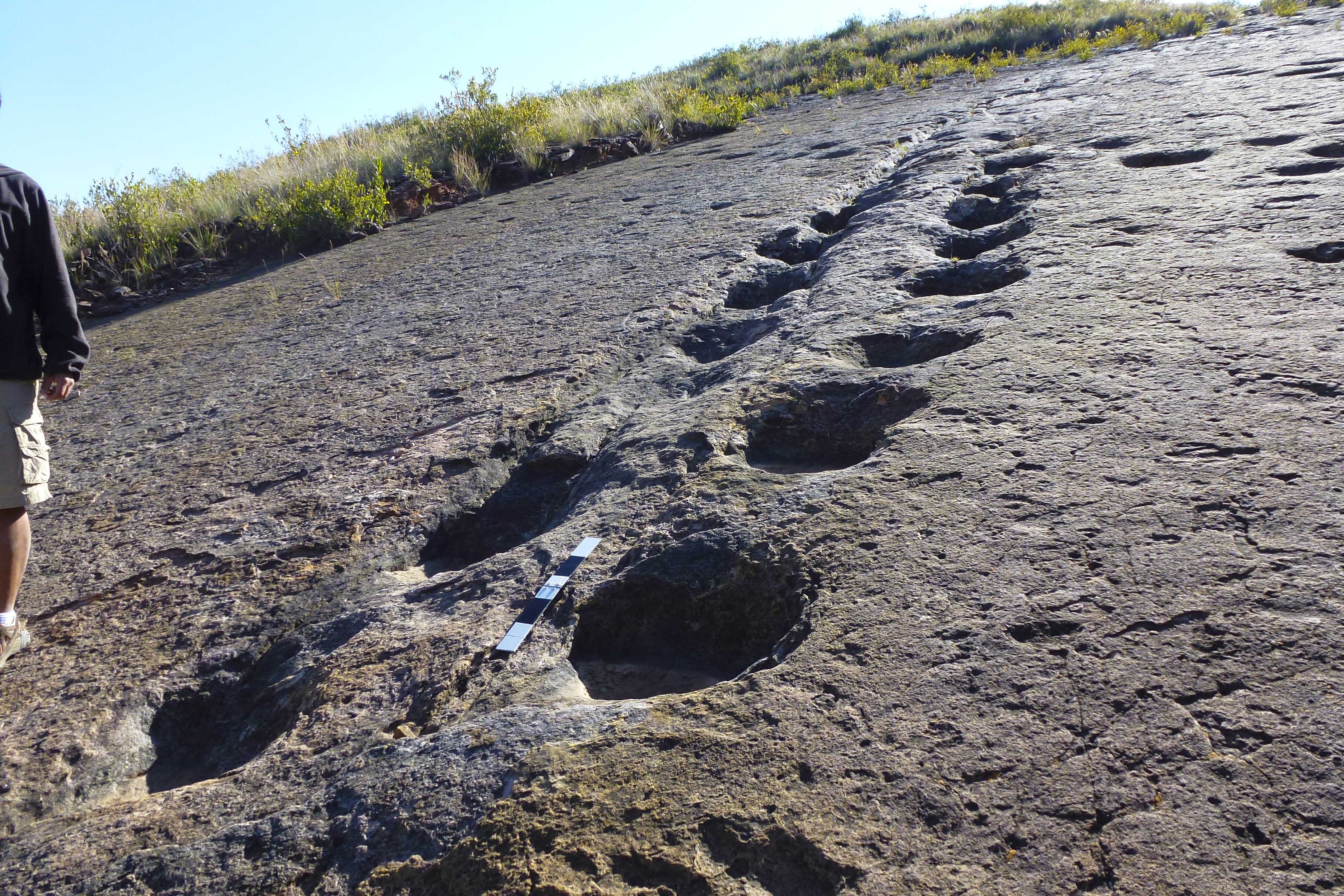
Ankilosaur footprints
Trail of ankilosaur footprints. This track is right at the entrance of the town of Torotoro.
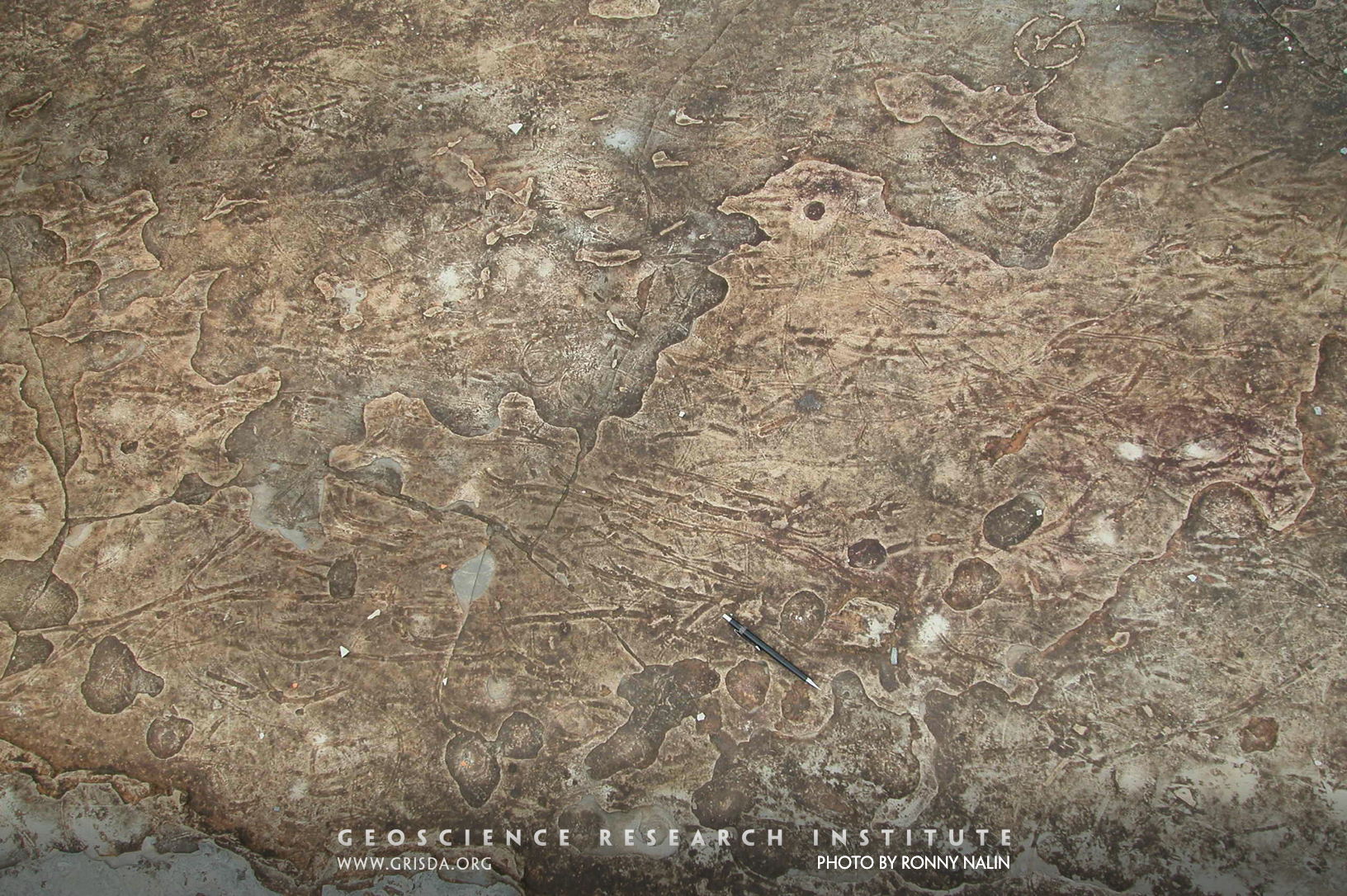
Bioturbation
The distinctive linear patterns observed on the surface of this sandstone bed are trace fossils produced by crustaceans as they were moving in the originally loose sediment. The technical term for this type of biogenic structures is bioturbation. Photo taken on a sandstone slab at the Varvito Park, Ito, Brazil, with exposures of Permian strata from the Itararé Group.
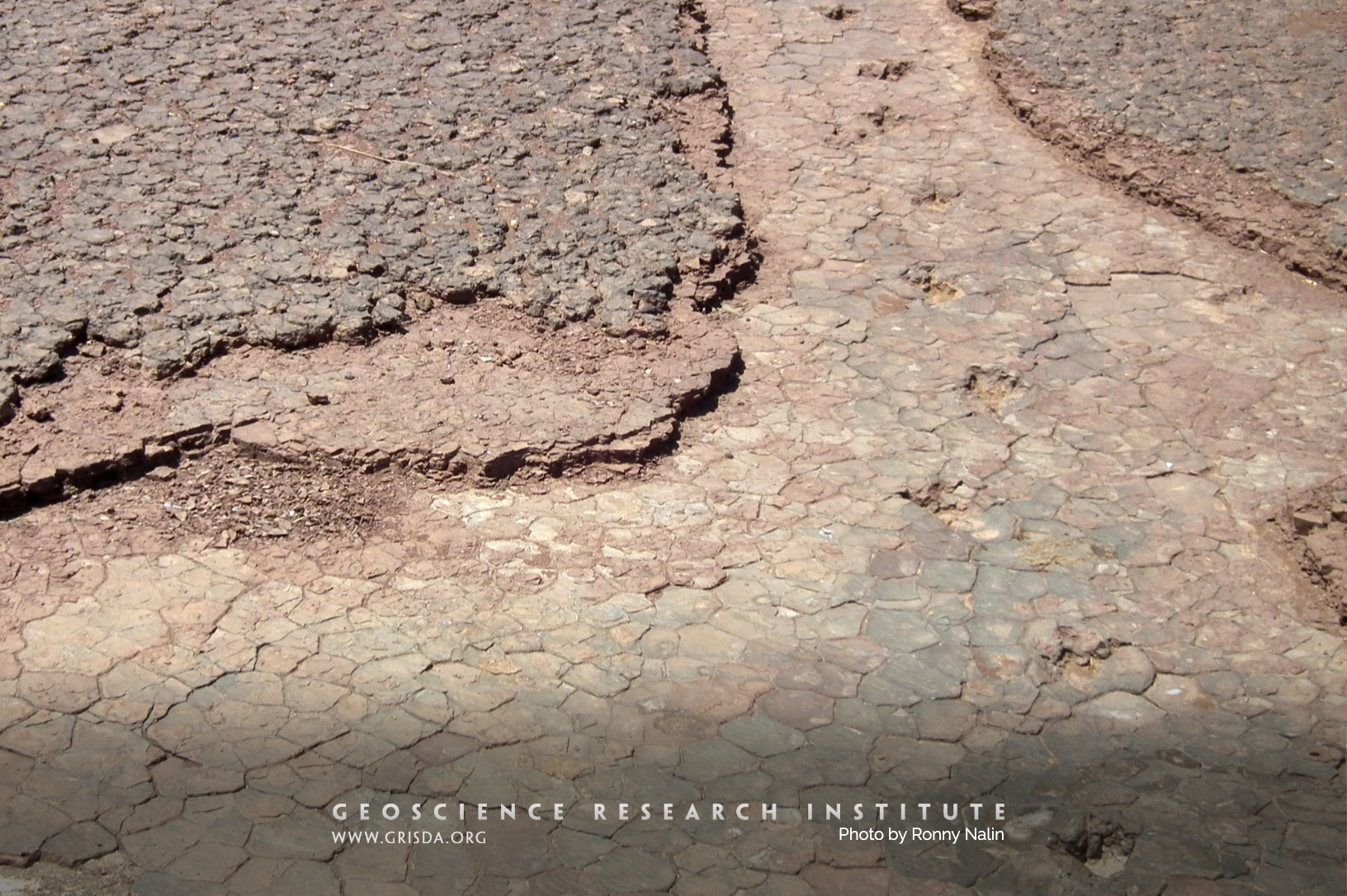
Carnosaur trackway
Walking on mudcracks. A dinosaur left this track in muddy sediment that shrank, forming polygons upon desiccation. Trackway exposed in Cretaceous layers from the Sousa Basin of Brazil, at the Vales Dos Dinossauros geosite.
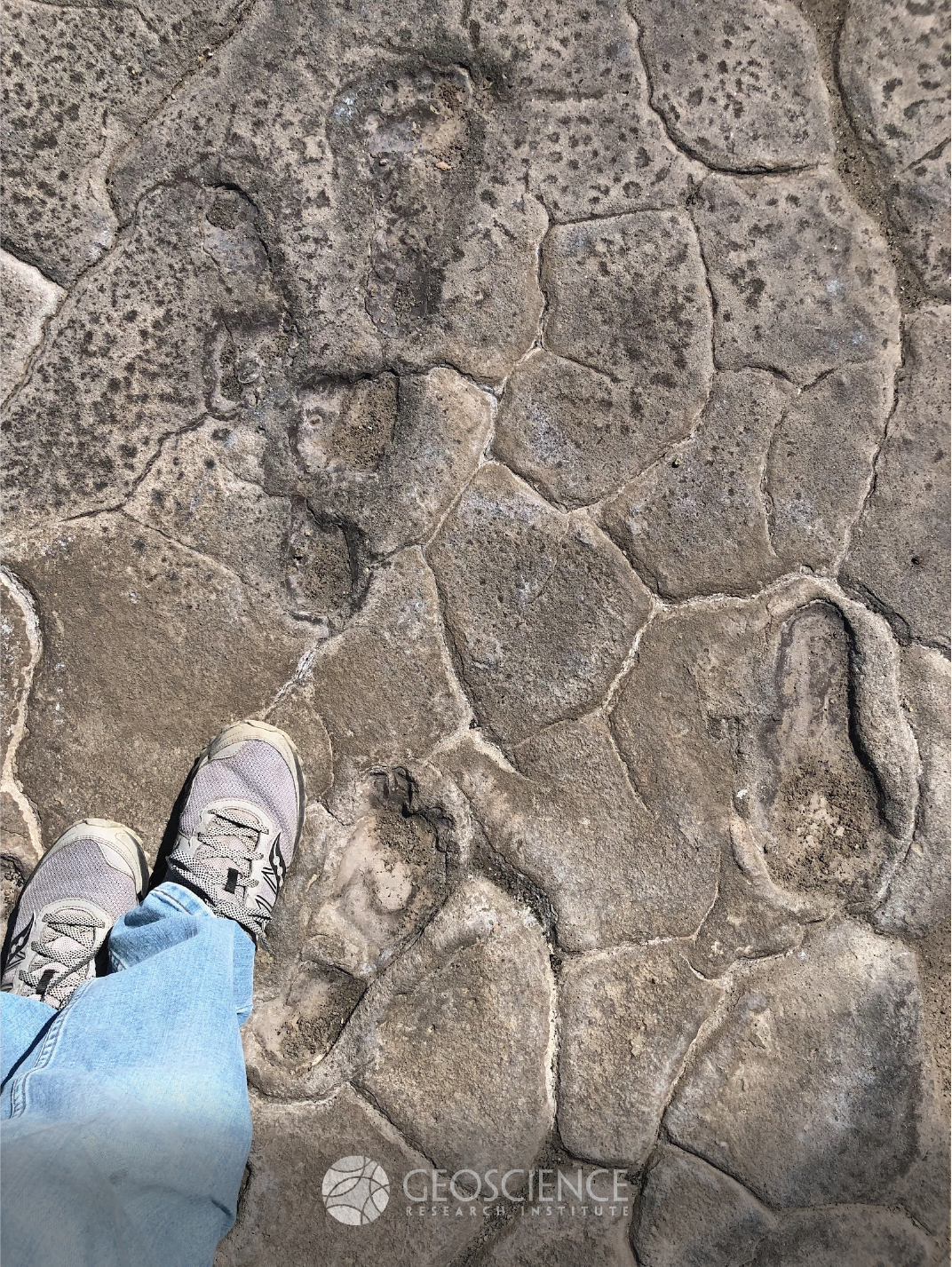
Engare Sero footprints
Well preserved human footprints are relatively uncommon in the rock record. On the southern shores of Lake Natron and near Oldoinyo Lengai in Tanzania, approximately 400 well-preserved human footprints are found in the mudflat called Engare Sero, said to be thousands of years old. This unique preservation of footprints was made possible by volcanic sediment that washed off Oldoinyo Lengai’s slopes. After the footprints were made in the wet soft sediment, they would have dried out in a cracked crust,…
Bird tracks
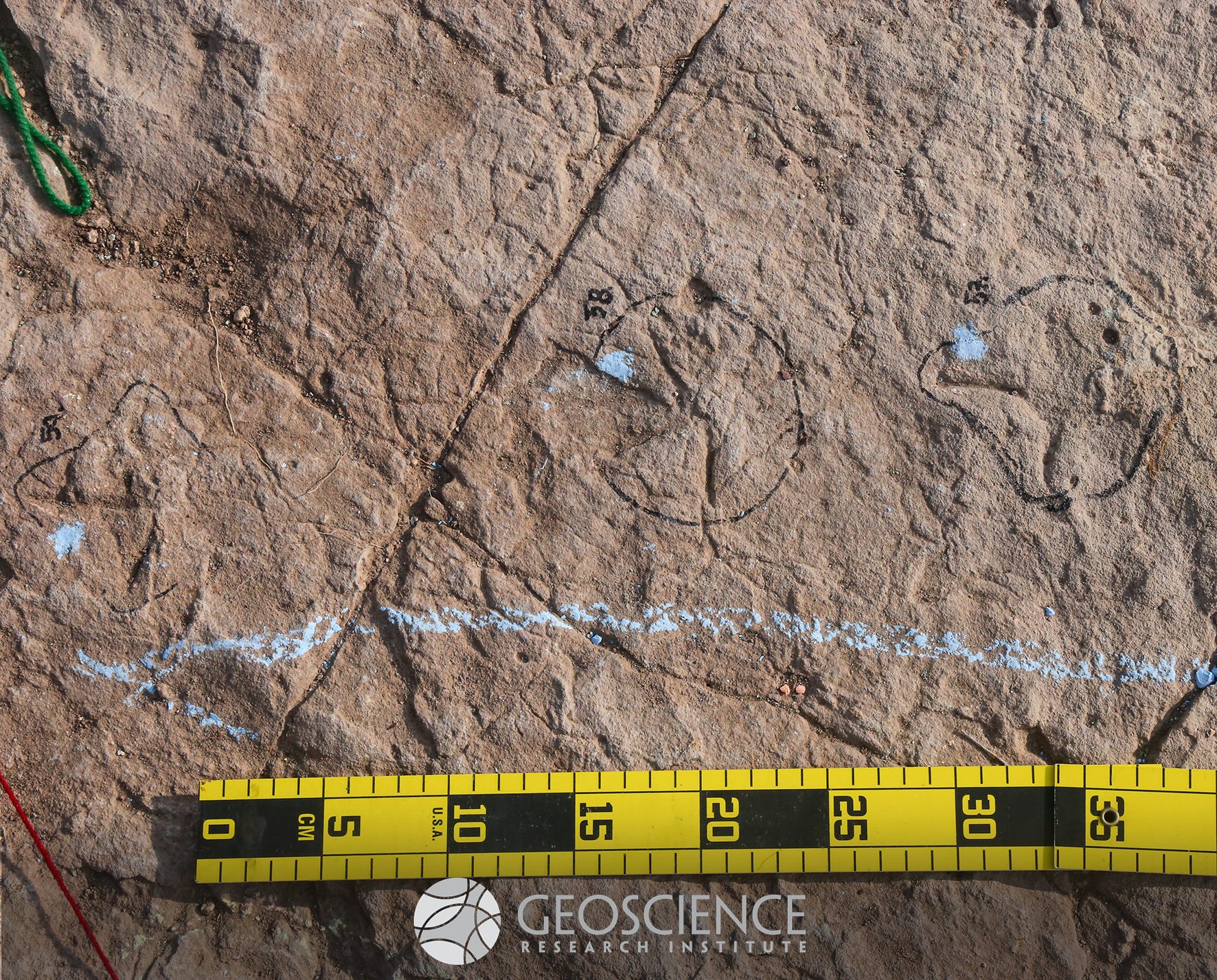
Bird tracks are especially susceptible to erosion, and in modern environments they last only a short time before being destroyed by water currents, wind, or the activity of other organisms. Their fossilization is highly unusual, and their preservation strongly indicates that the trackbearing layer cemented relatively quickly. The bird tracks in the photos (marked with black circles) are from a recently discovered Cretaceous tracksite in Bolivia. Photo by Dr. Raul Esperante.