












©Copyright 2018 GEOSCIENCE RESEARCH INSTITUTE
11060 Campus Street • Loma Linda, California 92350 • 909-558-4548

All Galleries
All Images










Underprints
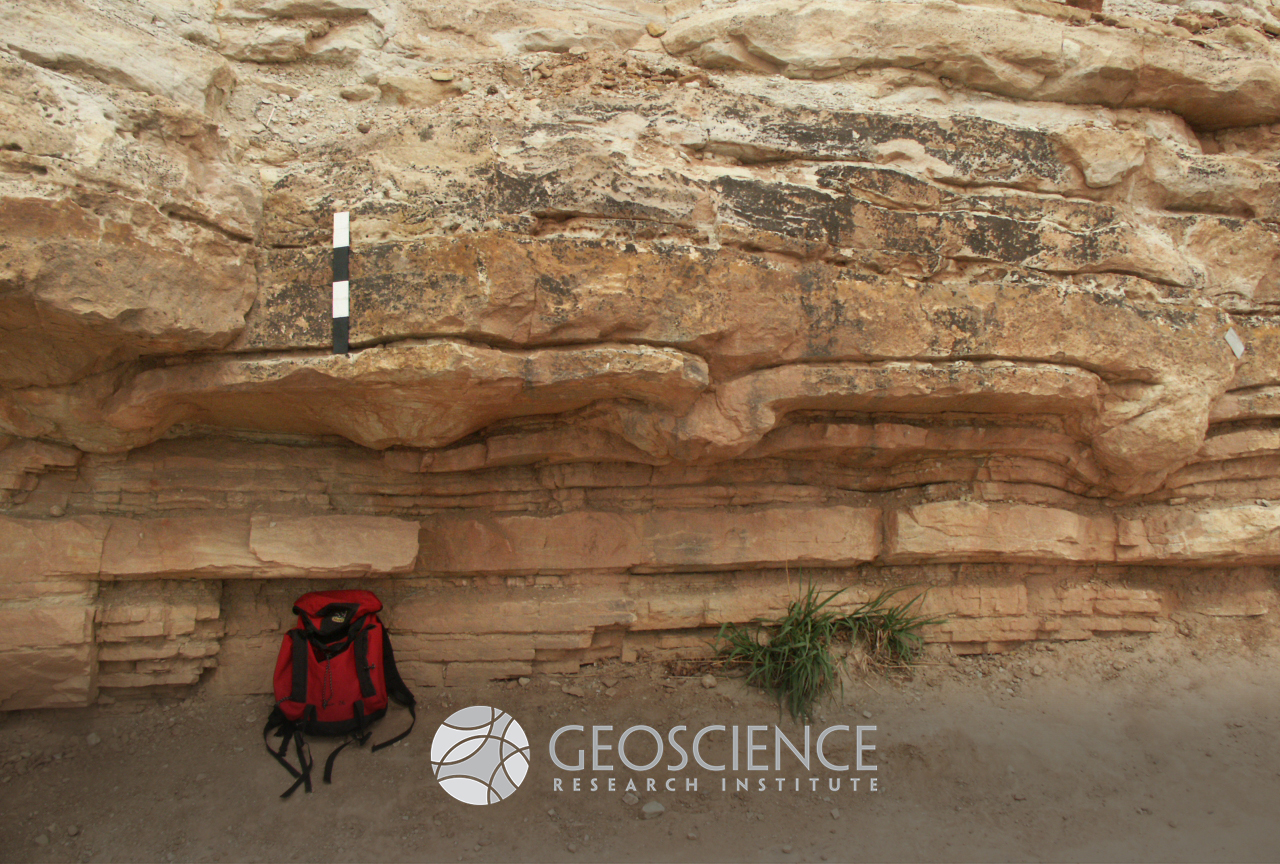
“Brontosaur bulges." Mid-way through the picture we can observe four bulges in a sandstone layer, depressing downward the underlying layers. These have been interpreted as a dinosaur trackway viewed in cross-section. A large sauropod left these “underprints" by deforming soft sediment while walking. Very specific conditions (e.g, sediment cohesiveness, rate of sedimentation, exposure vs submergence) are necessary for the preservation of footprints in the rock record. Scale bar is 40 cm long. Photo…
Tanzanite & tsavorite
Tanzanite and tsavorite are two very rare and valuable metamorphic minerals that formed during interaction with fluids rich in elements like vanadium, manganese, and chromium. Tanzanite occurs almost exclusively in a 7 km by 2 km zone in the Merelani Hills area near Mt. Kilimanjaro in Tanzania. It is a type of zoisite in the epidote mineral group with vanadium and chromium impurities giving it a blue or violet color. Tsavorite is in the garnet group, with the green color also coming from trace…
Dinosaur Ridge Trackway
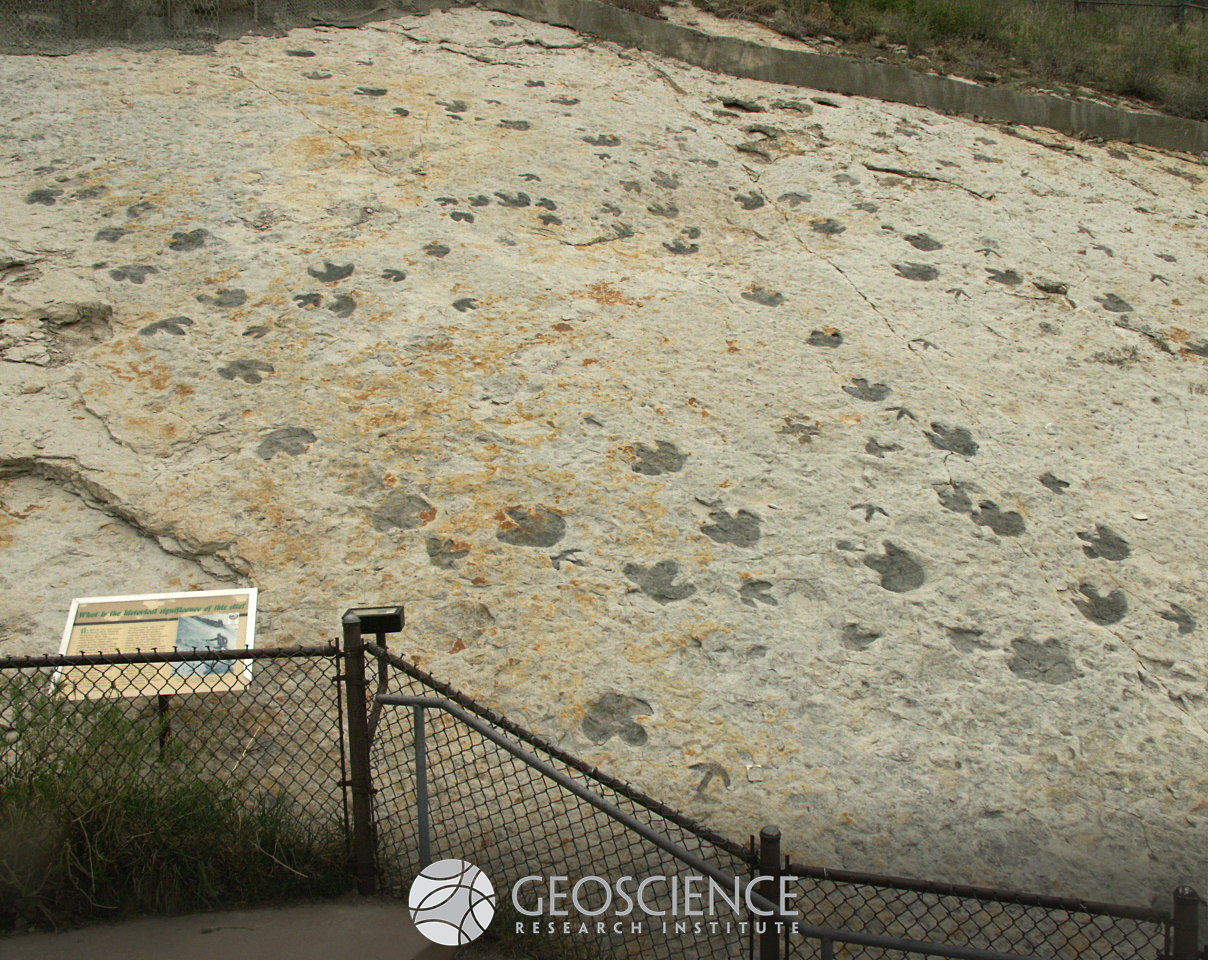
The Dinosaur Ridge Tracksite, in Golden, CO, preserves two main types of dinosaur footprints. Both are tridactyl (with three toes). They have been colored in with charcoal to enhance their visibility. The tracks with a wider aspect and thick toes were made by ornithopod dinosaurs. They were left by animals of different sizes (possibly adults and juveniles). The narrow-toed tracks were made by theropods. See if you can recognize the different tracks. This outcrop exposes the surface of a sandstone…
Geita gold mine
Large gold deposits are found in Precambrian Archean rocks of the Tanzania Craton. The Geita gold mine south of Mwanza and Lake Victoria is one of the largest in East Africa, being a type of deposit known as an orogenic gold deposit. Gold formed by a combination of geological events, in a region known as the Geita Greenstone Belt. As is often the case with mineral formation in rocks, hydrothermal fluid containing gold interacted with rocks in a fault zone, depositing the minerals. In Geita, sulphur…
Palm fronds
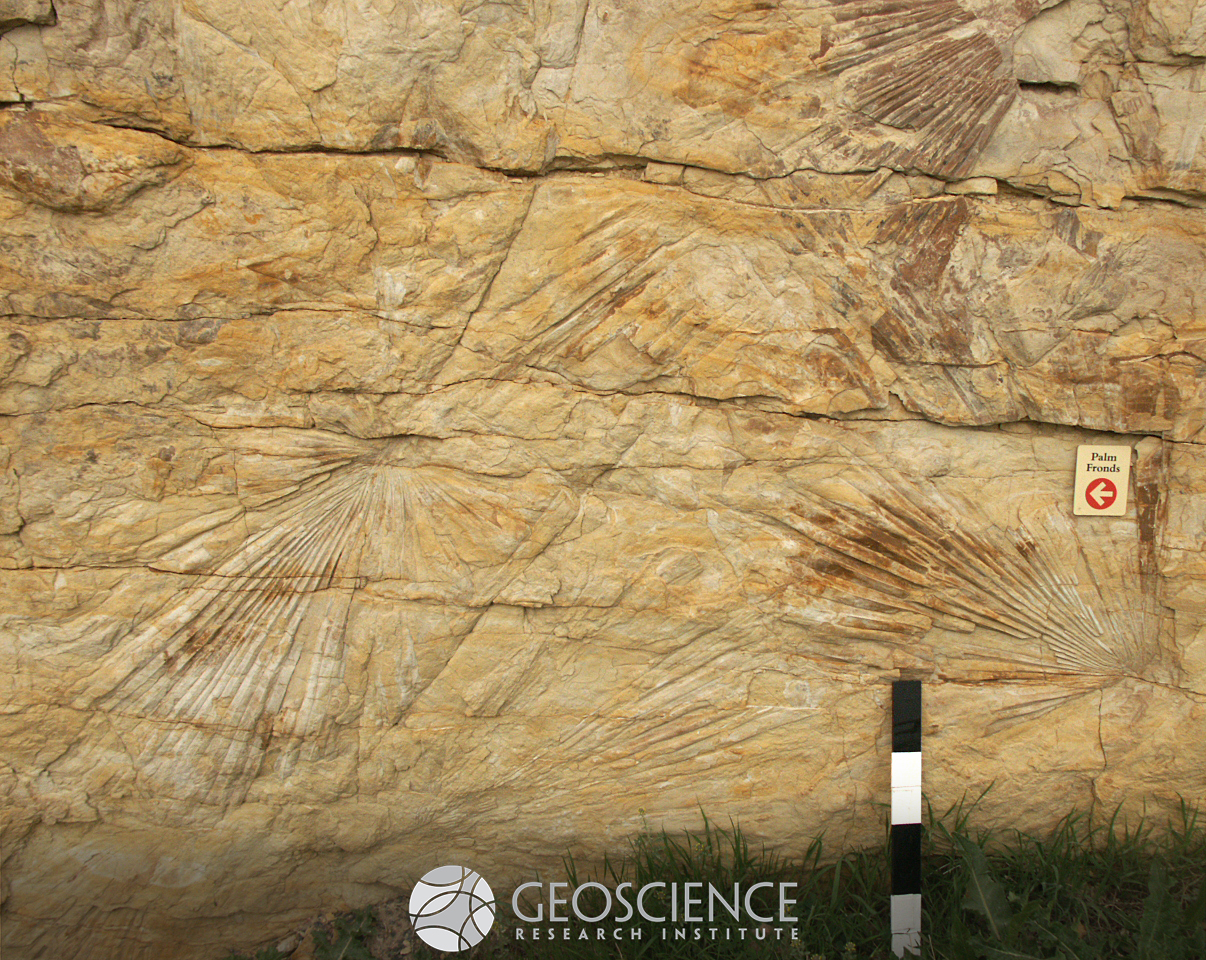
Fossil impressions of palm fronds exposed on a verticalized bedding surface of fine sandstone in the Maastrichtian Laramie Formation, near Golden CO. The integrity of individual fronds implies that minimal decomposition took place prior to burial. Scale bar is 40 cm long.
Bioconstruction
Bioconstructions are organic build-ups typically attached to a hard substrate that can expand vertically and laterally, trapping and stabilizing sediment within their framework. This photo shows a tabular framework dominated by corals, carpeting large granitic blocks in an originally submerged shallow water setting. Cala di Labra Formation, Miocene, near Bonifacio, France. Black camera case to the left of large angular block for scale.
Coccoliths
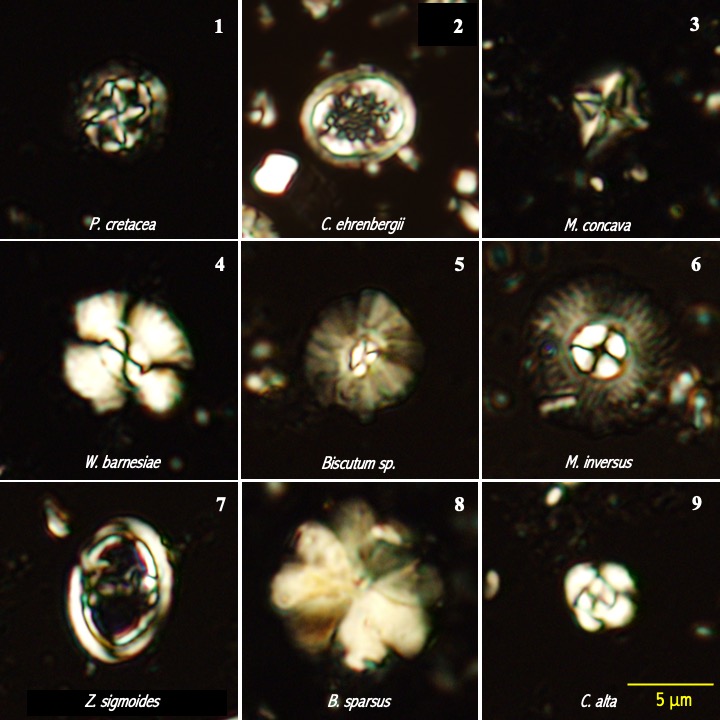
Calcareous nannofossils (coccoliths) are among the tiniest fossils preserved in the sedimentary record, measuring around 5 to 10 microns. The image (plate) shows petrographic microscope photos of some of the most characteristic coccoliths of the Cretaceous/Paleogene (K/Pg) boundary. This boundary is associated with one of the most studied mass extinctions in the geological record, which has been correlated to a major catastrophic event. Photos 1 to 4 show nannofossils of the Upper Cretaceous (Maastrichtian)…
Coastal notch
Coastal notches are erosional features characterized by subhorizontal indentations formed at the base of resistant coastal cliffs. Their height and depth can range from a few centimeters to several meters, depending on tidal range, wave energy, rock strength, and other factors. Because they develop through processes such as abrasion, weathering, dissolution, and bioerosion occurring near the high tidal level, they are considered reliable indicators of past sea levels when observed along submerged…
BurningMtn
ENERGY SOURCES: Burning Mountain, New Castle --- Burning coal seam heats up the ground so there is a horizontal bare streak across the hill that is too warm for vegetation to grow.
Sequoia affinis
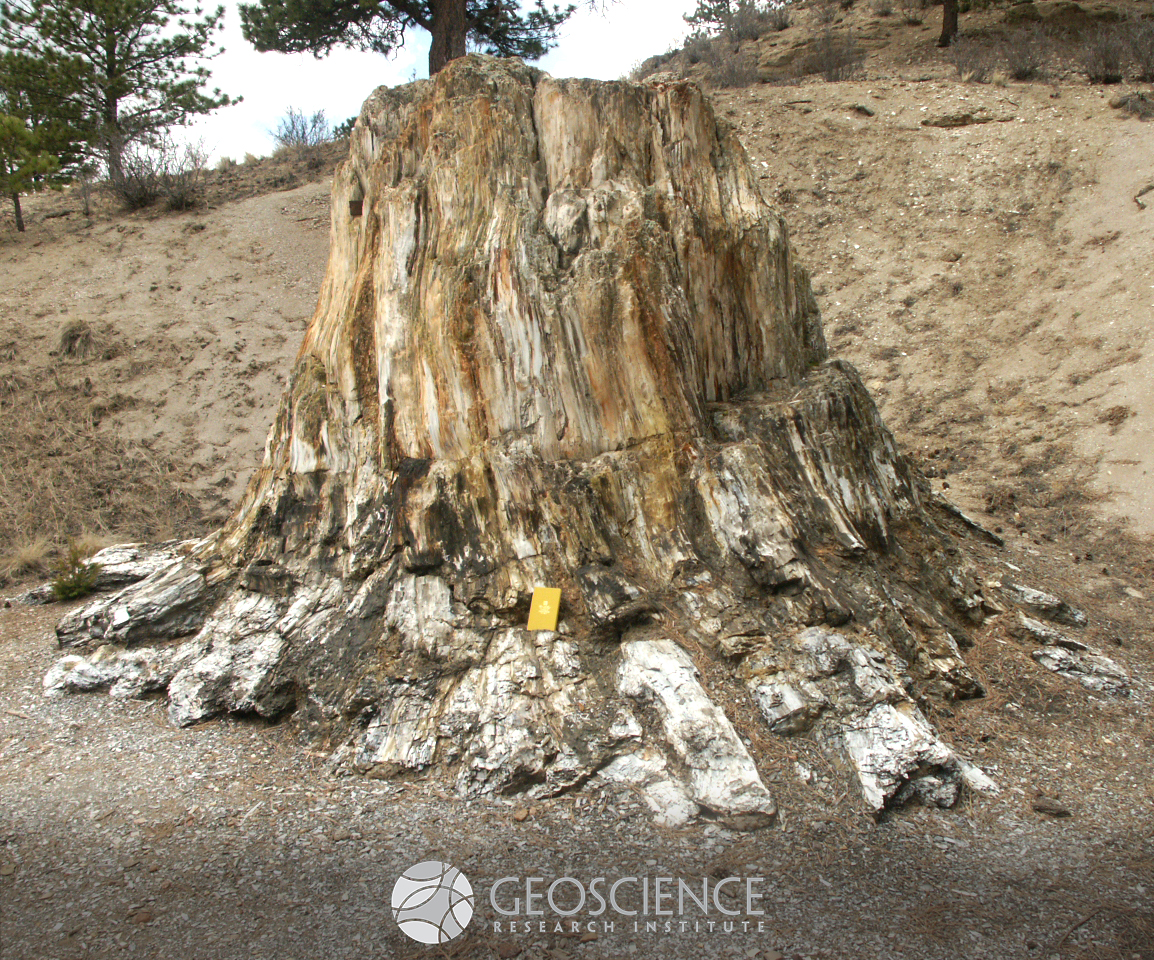
Large fossilized redwood stump preserved in Eocene deposits at Florissant Fossil Beds National Monument (CO). Volcanic activity was essential for rapid burial and petrification of this stump. Vertical side of notebook (for scale) is 19 cm long.