




©Copyright 2018 GEOSCIENCE RESEARCH INSTITUTE
11060 Campus Street • Loma Linda, California 92350 • 909-558-4548

All Galleries
All Images




Panorama-whale
Specimen of partially excavated fossil mysticete whale, in which excellent preservation and articulation is observed.
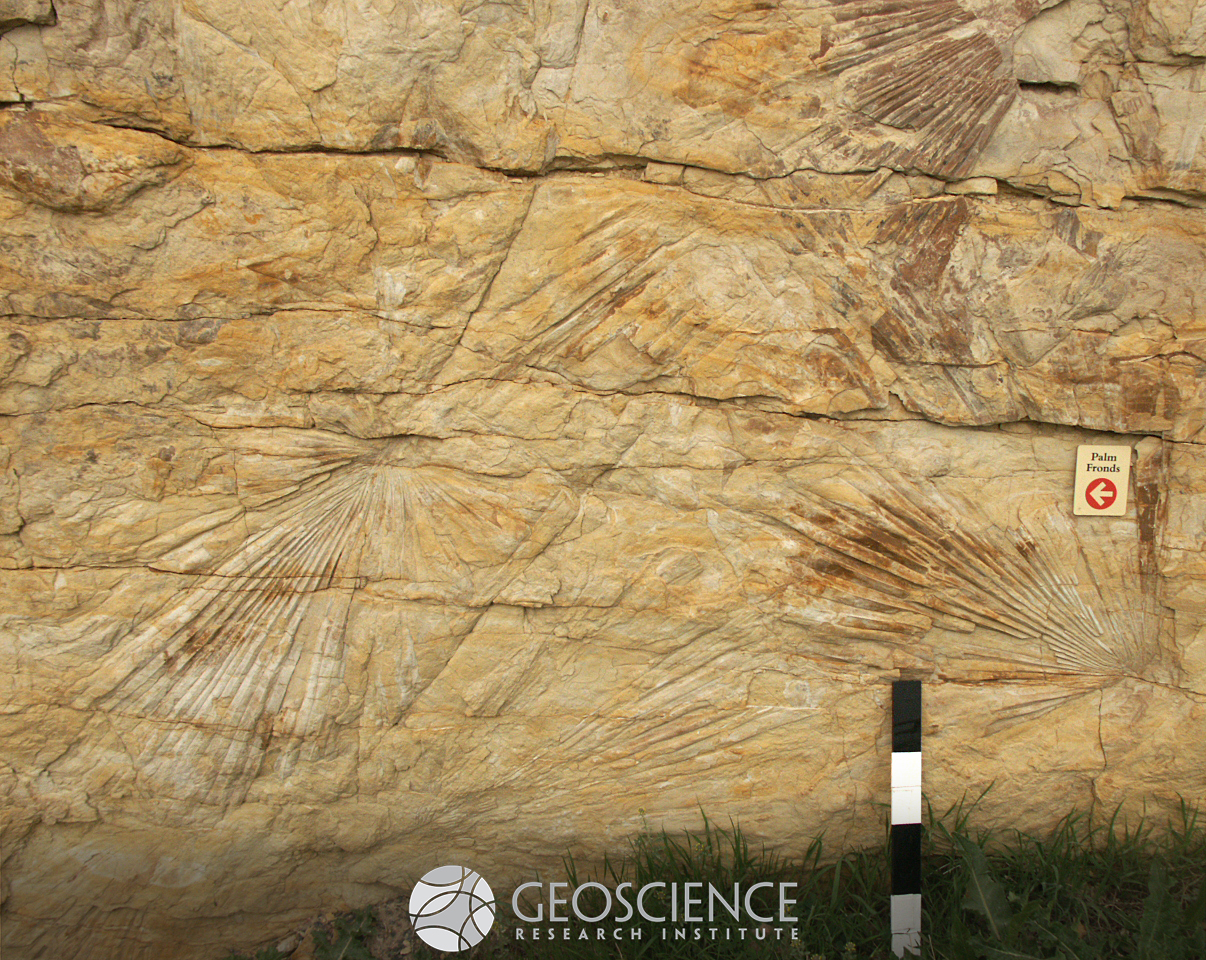
Palm fronds
Fossil impressions of palm fronds exposed on a verticalized bedding surface of fine sandstone in the Maastrichtian Laramie Formation, near Golden CO. The integrity of individual fronds implies that minimal decomposition took place prior to burial. Scale bar is 40 cm long.
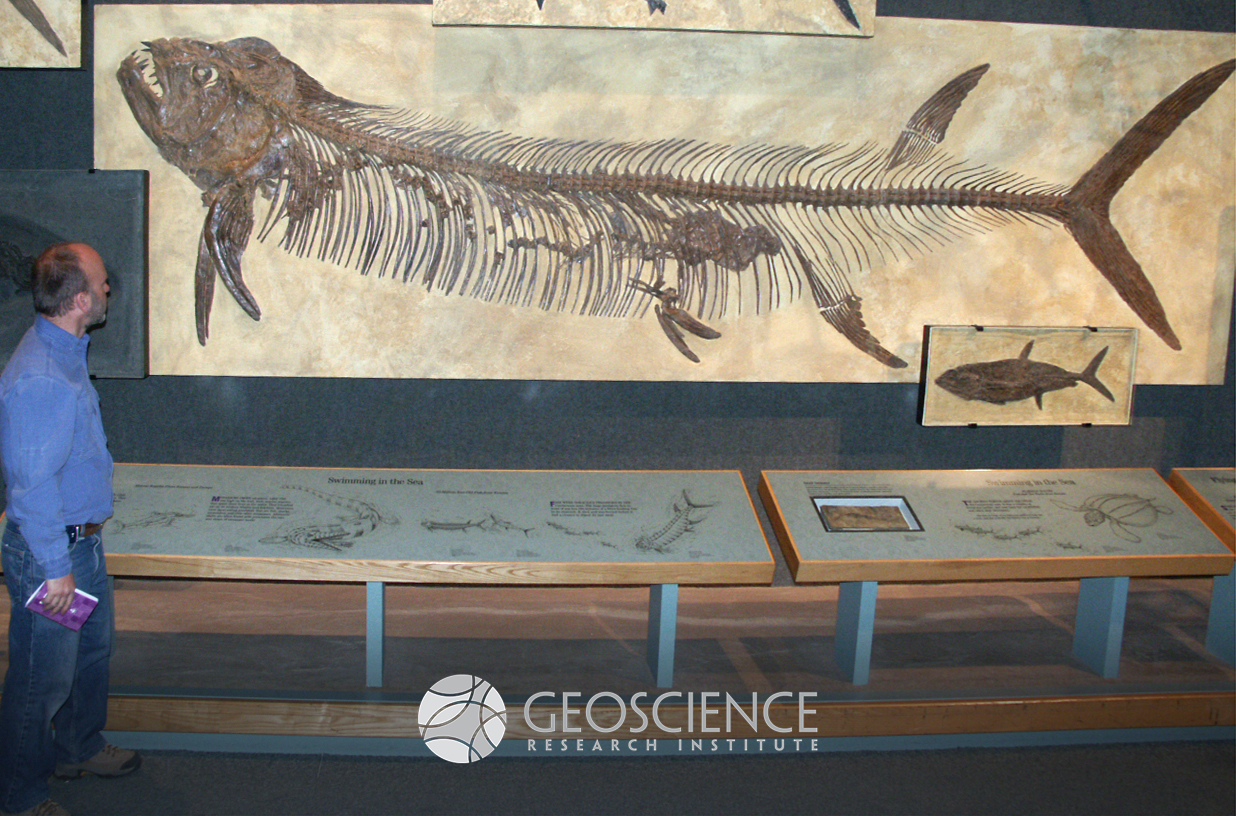
Xiphactinus audax
Predation is documented in the fossil record by exceptional specimens like this large fish from the Upper Cretaceous Niobrara Formation (KS, USA). When it died, the remains of its last meal (another large fish) were still partly undigested in its stomach. The incredible preservation of this fully articulated specimen (fins included) points to rapid burial and special taphonomic conditions. Photo taken at the Denver Museum of Nature & Science (CO, USA).
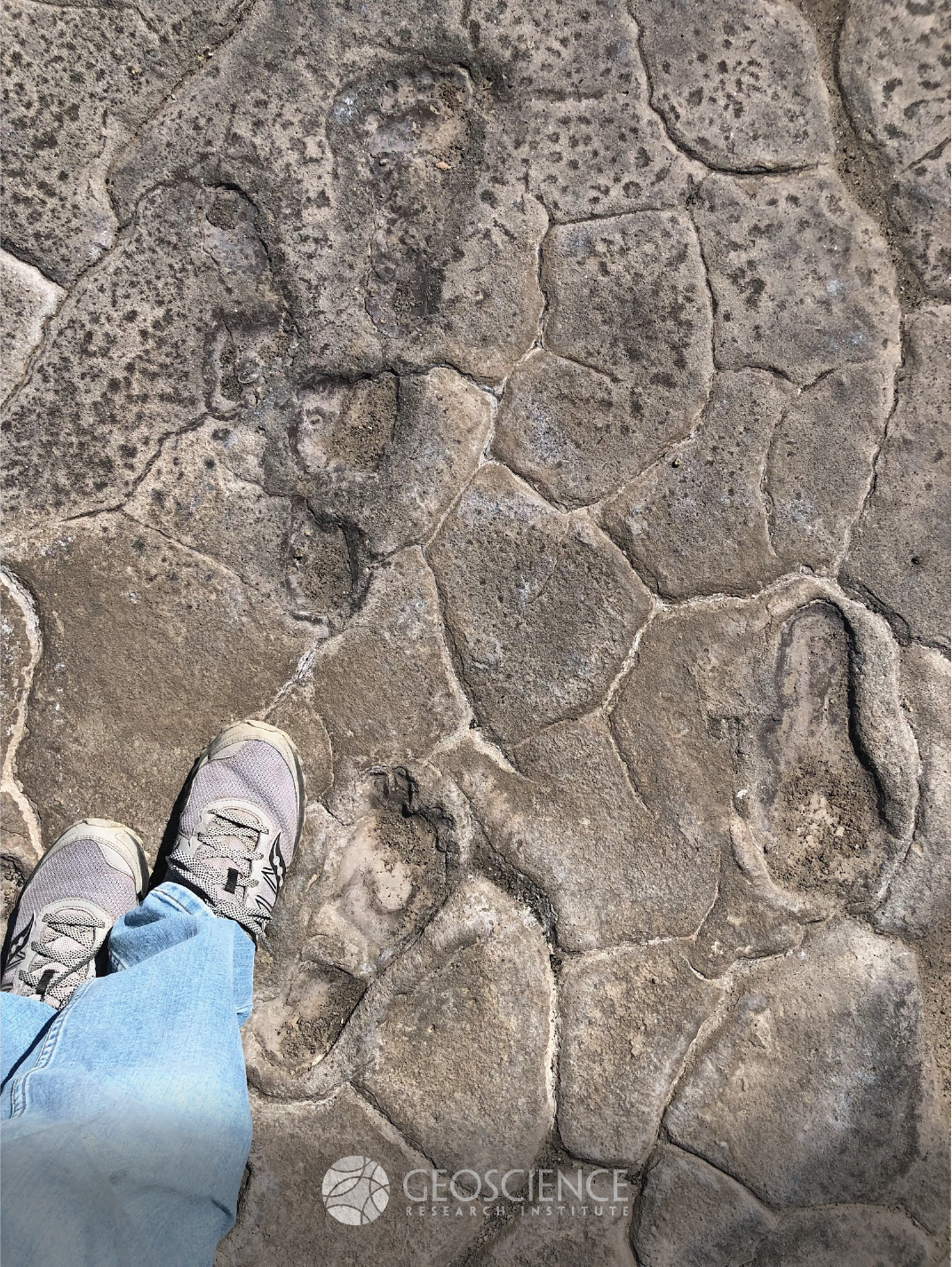
Engare Sero footprints
Well preserved human footprints are relatively uncommon in the rock record. On the southern shores of Lake Natron and near Oldoinyo Lengai in Tanzania, approximately 400 well-preserved human footprints are found in the mudflat called Engare Sero, said to be thousands of years old. This unique preservation of footprints was made possible by volcanic sediment that washed off Oldoinyo Lengai’s slopes. After the footprints were made in the wet soft sediment, they would have dried out in a cracked crust,…