




©Copyright 2018 GEOSCIENCE RESEARCH INSTITUTE
11060 Campus Street • Loma Linda, California 92350 • 909-558-4548

All Galleries
All Images








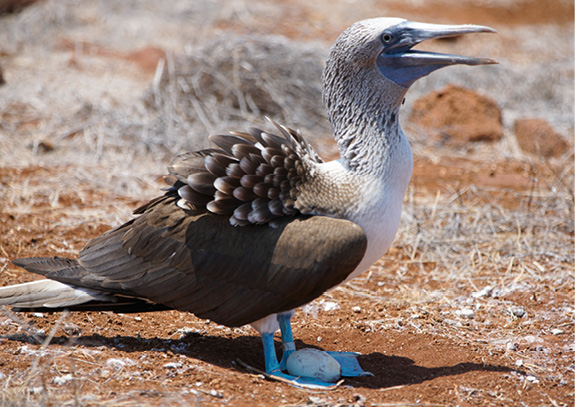
Blue-footed booby
The Galapagos Islands are habitat for numerous seabirds, which nest in large numbers on some islands and islets.
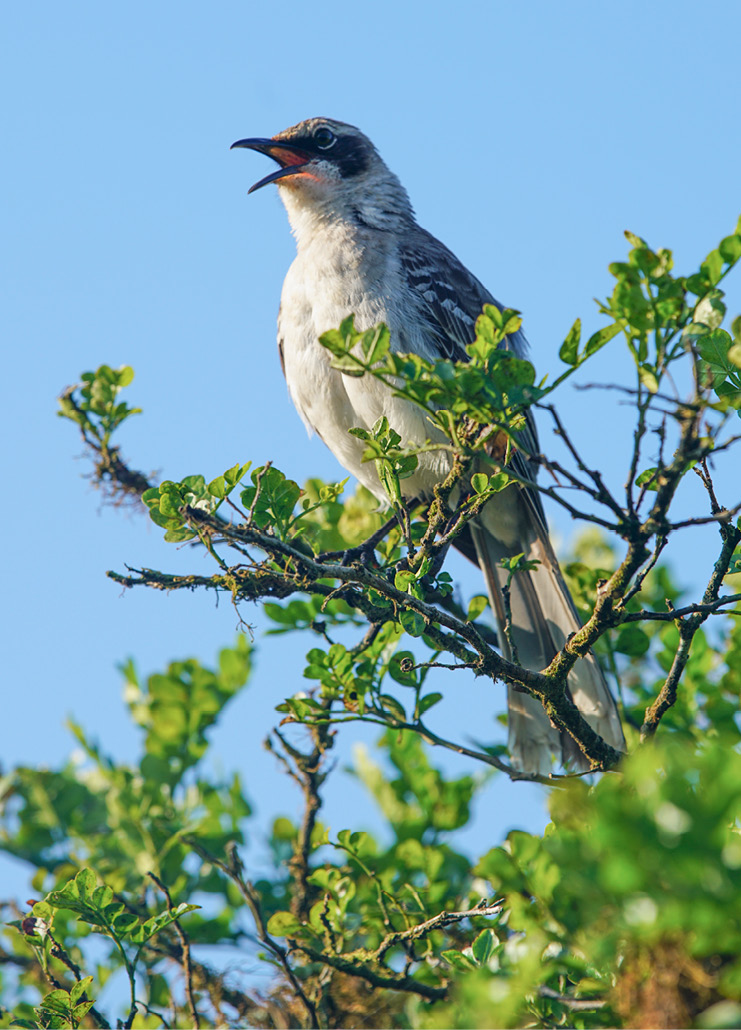
Mockingbird
The Galápagos mockingbirds is an insectivorous bird, about 25 cm in size, with brown back, white belly, long tail, and straight, long and thin beak.
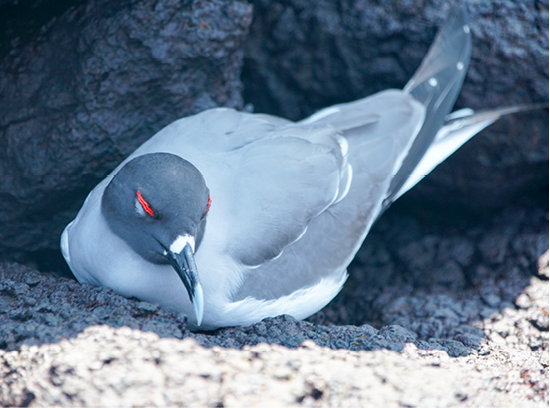
Gull
The bifurcated tail gull ( Creagrus furcatus) is completely nocturnal and thus avoids the attacks of the frigates, which fly during the day.
Flamingos
Lake Natron, in Tanzania, is partially fed by springs that have absorbed alkaline minerals from the surrounding volcanic bedrock. High evaporation rates increase alkalinity of the lake to as high as ammonia, reaching a pH of 12, caustic enough to strip away human skin. Living creatures that enter the lake are typically killed quickly by the caustic water. Amazingly, in spite of these harsh conditions, about 75% of the world’s lesser flamingos nest at Lake Natron. They have tough skin and scales on…
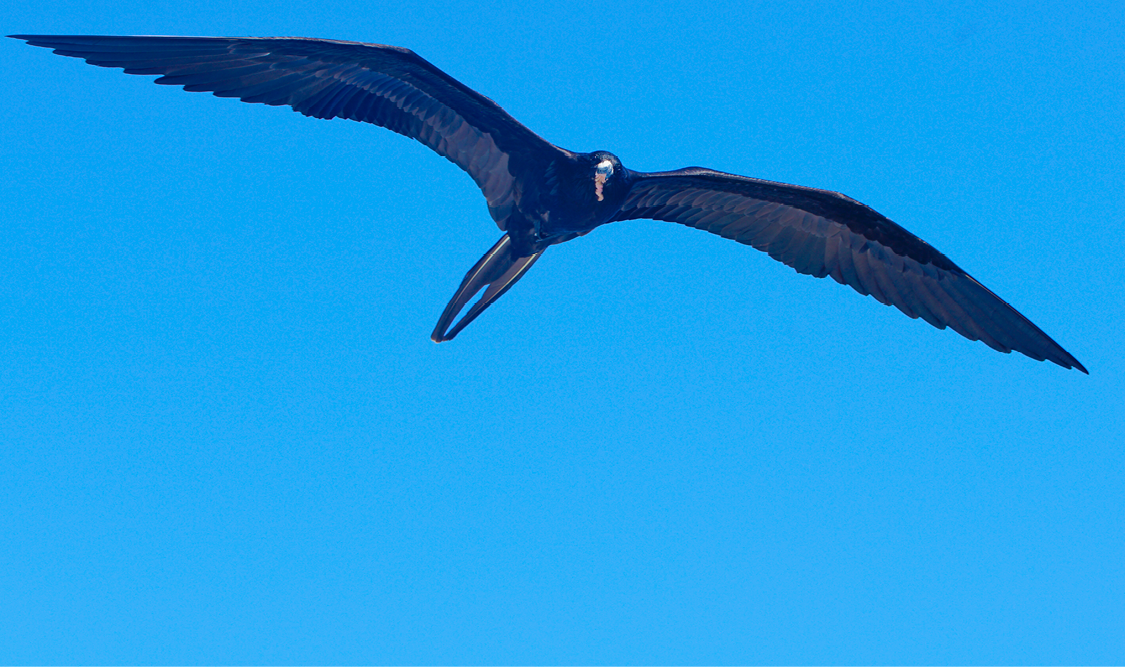
Frigate
One of the most characteristic Galápagos seabird is the frigatebird, an elegant black bird with a wingspan of more than a meter, capable of performing the most incredible aerial maneuvers.
Penguin
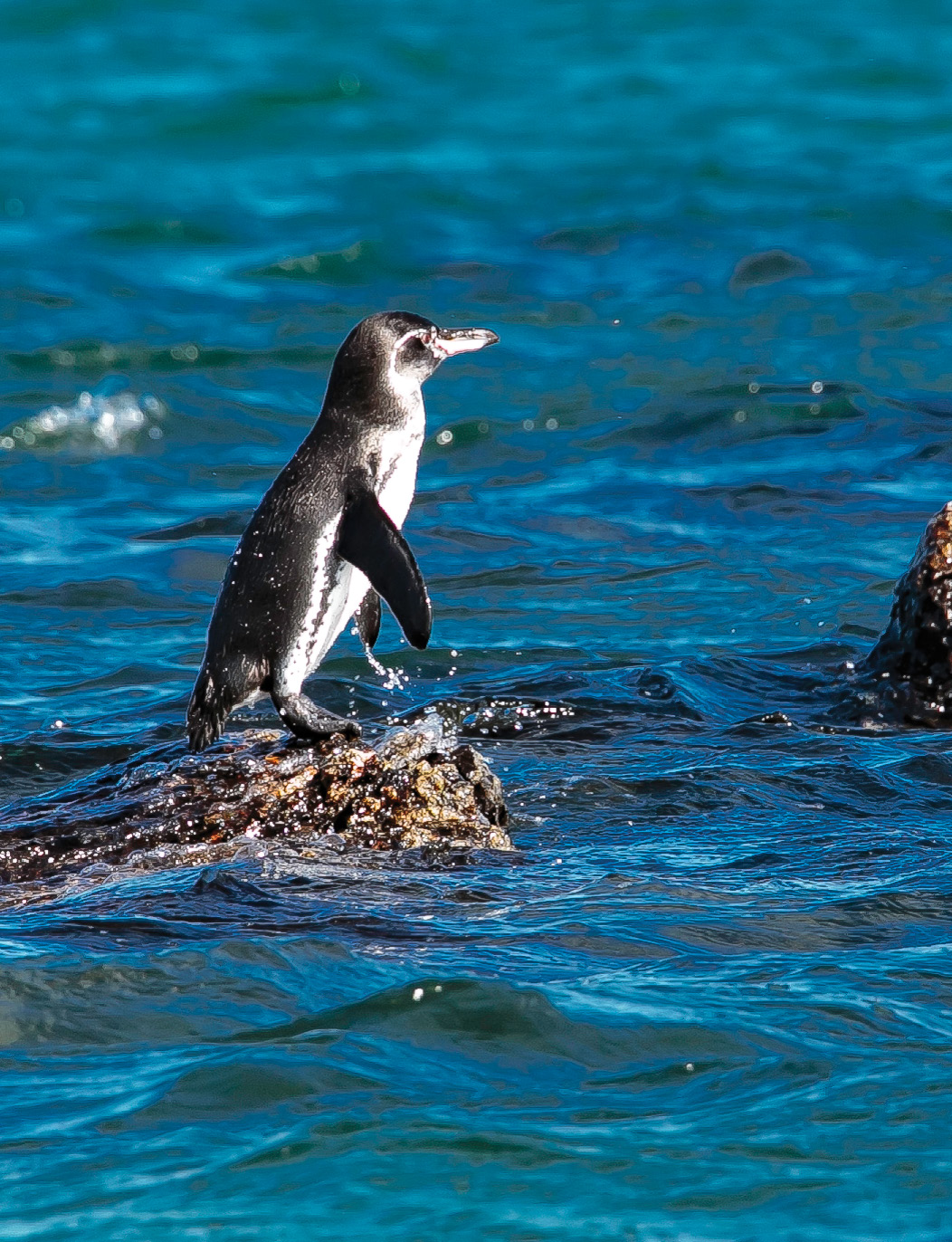
The Galapagos penguin (Spheniscus mendiculus) is the only penguin that lives in Ecuador. Although the species is endemic to the islands, the Galapagos penguins are morphologically similar to the Humboldt penguins, which breed in the coasts of Chile and Peru, and to the Magellanic penguins, typical of the southern tip of South America.
Fossil feather
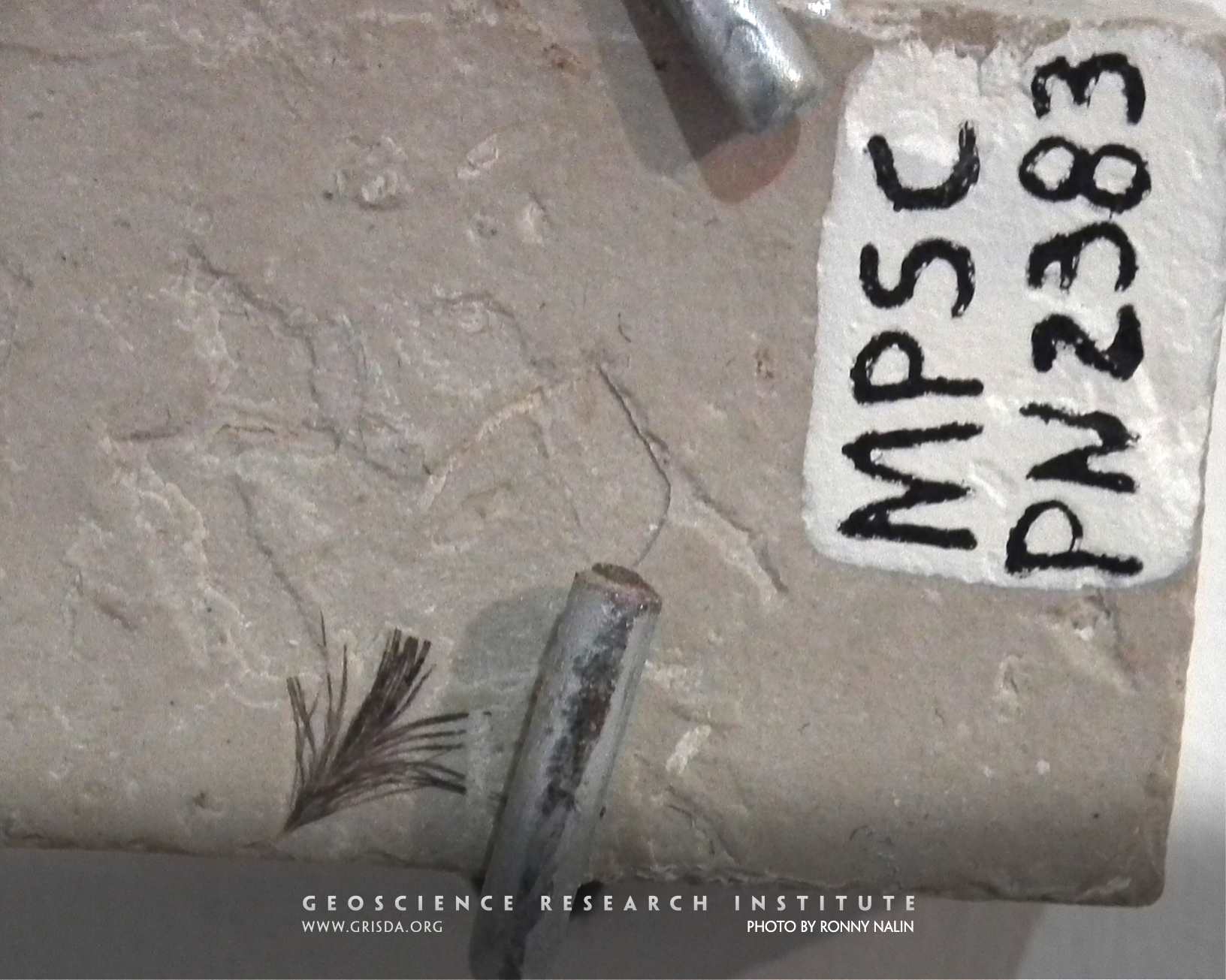
Fossil feather from the Crato Formation, Cretaceous, Brazil. It is possible that this feather belonged to an individual of the bird species Cratoavis cearensis. Specimen on display at the Paleontological Museum of Santana do Cariri
Bird tracks
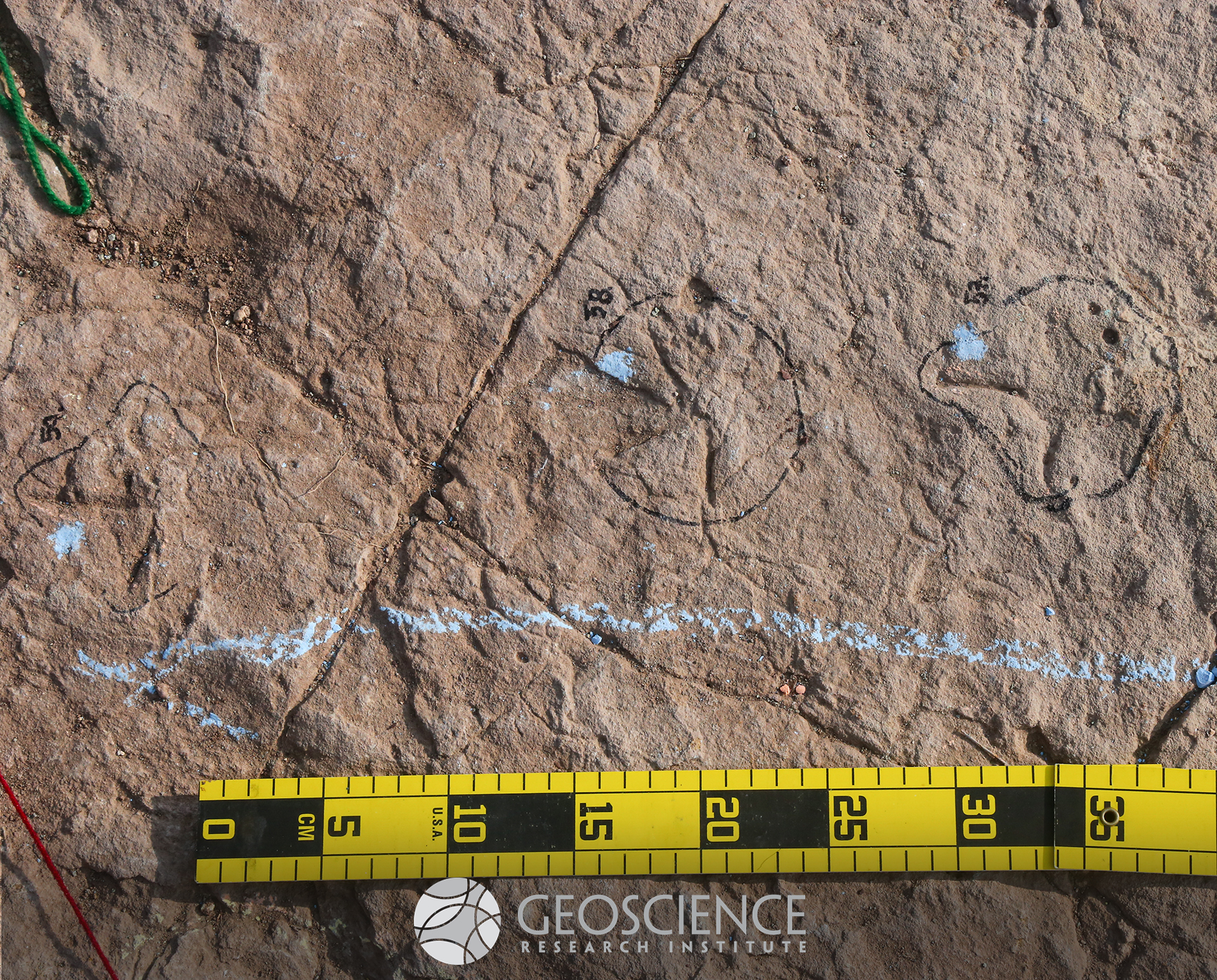
Bird tracks are especially susceptible to erosion, and in modern environments they last only a short time before being destroyed by water currents, wind, or the activity of other organisms. Their fossilization is highly unusual, and their preservation strongly indicates that the trackbearing layer cemented relatively quickly. The bird tracks in the photos (marked with black circles) are from a recently discovered Cretaceous tracksite in Bolivia. Photo by Dr. Raul Esperante.