





©Copyright 2018 GEOSCIENCE RESEARCH INSTITUTE
11060 Campus Street • Loma Linda, California 92350 • 909-558-4548

All Galleries
All Images




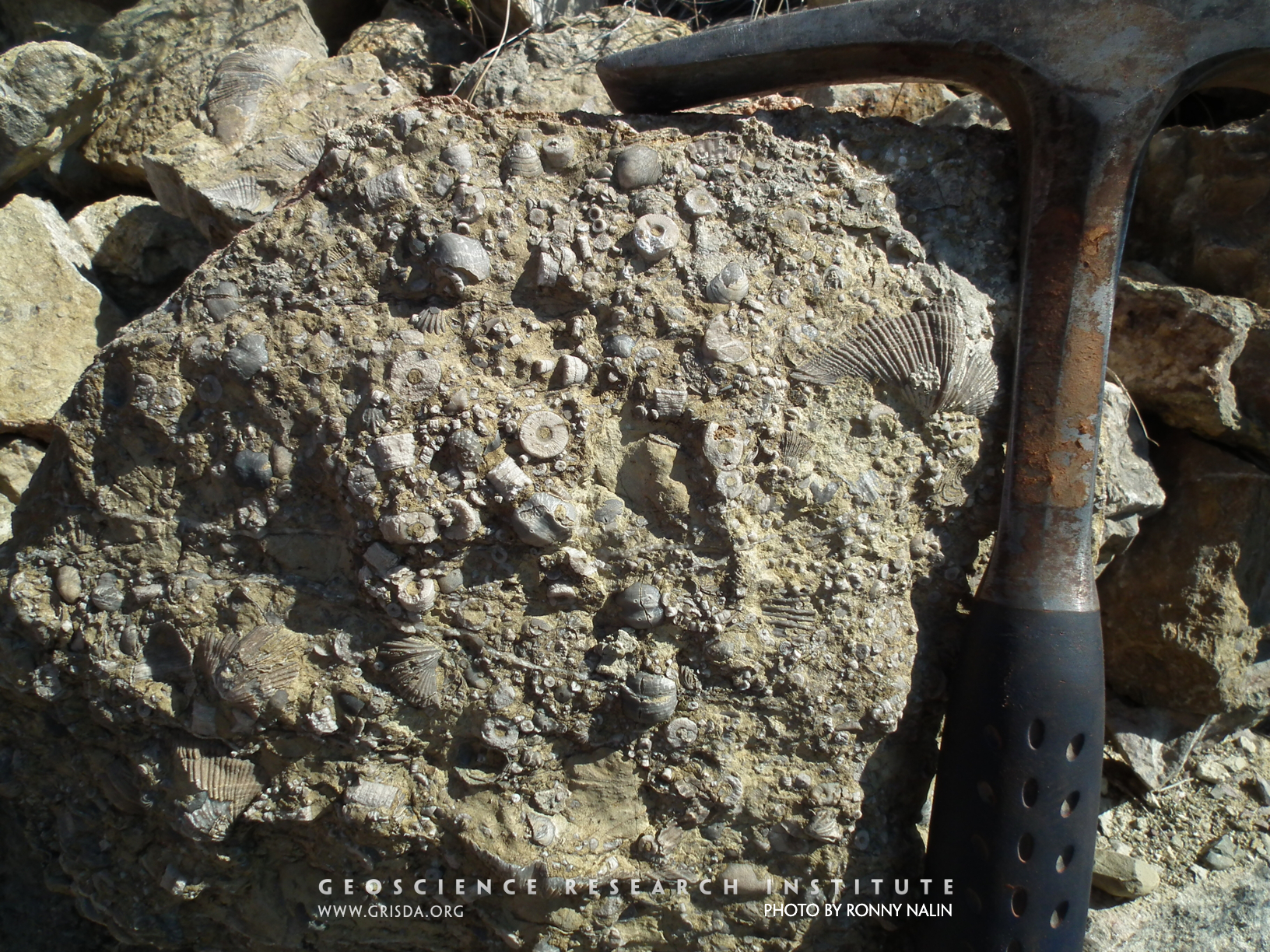
Shellbed
Accumulations of skeletal fragments of marine invertebrates are common in the geologic record and are important for reconstruction of depositional processes. This is a Permian example from the Copacabana Fm. of Bolivia, dominated by brachiopods (including Neospirifer condor) and crinoids.
Bioconstruction
Bioconstructions are organic build-ups typically attached to a hard substrate that can expand vertically and laterally, trapping and stabilizing sediment within their framework. This photo shows a tabular framework dominated by corals, carpeting large granitic blocks in an originally submerged shallow water setting. Cala di Labra Formation, Miocene, near Bonifacio, France. Black camera case to the left of large angular block for scale.
Mogotes
Mogotes are landforms typical of karst terrains in tropical regions. They consist of steep-sided, often isolated hills surrounded by flat alluvial plains. Mogotes form in carbonate rocks that have undergone significant dissolution. This photo shows mogotes in the Viñales Valley, located in Pinar del Río Province, western Cuba. These mogotes are composed of Cretaceous and Paleocene limestone.
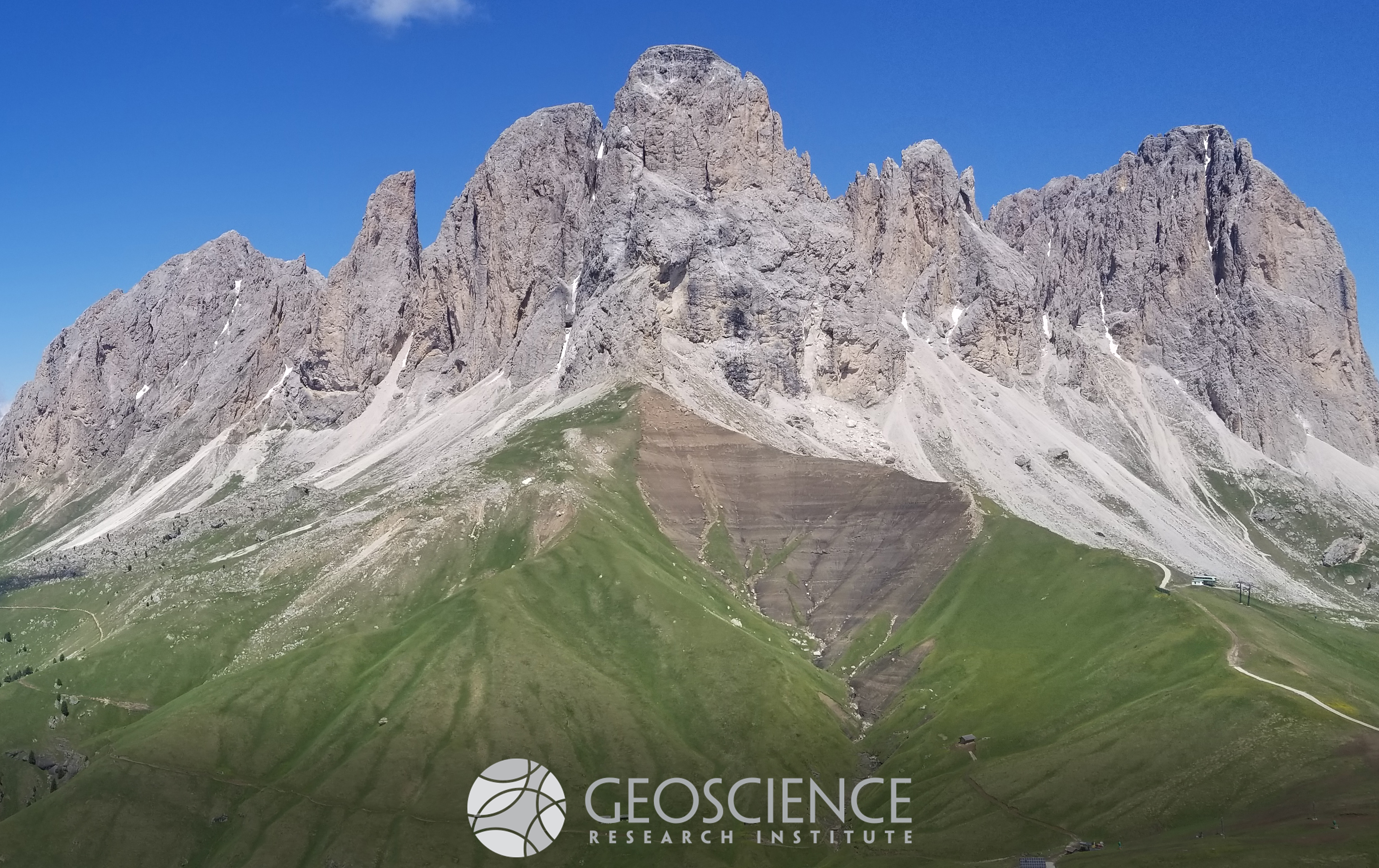
Punta Grohmann section
The iconic Punta Grohmann section, in the Dolomites of Italy, showcases Triassic (Ladinian to Carnian) basinal deposits visible in the grassy slopes at the center of the photo, overlain by the towering dolomitized limestone of the Cassian Dolomite Formation. The basinal deposits accumulated in troughs between carbonate platforms and preserve evidence of catastrophic processes, including volcanism, turbidity currents, and toe-of-slope deposits containing large limestone blocks that collapsed from…