








©Copyright 2018 GEOSCIENCE RESEARCH INSTITUTE
11060 Campus Street • Loma Linda, California 92350 • 909-558-4548

All Galleries
All Images













Torotoro syncline
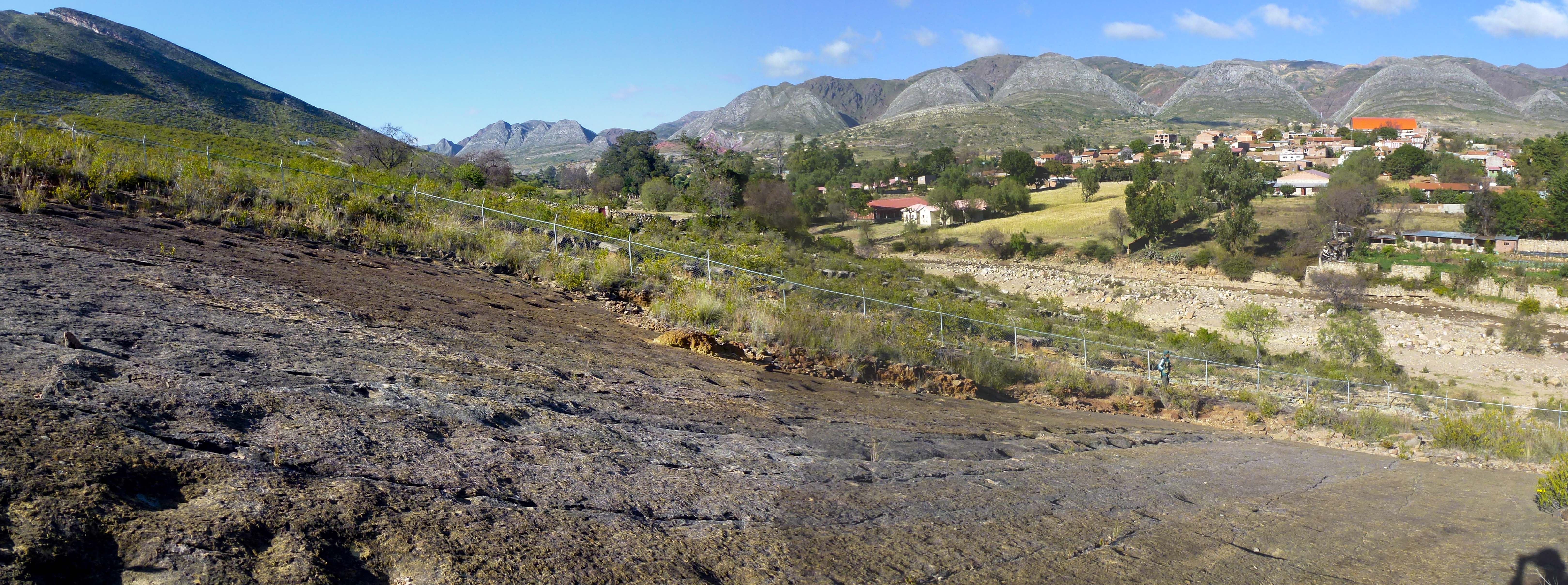
Dinosaur footprints in the town of Torotoro. Torotoro is located in a valley formed by synclinal folding of sedimentary layers, forming a U-shaped regional structure. In the distance, one of the sides of the syncline can be seen, and the other occupies the bottom part of the photo, where the footprints are exposed
Ankilosaur footprints
Trail of ankilosaur footprints. This track is right at the entrance of the town of Torotoro.
Sauropod trackways
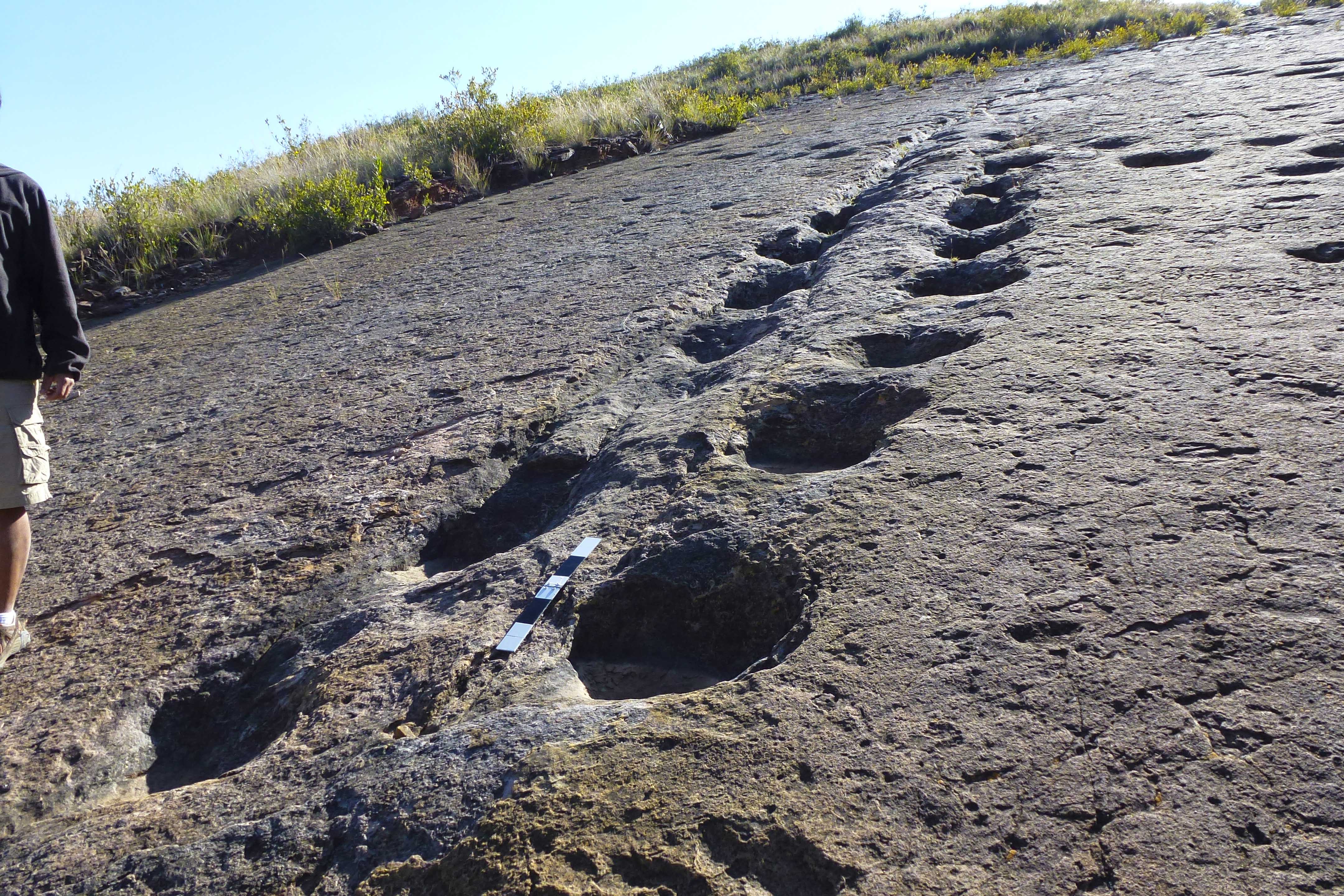
Sauropod dinosaur footprints on the outskirts of the town of Torotoro. The footprints are very well preserved in sandstone rock.
Parallel dinosaur trackways
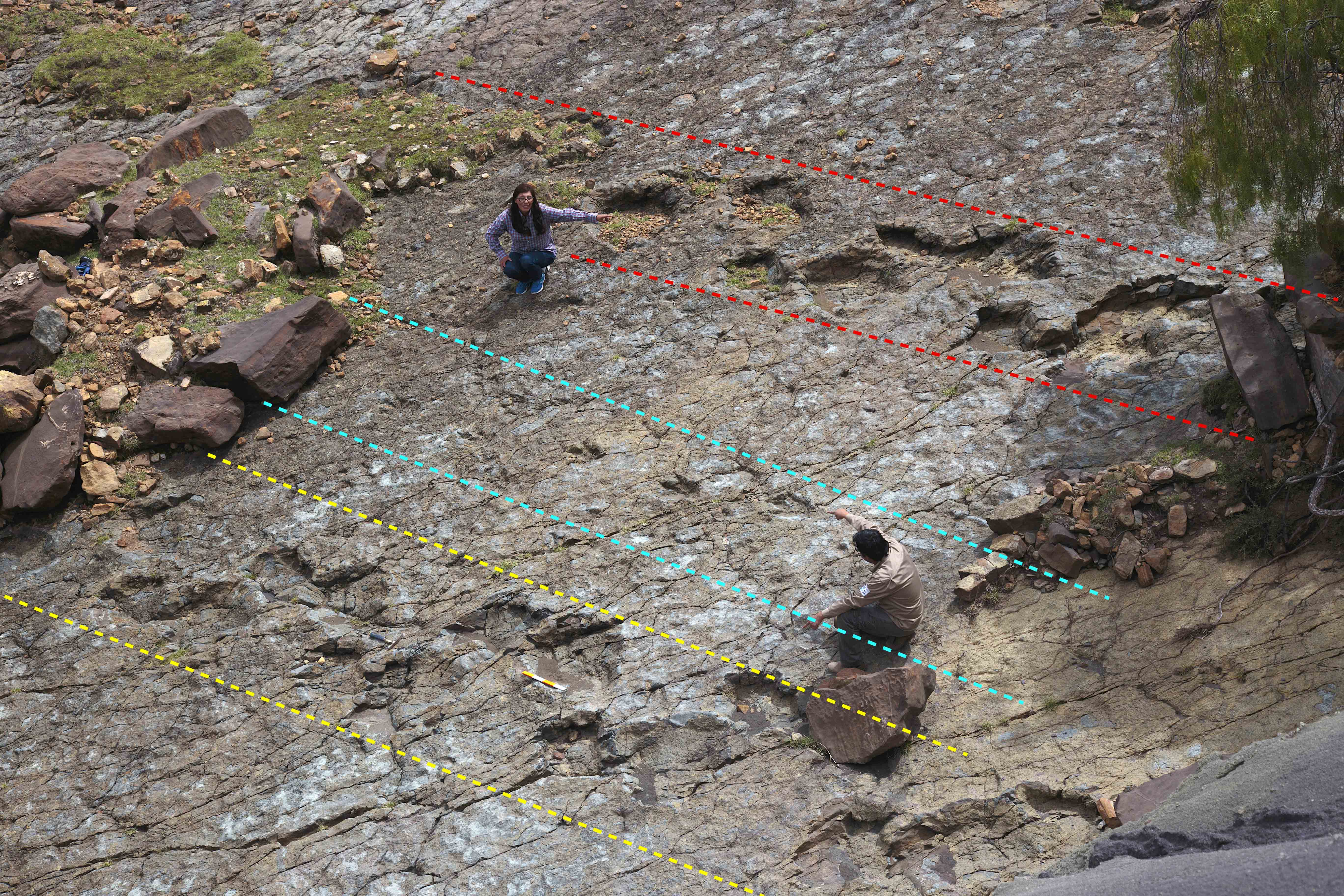
Three trackways of dinosaur footprints. The middle one was made by a bipedal dinosaur, and those on both sides by quadrupedal dinosaurs (sauropods). The rocky substrate consists of sandstones formed on a beach or coast at low tide. The substrate was originally wet and firm, but deformable. The direction of movement of the dinosaurs was to the left.
Dinosaur trackways
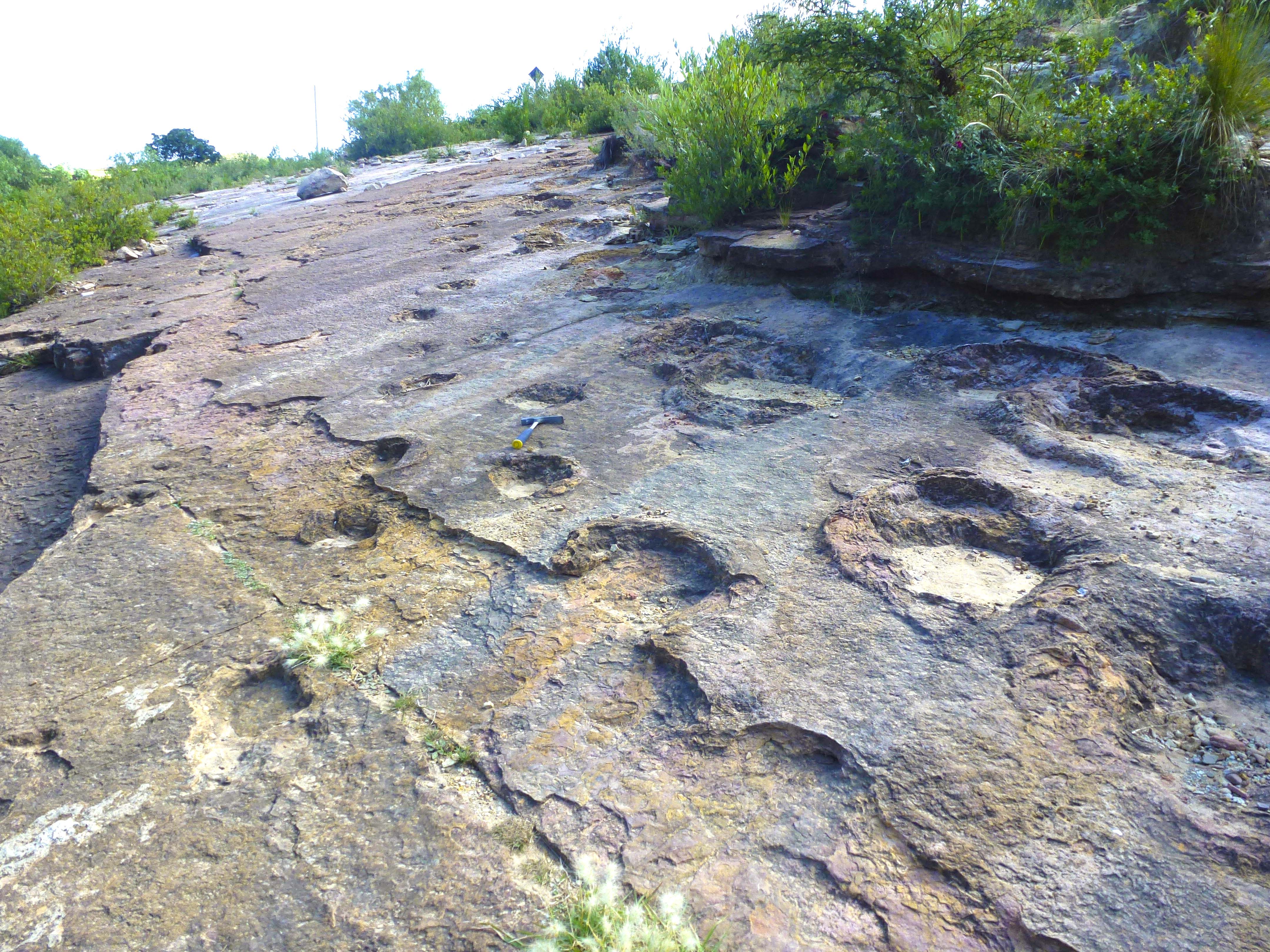
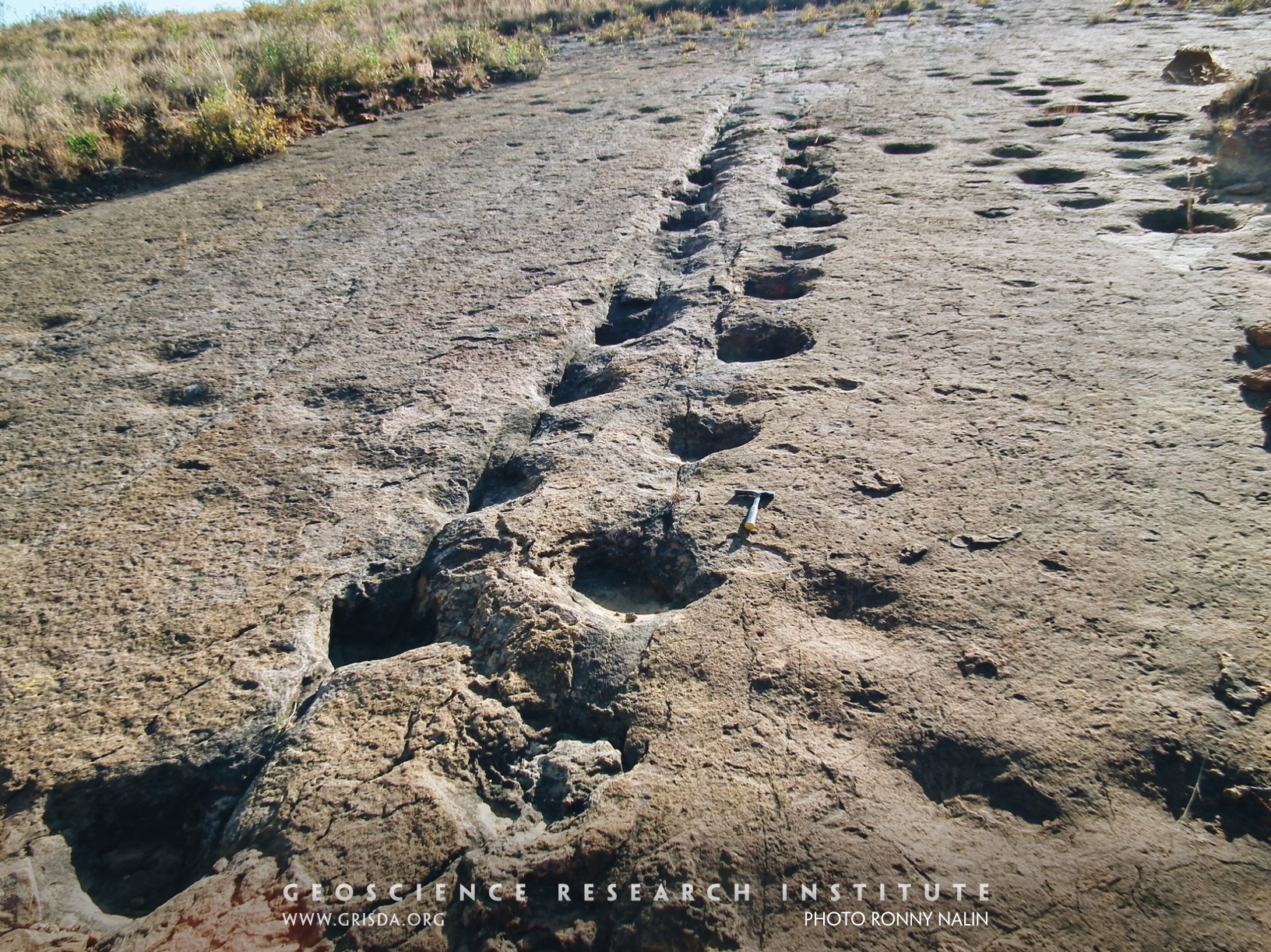
Dinosaur trackways, the main one thought to have been left by an ankylosaurid (hammer for scale). Cretaceous El Molino Fm., Torotoro, Bolivia. Well developed fossil trackways imply a special set of conditions, with sediment wet enough for footprints to remain impressed followed by prompt induration and burial.
Carnosaur trackway
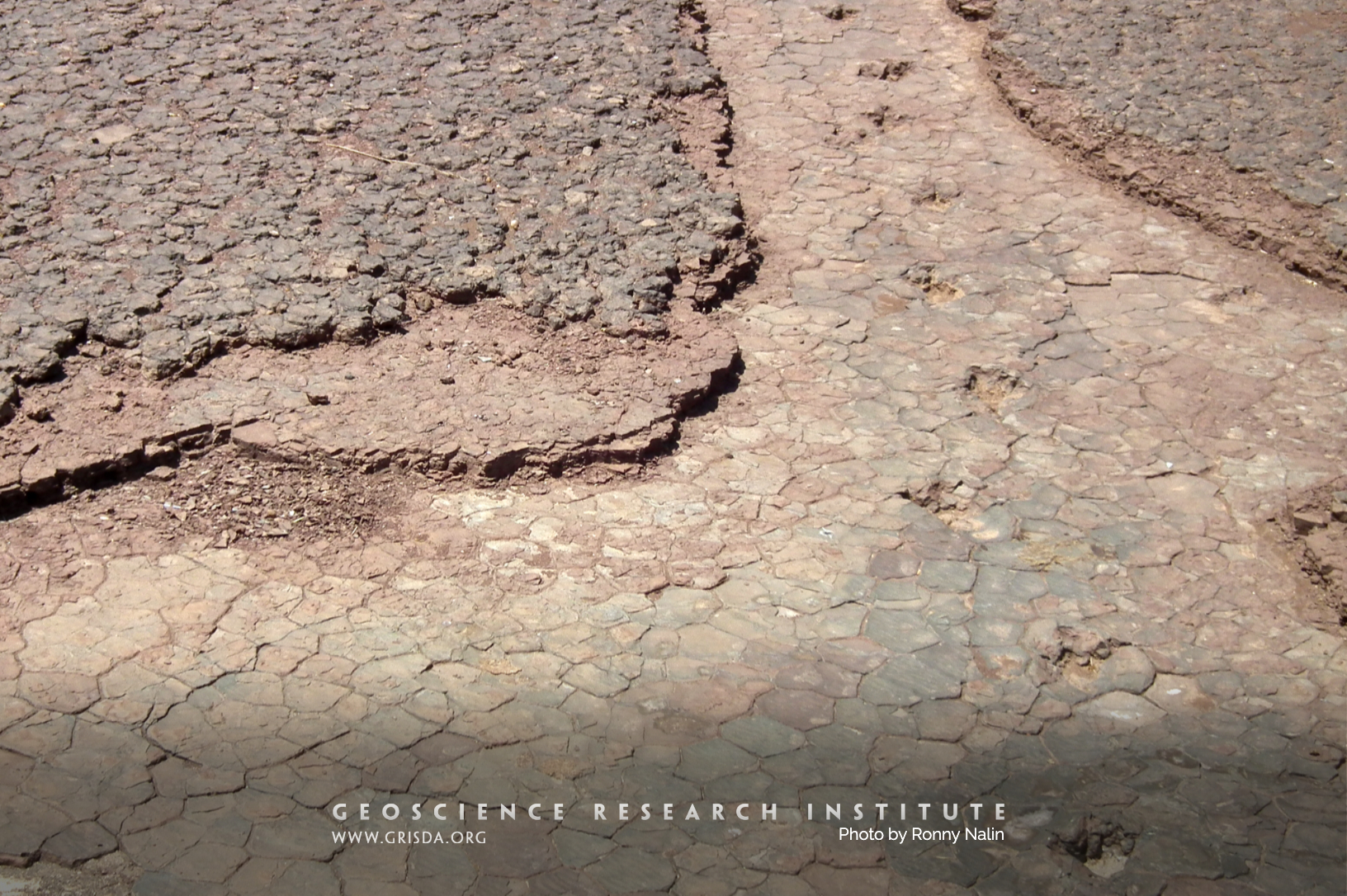
Walking on mudcracks. A dinosaur left this track in muddy sediment that shrank, forming polygons upon desiccation. Trackway exposed in Cretaceous layers from the Sousa Basin of Brazil, at the Vales Dos Dinossauros geosite.
Marginocephalians
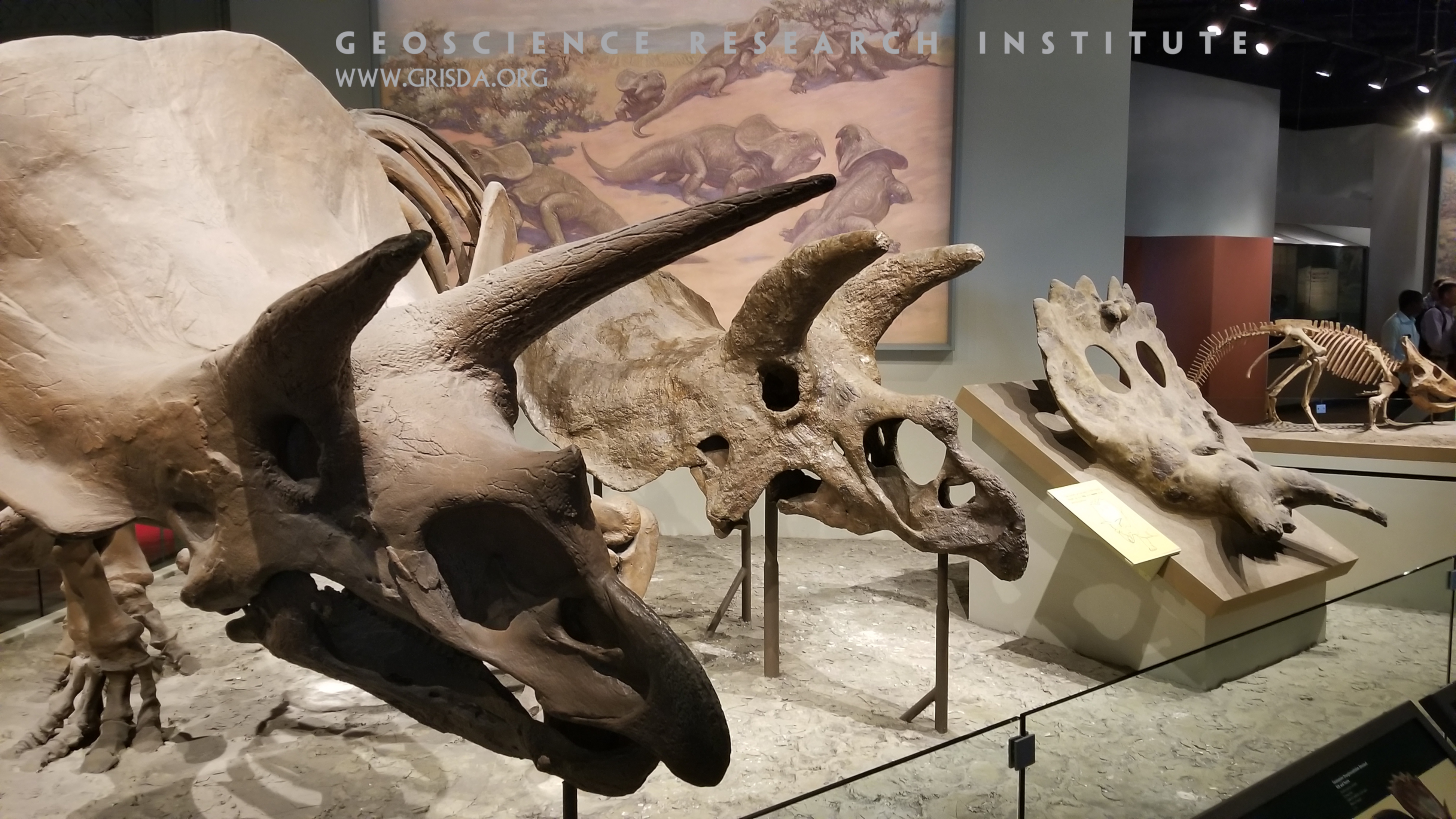
Marginocephalians are a group of herbivorous dinosaurs found in Cretaceous layers and characterized by a bony frill at the back of their skull. This photo shows specimens of 4 different species within this group, on display at the Field Museum of Natural History, Chicago.
T. rex foot
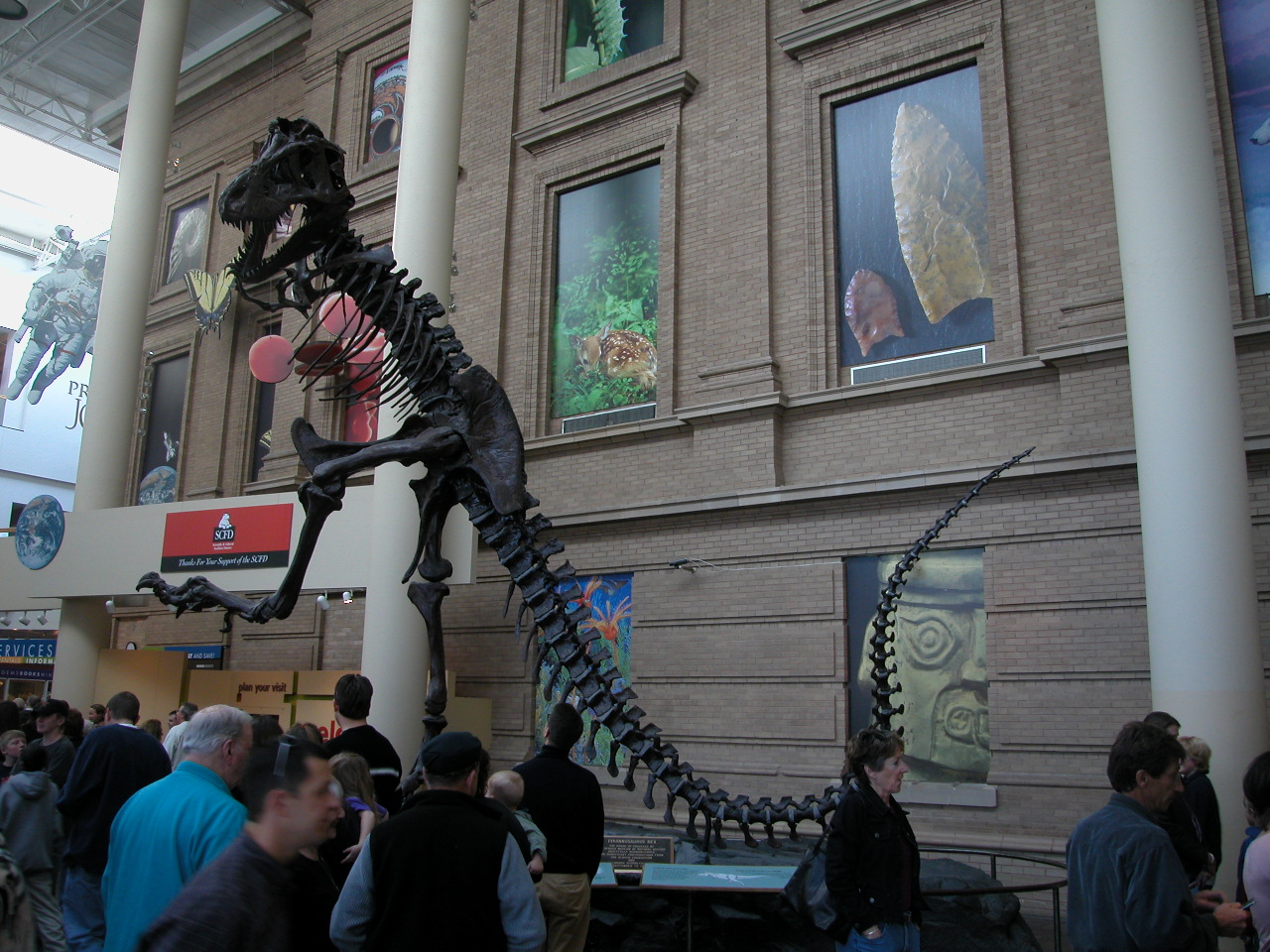
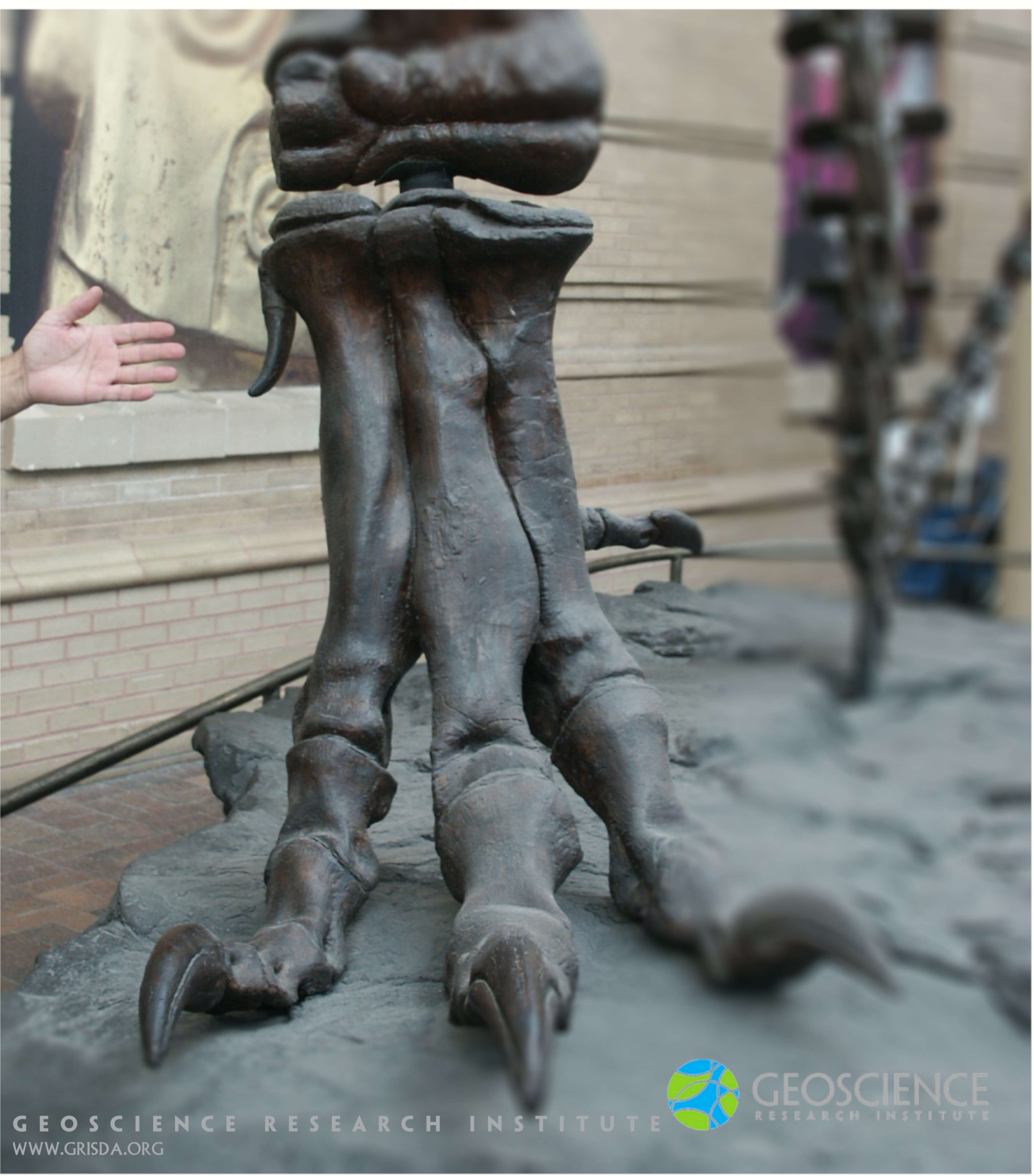
Compare the foot of this big land vertebrate with the hand of a human... Pretty massive animal, right? Can you guess the species? Well, a T. rex dinosaur, of course! This specimen welcomes you in the foyer of the Denver Museum of Nature and Science, CO, US.
Underprints
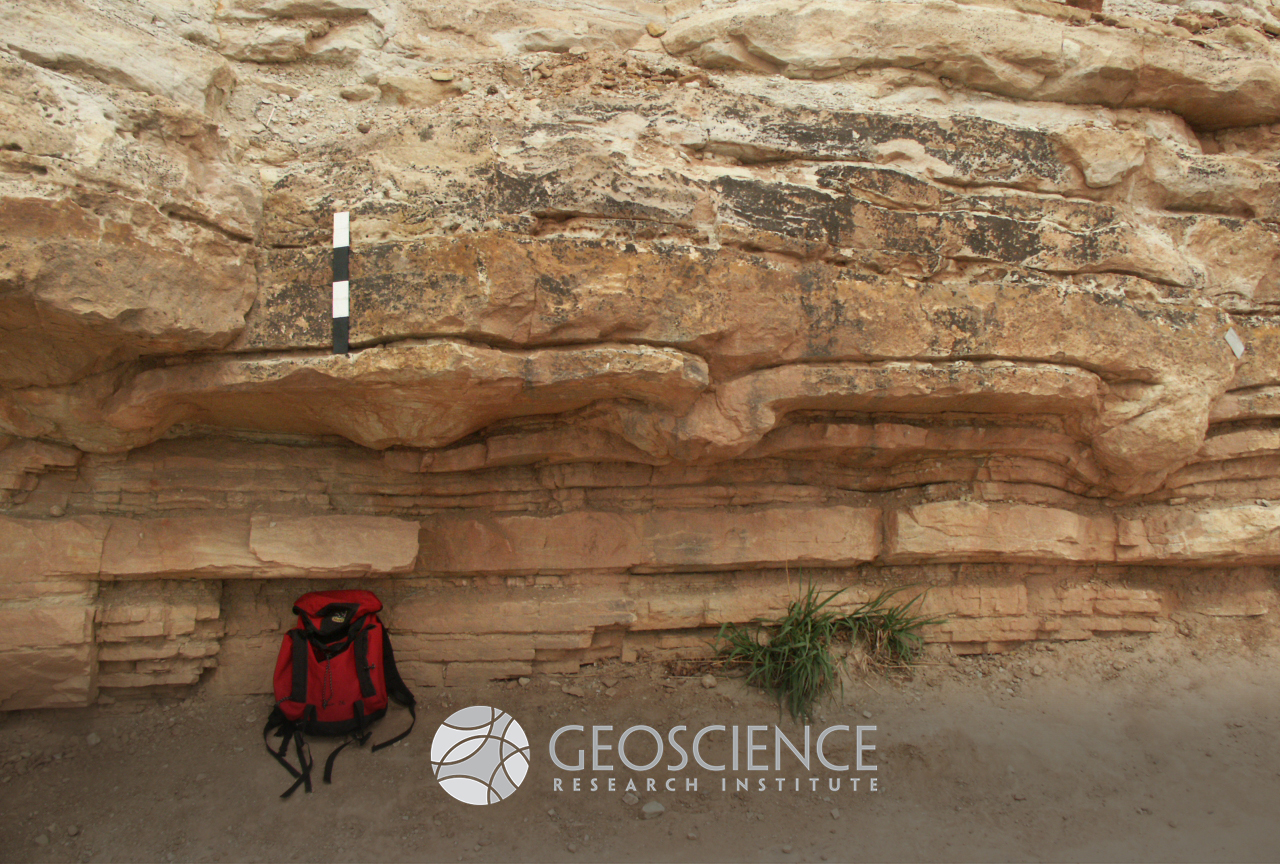
“Brontosaur bulges." Mid-way through the picture we can observe four bulges in a sandstone layer, depressing downward the underlying layers. These have been interpreted as a dinosaur trackway viewed in cross-section. A large sauropod left these “underprints" by deforming soft sediment while walking. Very specific conditions (e.g, sediment cohesiveness, rate of sedimentation, exposure vs submergence) are necessary for the preservation of footprints in the rock record. Scale bar is 40 cm long. Photo…
Dinosaur Ridge Trackway
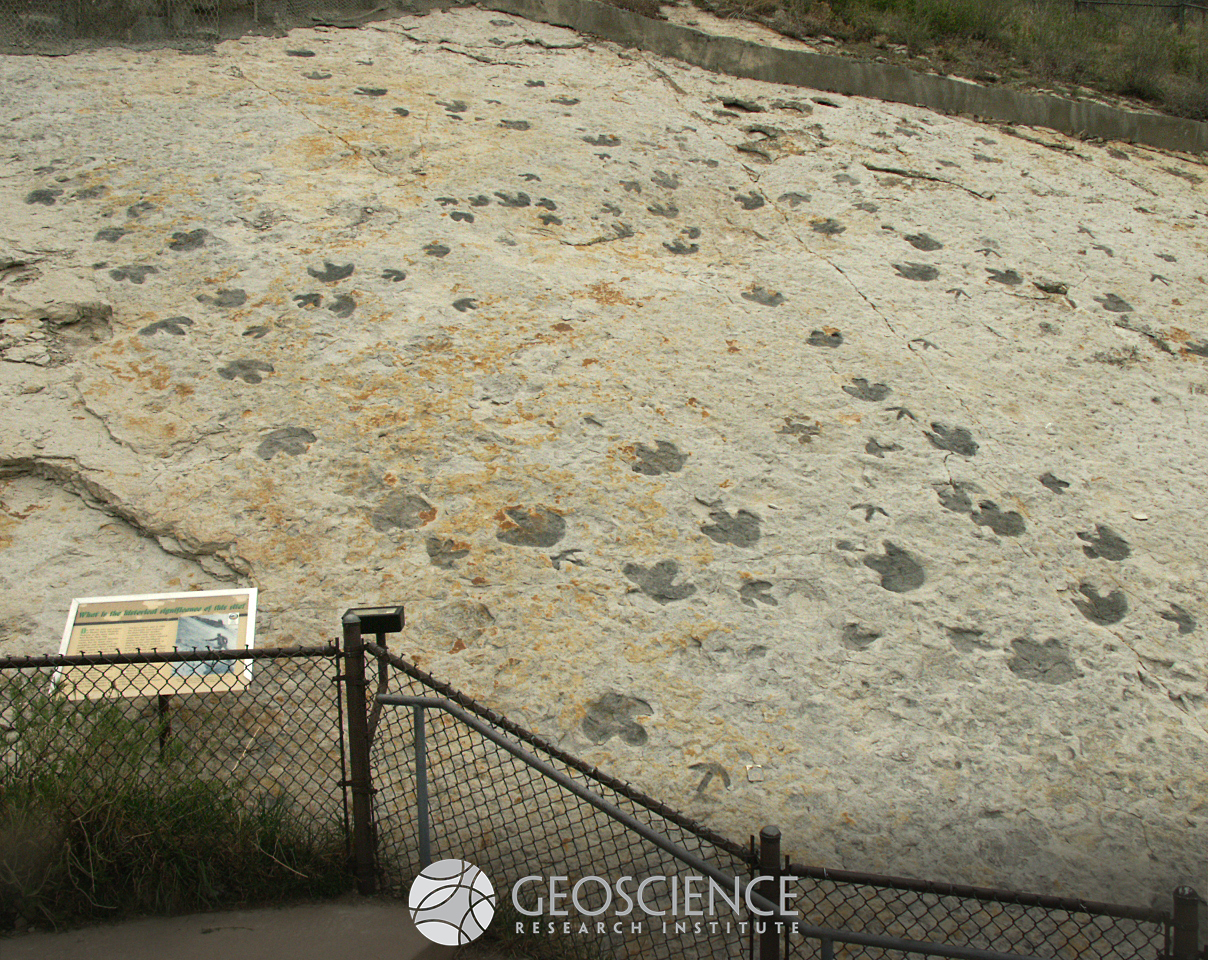
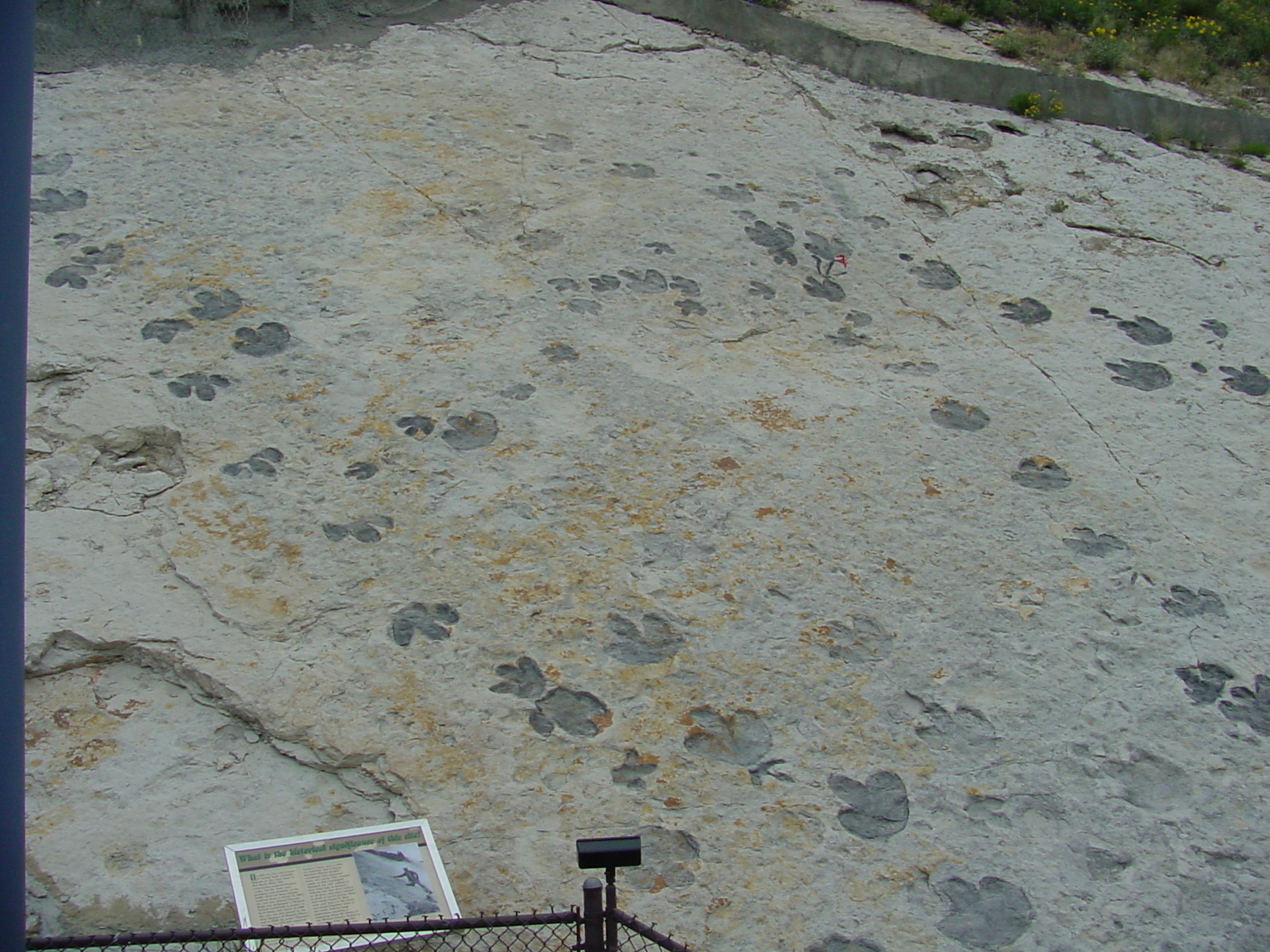
The Dinosaur Ridge Tracksite, in Golden, CO, preserves two main types of dinosaur footprints. Both are tridactyl (with three toes). They have been colored in with charcoal to enhance their visibility. The tracks with a wider aspect and thick toes were made by ornithopod dinosaurs. They were left by animals of different sizes (possibly adults and juveniles). The narrow-toed tracks were made by theropods. See if you can recognize the different tracks. This outcrop exposes the surface of a sandstone…
Saurischia
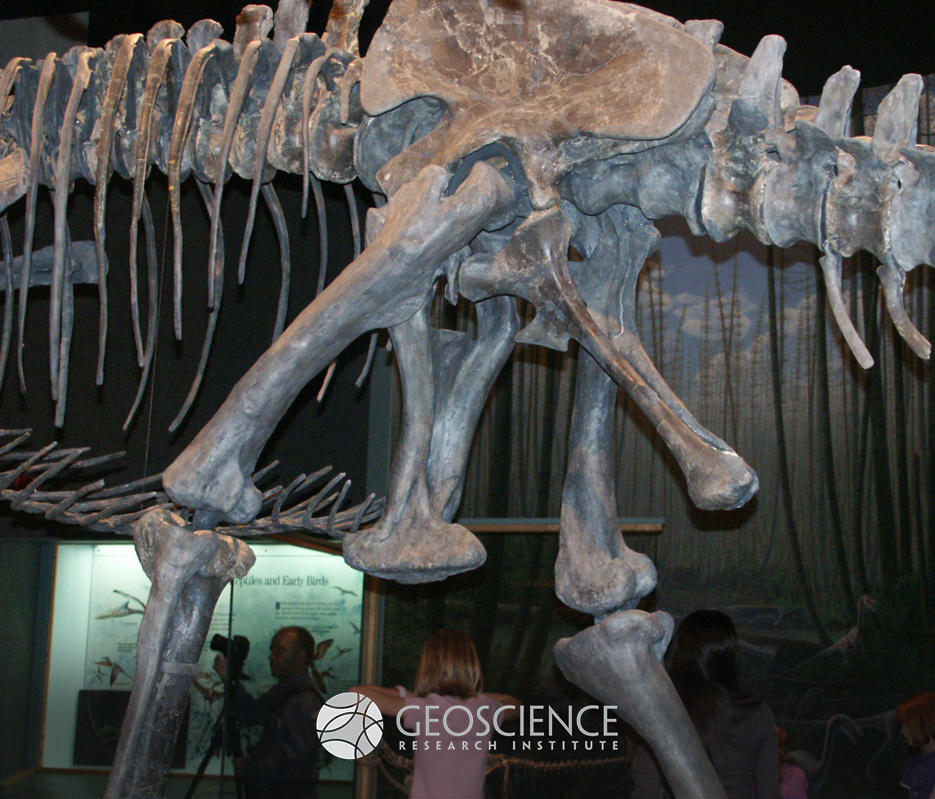
Dinosaurs can be classified into two groups, based on the arrangement of their hip bones. One group is named Saurischia, and the pubic bone points forward, in the opposite direction of the ischium, which points backward. All carnivore (and some herbivore) dinosaurs were saurischian. The example in this photo shows the saurischian configuration of the pelvis (articulated with leg bones + vertebral column) of an Allosaurus skeleton, on display at the Denver Museum of Nature and Science.
Ornithischia
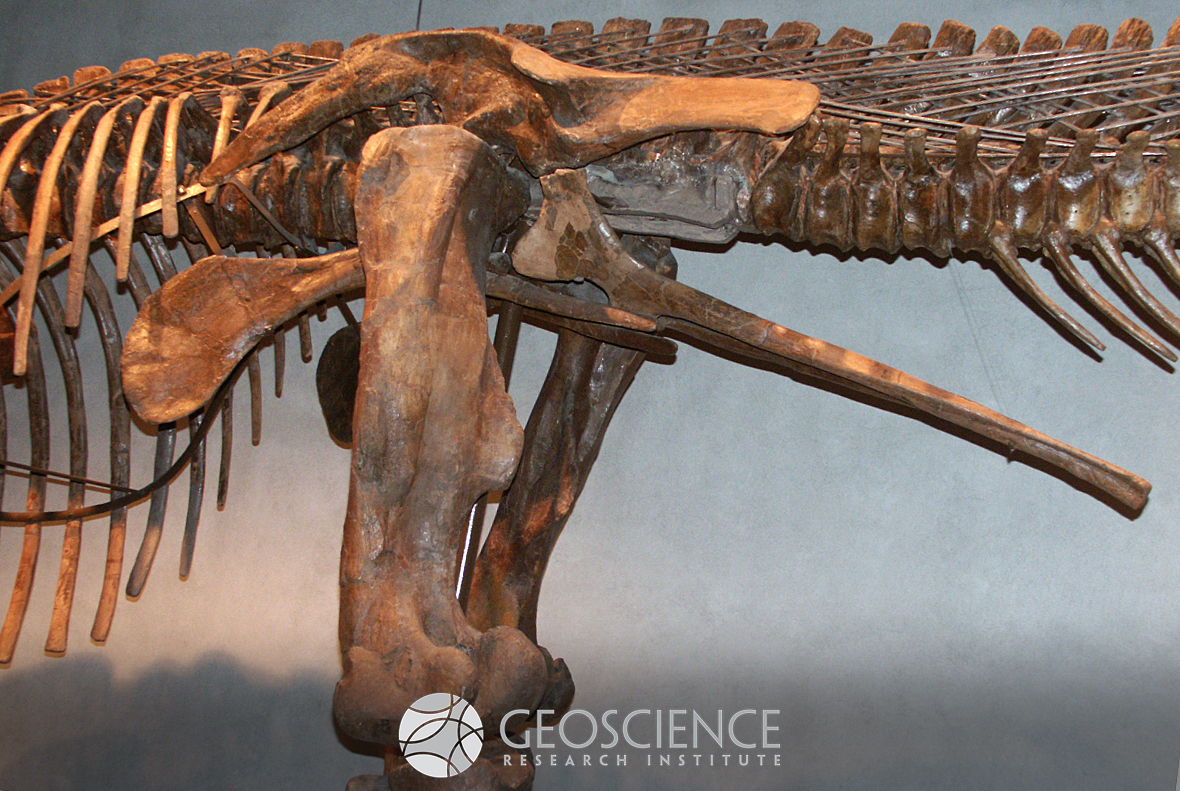
Dinosaurs can be classified into two groups, based on the arrangement of their hip bones. One group, named Ornithischia, is characterized by the pubic bone being parallel with the ischium, both pointing backward. The example in the photo shows the ornithischian arrangement of the pelvic bones (articulated with femurs and vertebral column) of an Edmontosaurus skeleton, on display at the Denver Museum of Nature and Science.
DinoRdgTracks
Dinosaur trackways, west Denver --- Dinosaur Ridge with trackways in the Dakota sandstone.