







©Copyright 2018 GEOSCIENCE RESEARCH INSTITUTE
11060 Campus Street • Loma Linda, California 92350 • 909-558-4548

All Galleries
All Images










Lava
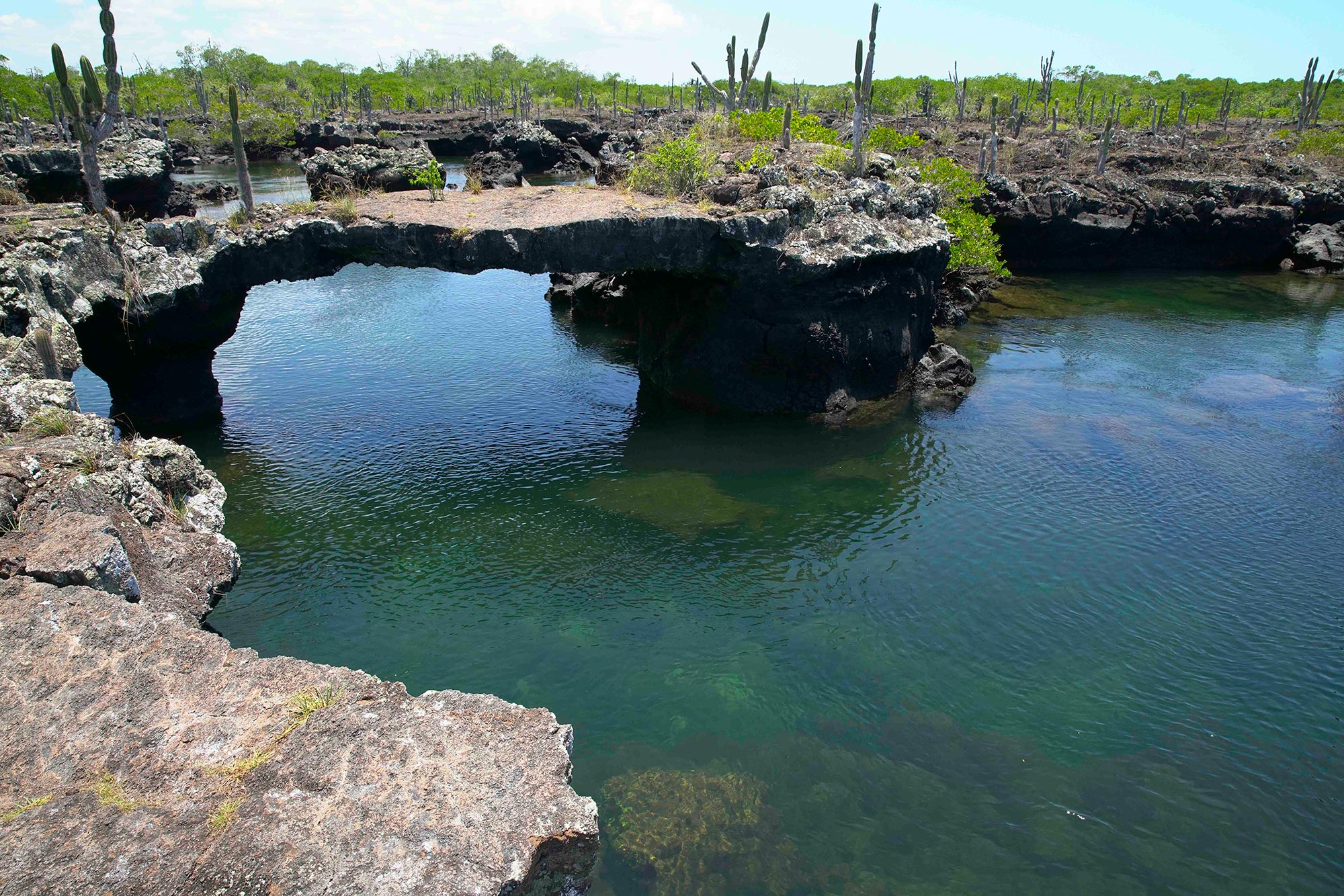
Lava tunnel on Isabela Island. As lava flows, it can form lava tunnels up to several kilometers long. The surface of the lava cools rapidly and forms a crust that protects the lava that continues to flow beneath. If the lava under the hardened crust eventually drains out, it can leave a hollow tunnel behind.
Epsilon cross-stratification
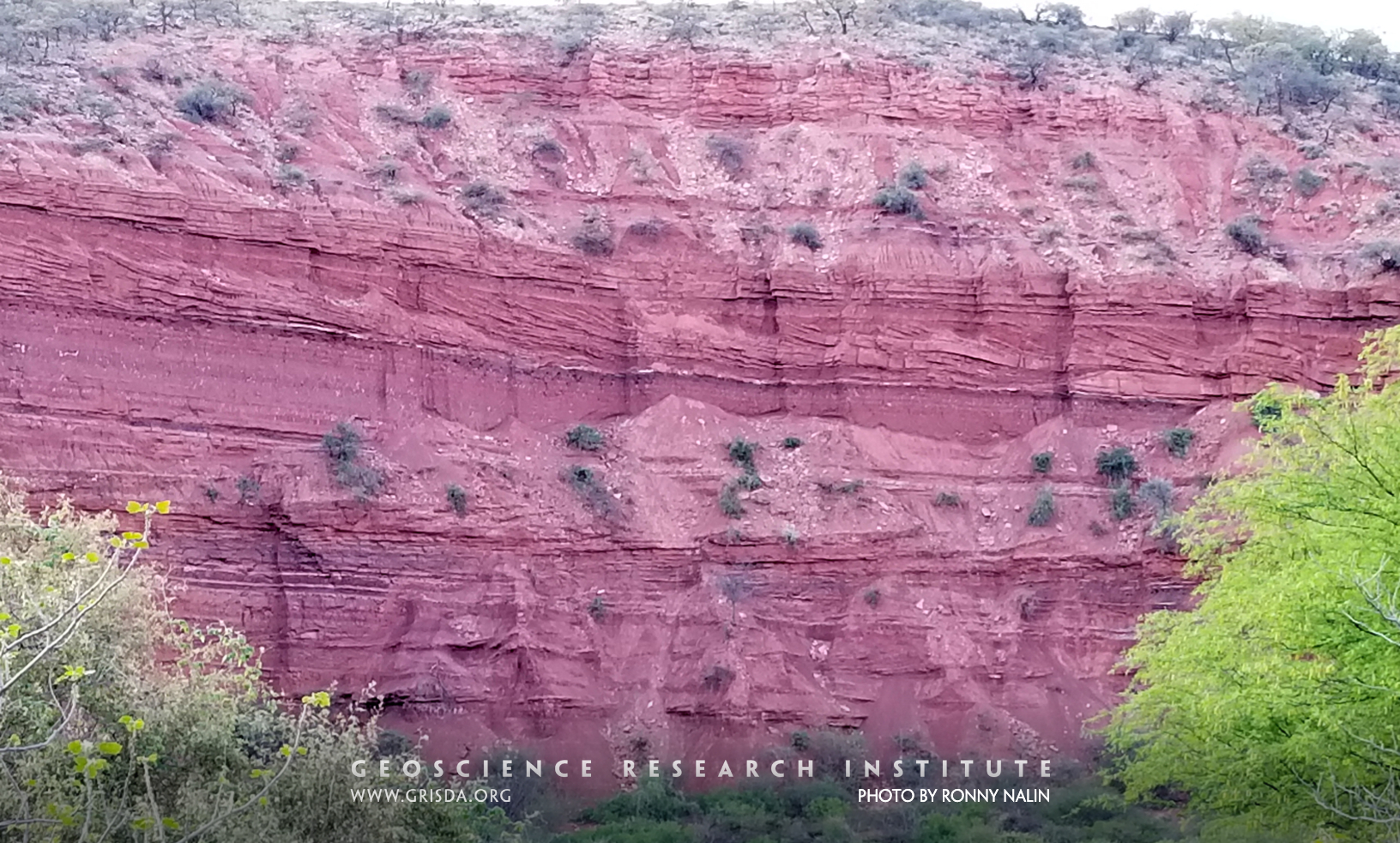
As meandering rivers move on a floodplain they can generate distinctive cross-stratified deposits related to lateral migration of point bars. The cross-set at the center of the photo is several meters thick.
Cannibalism
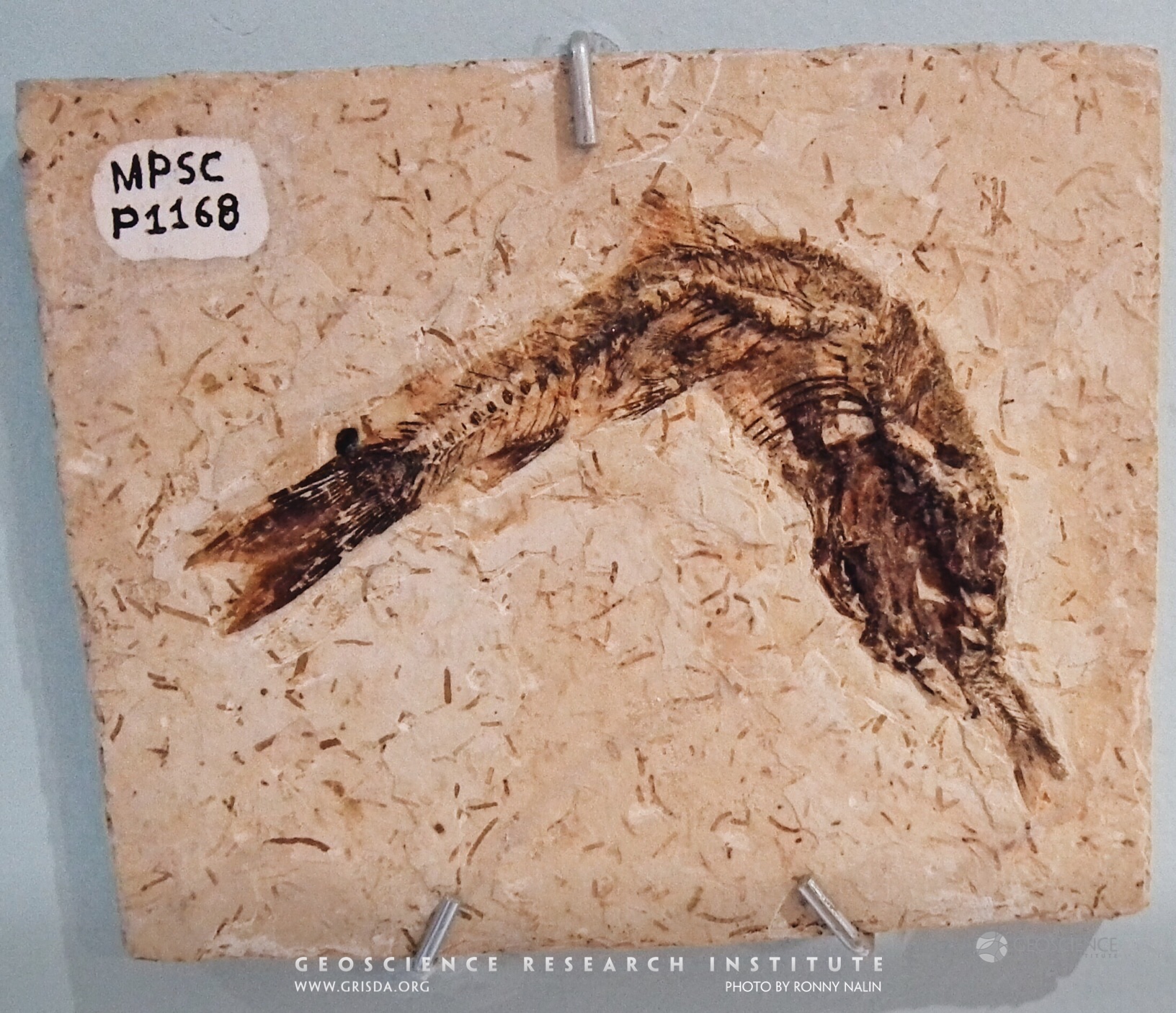
Cannibalism exhibited by the fish Dastilbe crandalli, Cretaceous Crato Fm., Brazil. Specimen on display at the Paleontological Museum in Santana do Cariri. Larger fish is about 10 cm in size. Unique environmental conditions are required for such spectacular preservation of fossil fish. This form of cannibalism is also interpreted as indicative of stressful environmental conditions.
Rt34
IGNEOUS - INTRUSIVE: Potassium feldspar, Big Thompson Canyon --- The potassium in this mineral is often used in K-Ar (potassium-argon) radiometric dating.
Volcanic cone
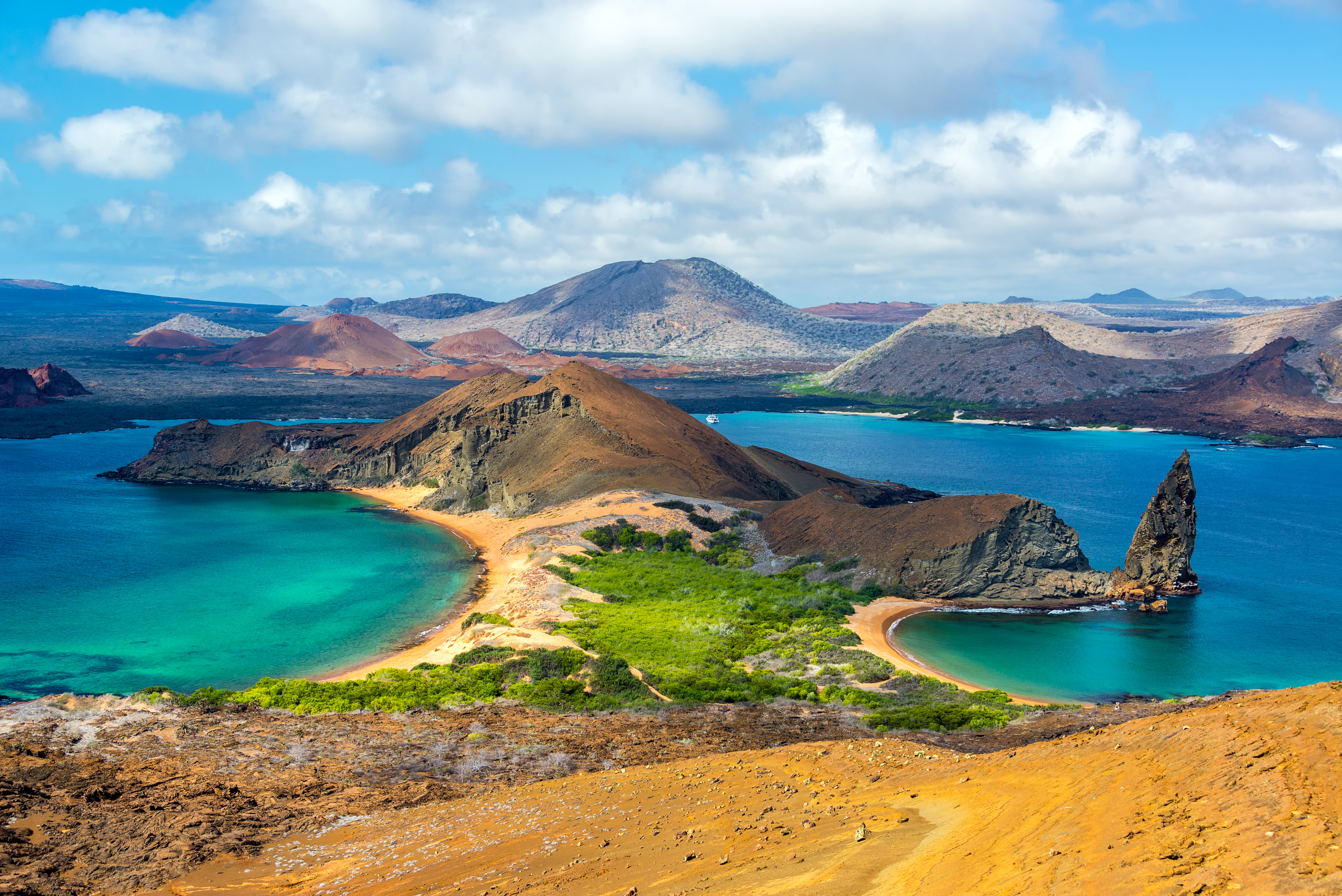
View of Bartolomé Island, where a parasitic cone is observed on the right side of the photograph. Notice the reddish colors from weathering of the volcanic rocks.
Current ripples
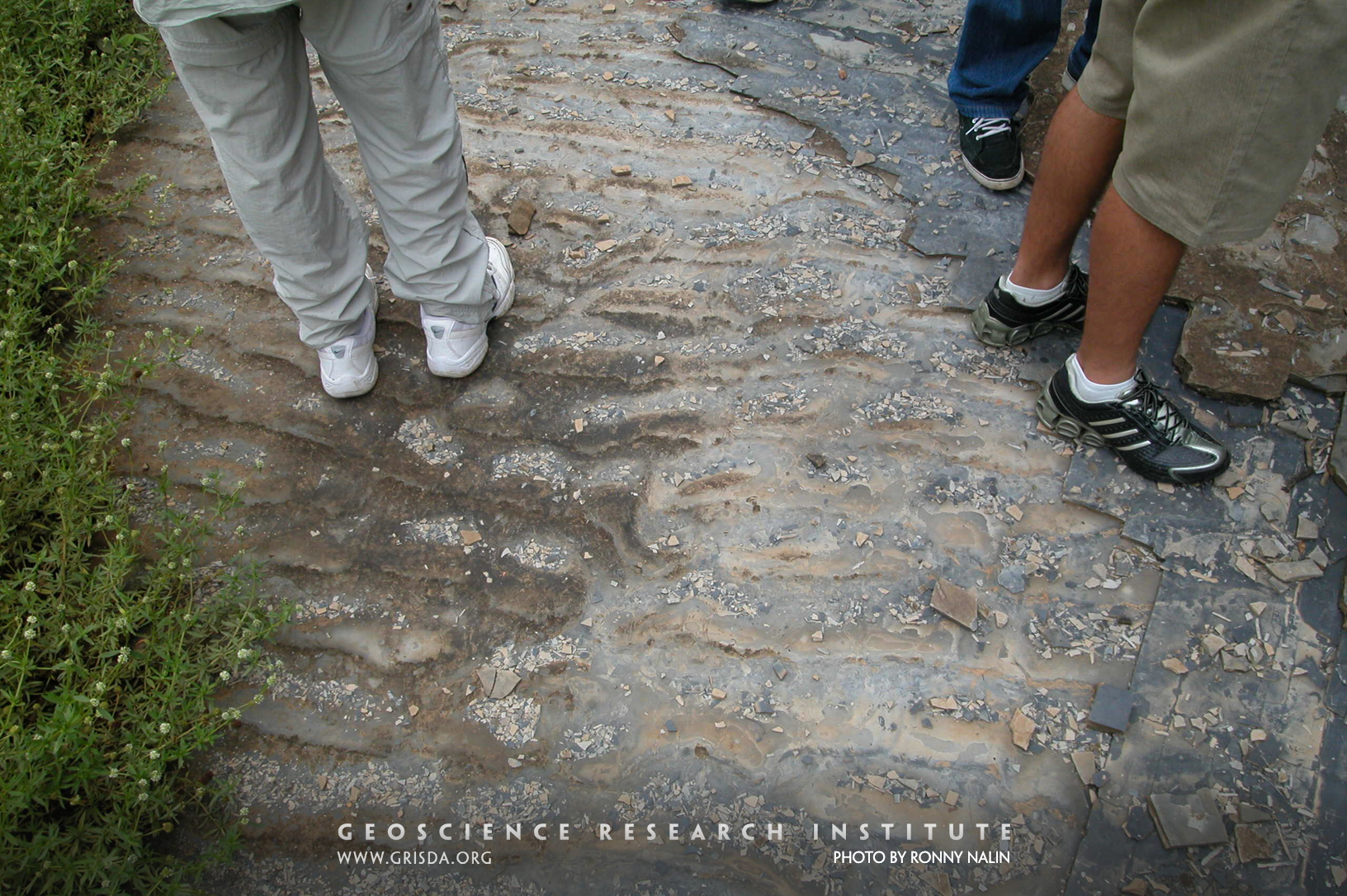
Walking on water? Not really, but these ripples, now petrified, formed under shallow water and are exposed on the floor of a quarry at the Varvito Park, Ito, Brazil. They are part of exposures of Permian sandstone from the Itararé Group. The ripple crests are mostly linear and the profile of the ripple is asymmetric, allowing to reconstruct the direction of flow (towards the viewer).
Dinosaur trackways
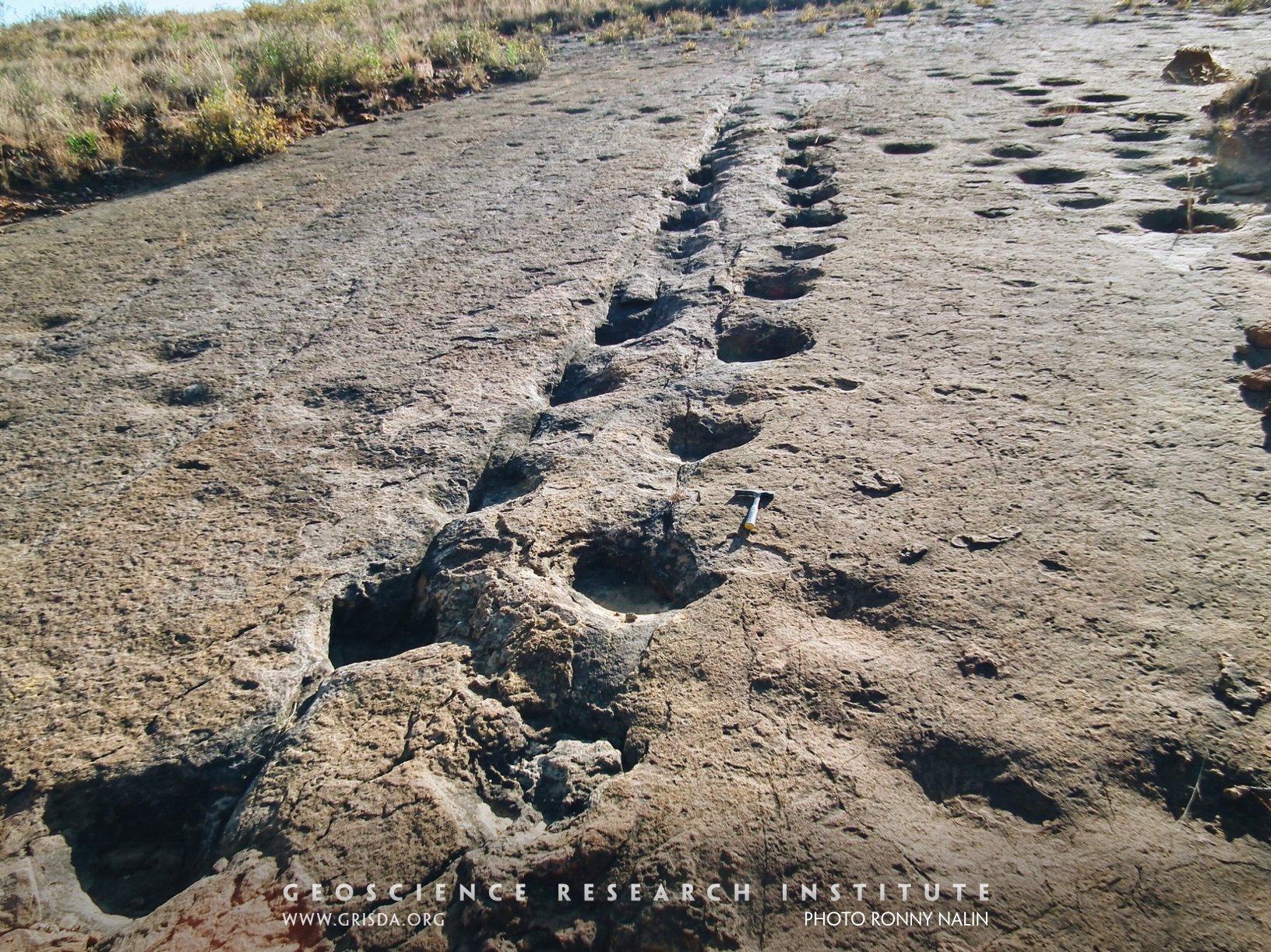
Dinosaur trackways, the main one thought to have been left by an ankylosaurid (hammer for scale). Cretaceous El Molino Fm., Torotoro, Bolivia. Well developed fossil trackways imply a special set of conditions, with sediment wet enough for footprints to remain impressed followed by prompt induration and burial.
Basalt Cliffs
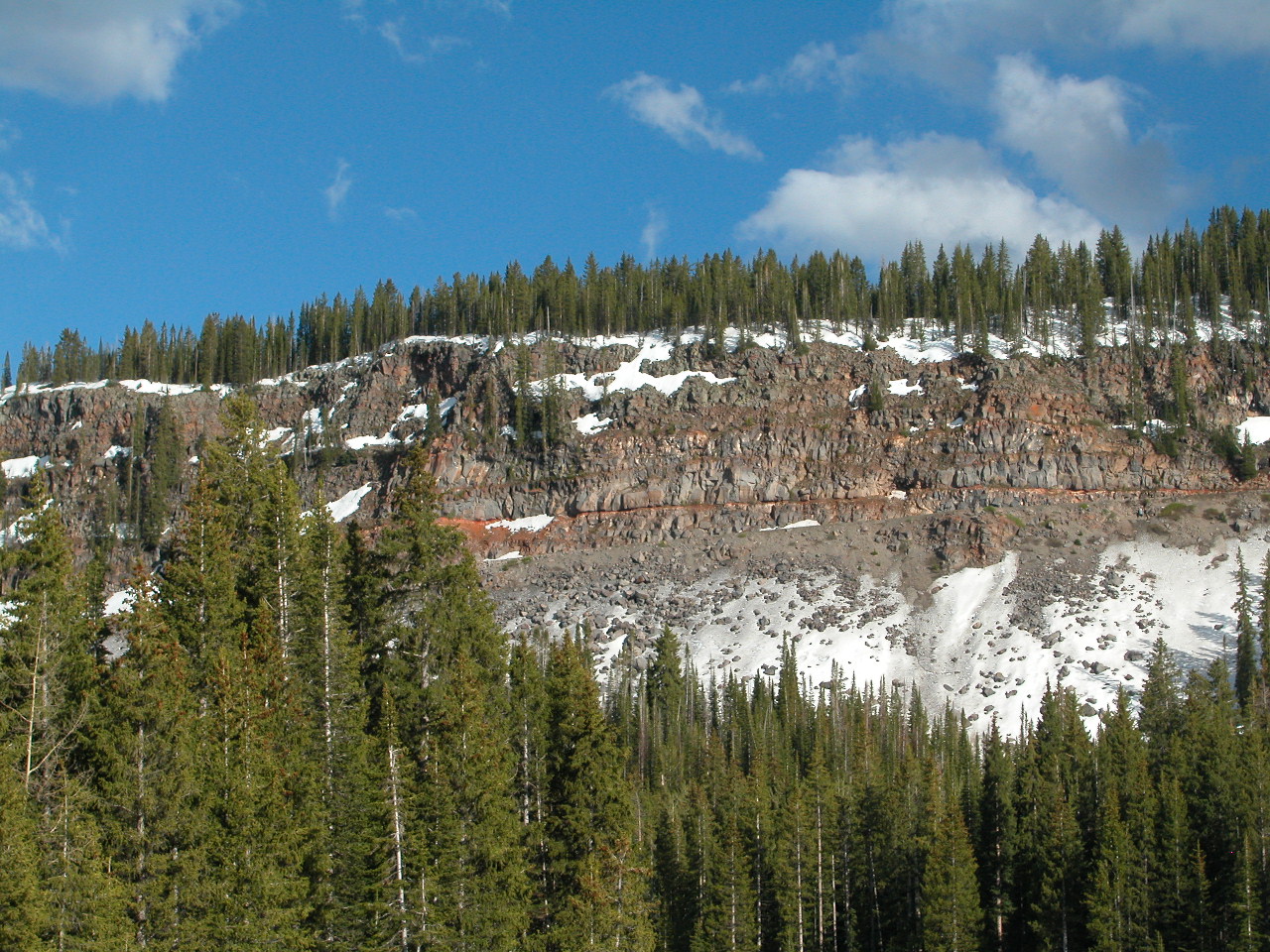
IGNEOUS - EXTRUSIVE: Basalt cliffs, Grand Mesa --- Tertiary basalt flowed down a valley and hardened. Later erosion formed these cliffs where the hard basalt caps the mesa. Grand Mesa is an inverted valley -- what was low has now become high.
Asymmetric ripples
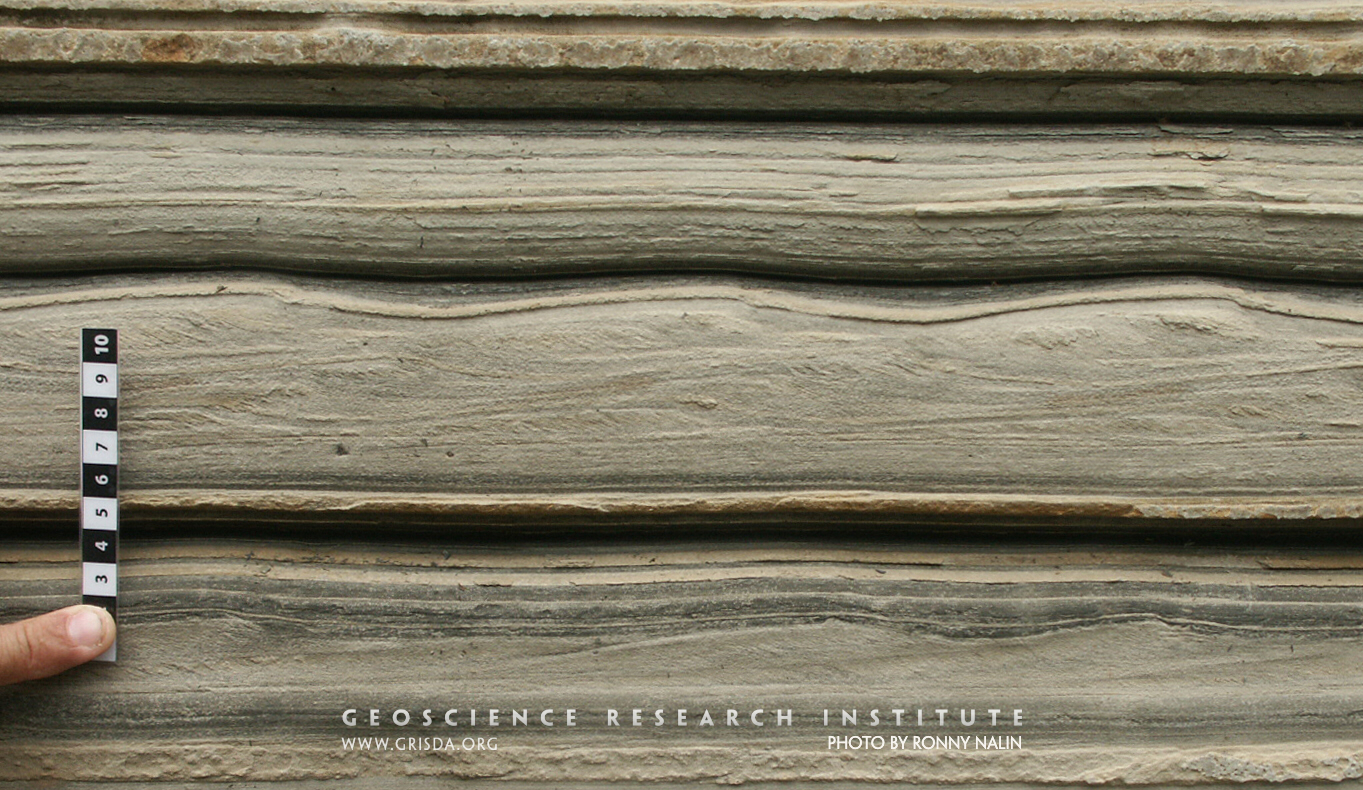
Current ripples are small asymmetric bedforms generated by movement of fine-grained sediment under unidirectional currents. The presence of climbing ripple lamination indicates rapid deposition from a sediment-laden flow. Upward transition from planar lamination to current ripple lamination is indicative of flow deceleration. Sequence of sedimentary structures (cf. Bouma sequence), grain size decrease, and cyclical repetition of bedding points to deposition from turbidity currents. Photo taken at…
Shellbed
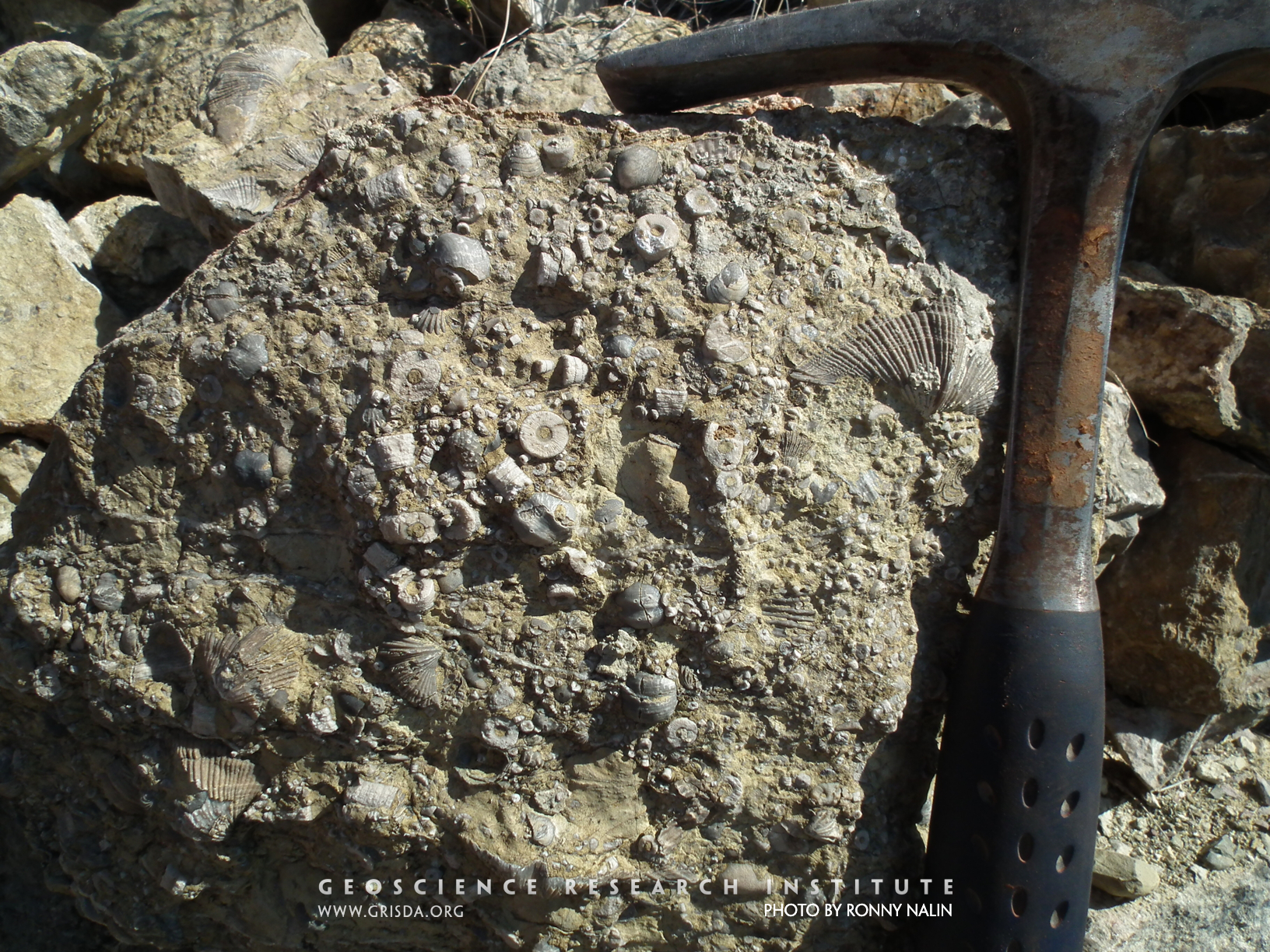
Accumulations of skeletal fragments of marine invertebrates are common in the geologic record and are important for reconstruction of depositional processes. This is a Permian example from the Copacabana Fm. of Bolivia, dominated by brachiopods (including Neospirifer condor) and crinoids.