





©Copyright 2018 GEOSCIENCE RESEARCH INSTITUTE
11060 Campus Street • Loma Linda, California 92350 • 909-558-4548

All Galleries
All Images














Load Casts at Pass Lueg
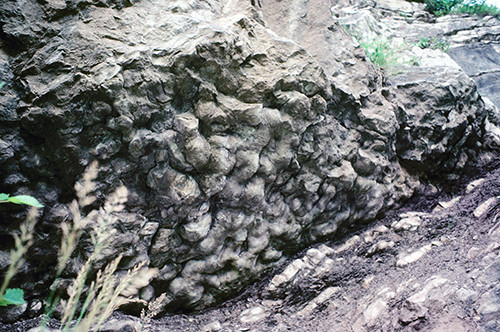
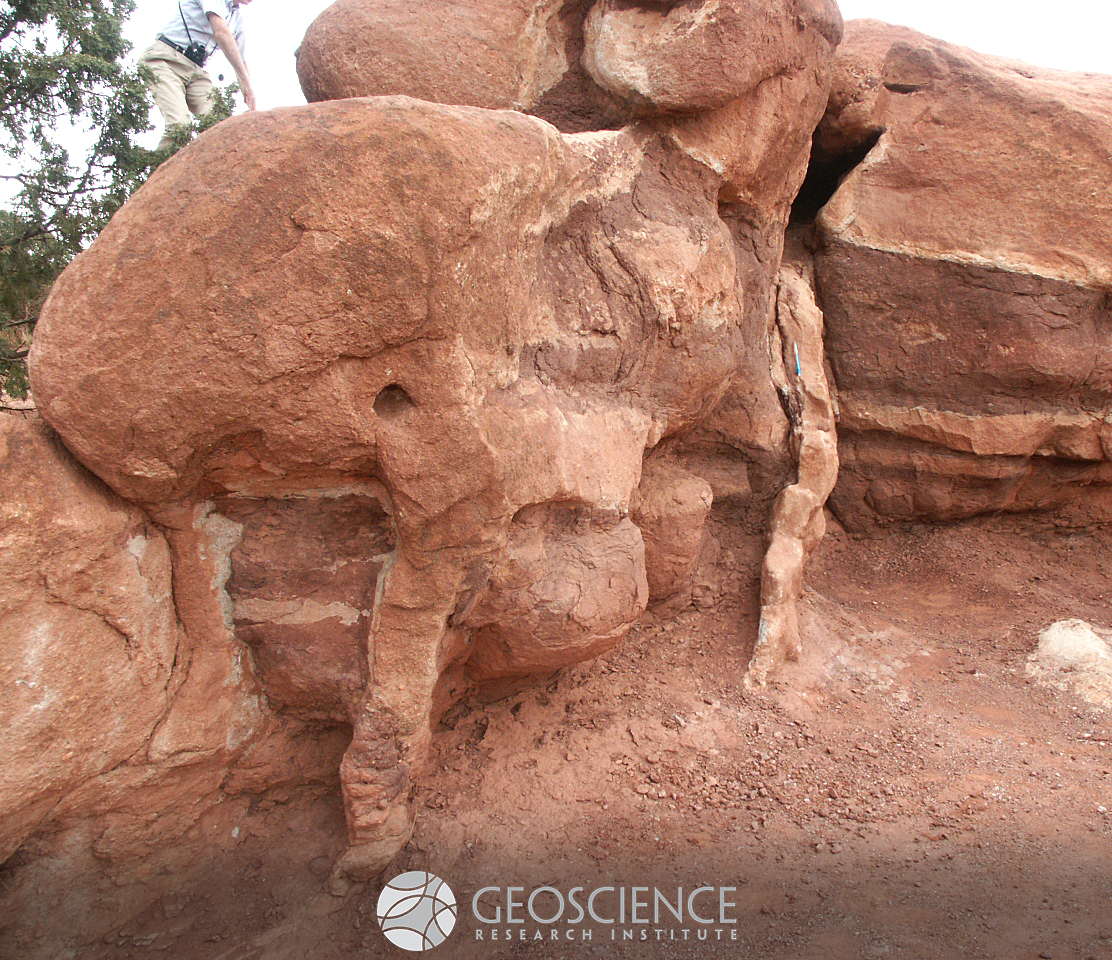
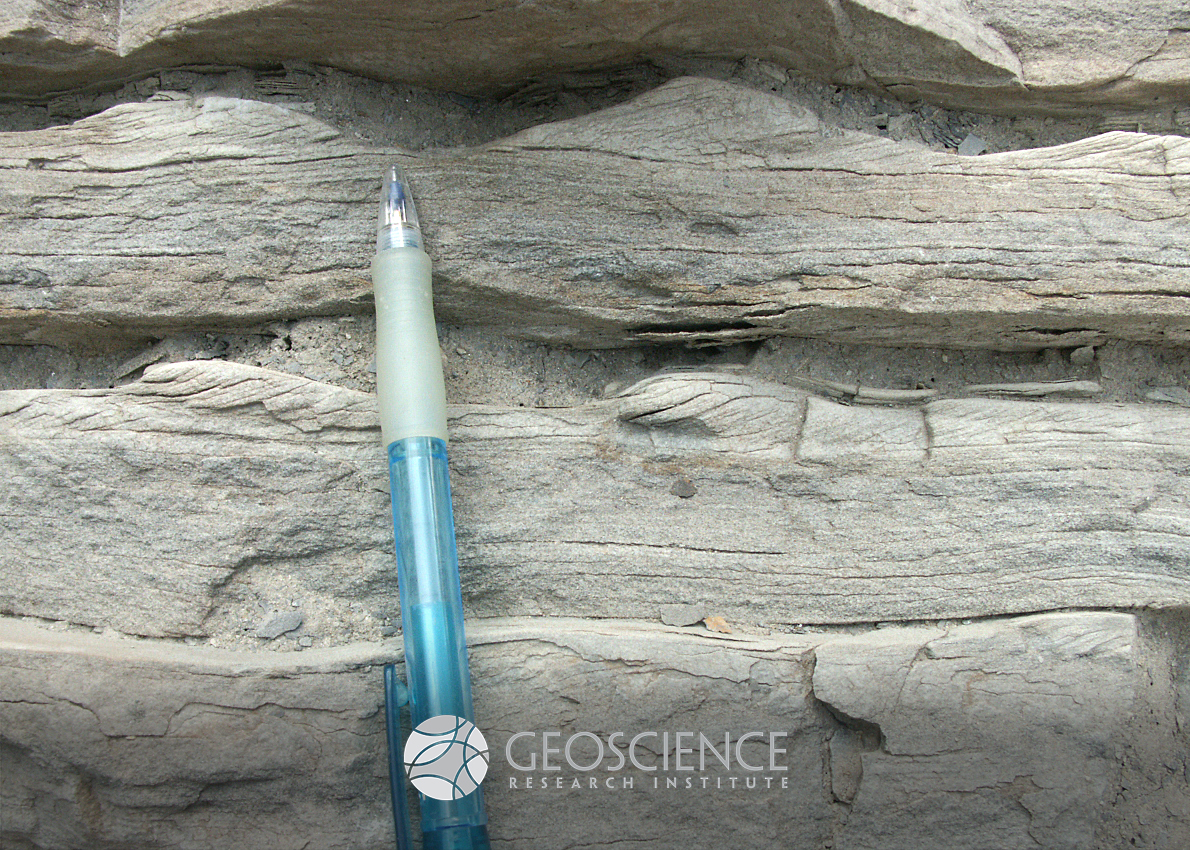
View looking up at the underside of a C unit in a Lofer cyclothem. The numerous bulbous forms which project downwards are called load casts. Load casts are often associated with turbidites. One bulb would be around 10-20 cm in diameter.
Cross-sets
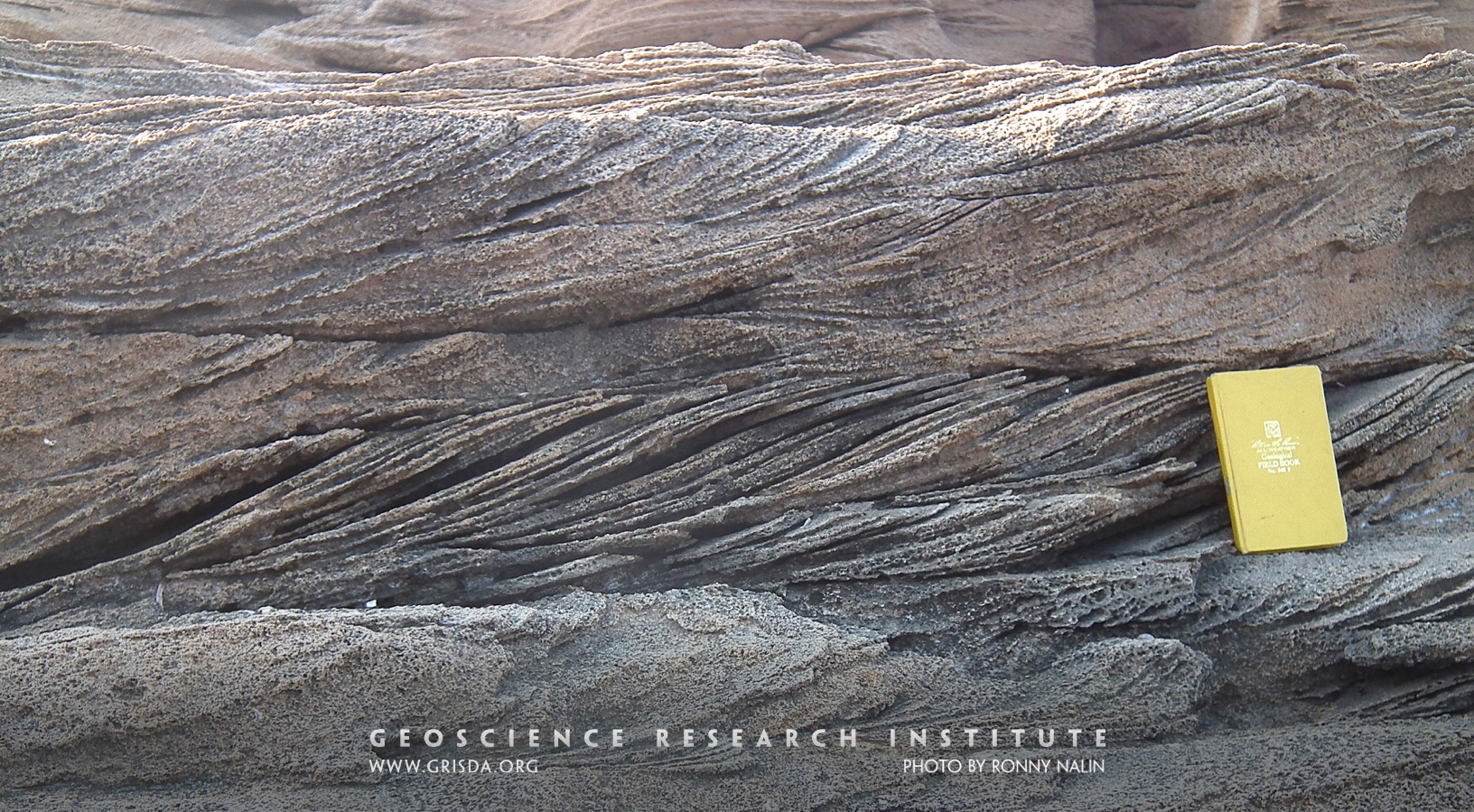
Sedimentary structures like these cross-sets form through the migration of sand dunes on the sea bottom under the action of a current. They can be used to infer flow directions and energy, and even aid in the interpretation of the general depositional system. Pleistocene calcarenites from Le Castella, Calabria, Italy.
Asymmetric ripples
Current ripples are small asymmetric bedforms generated by movement of fine-grained sediment under unidirectional currents. The presence of climbing ripple lamination indicates rapid deposition from a sediment-laden flow. Upward transition from planar lamination to current ripple lamination is indicative of flow deceleration. Sequence of sedimentary structures (cf. Bouma sequence), grain size decrease, and cyclical repetition of bedding points to deposition from turbidity currents. Photo taken at…
Climbing ripples
When a fluid laden with sediment rapidly drops some of its load as it is flowing, a sedimentary structure named "climbing ripple lamination" can form. It is characterized by superimposed ripple crests (or ripple cross-sets) migrating in the direction of flow. Photo taken at the Varvito Park, Ito, Brazil, with exposures of Permian strata from the Itararé Group. Scale in cm.
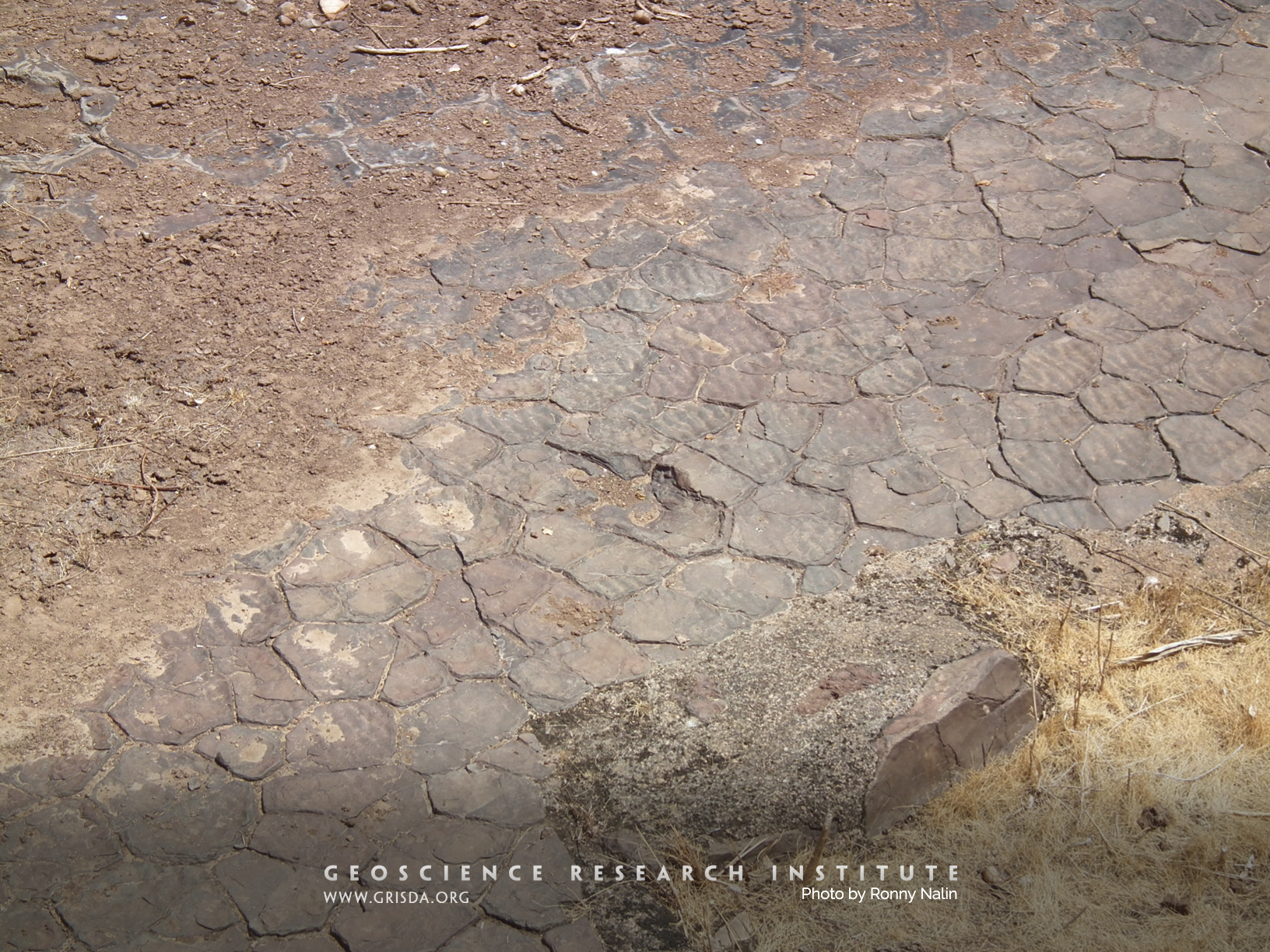
Mud cracks and ripples
On the surface of this Cretaceous mudstone bed from the Sousa Basin of Brazil, one can see both polygonal cracks (indicative of subaerial exposure) and wave ripples (indicative of a thin cover of water).
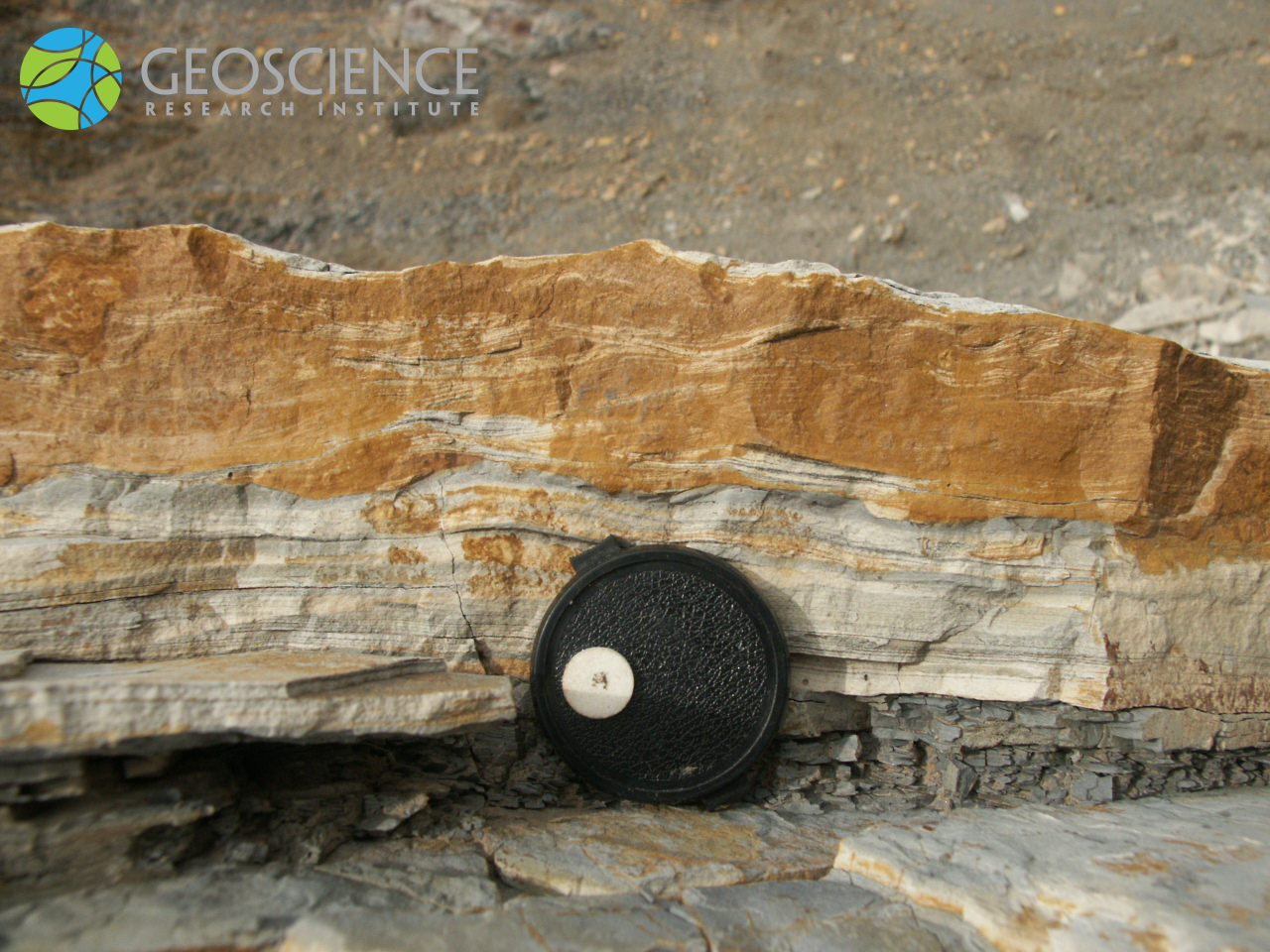
Ripple cross-lamination
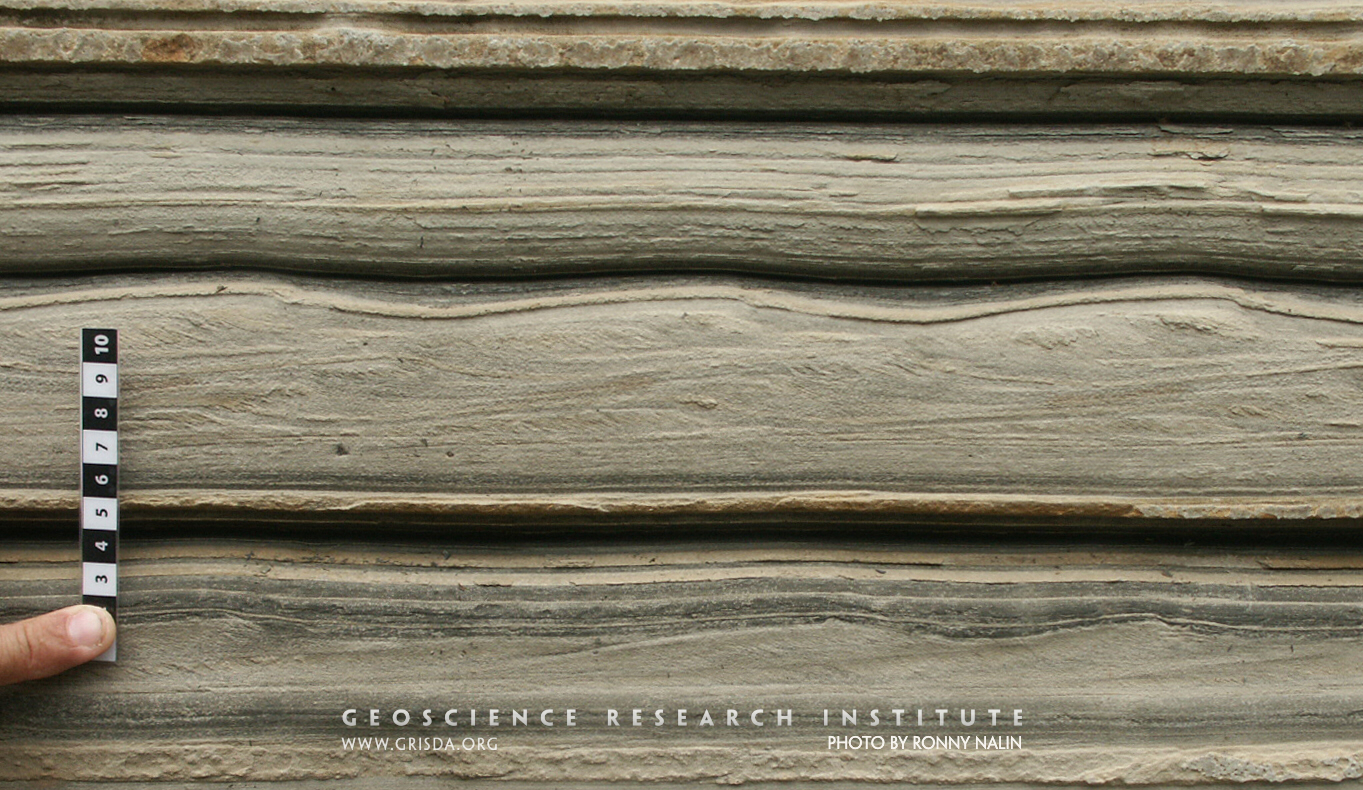
Cross-sectional view of a calcareous mudstone to fine-sandstone bed, showing planar lamination passing upward to ripple-cross lamination. The symmetric shape of the ripples, the presence of foreset laminae dipping in opposite directions, and some lamina draping suggest that the cross-lamination was likely generated by wave-ripples. The sequence from planar lamination to ripple cross-lamination can be indicative of decreasing velocity of bottom currents (or changes in sediment grainsize and supply…
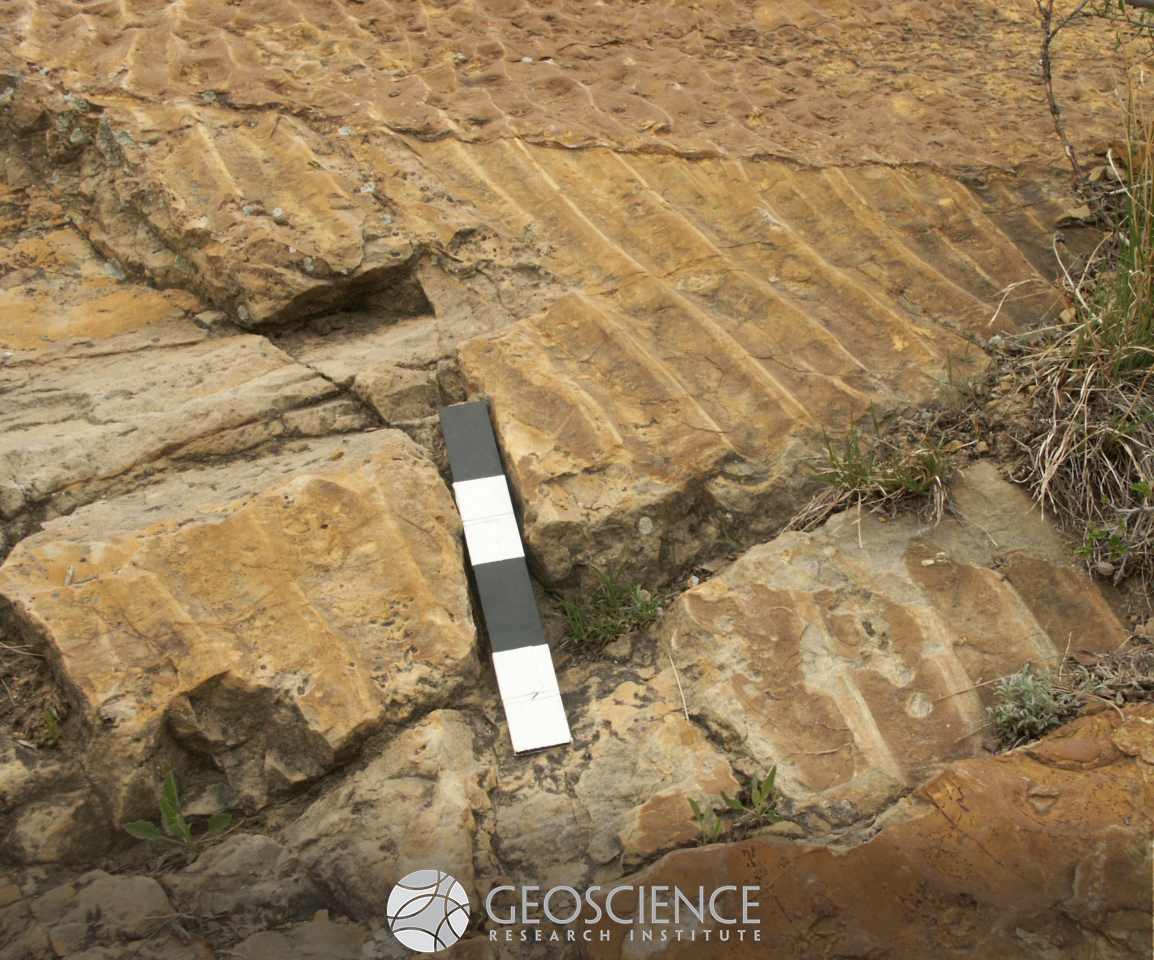
Wave ripples
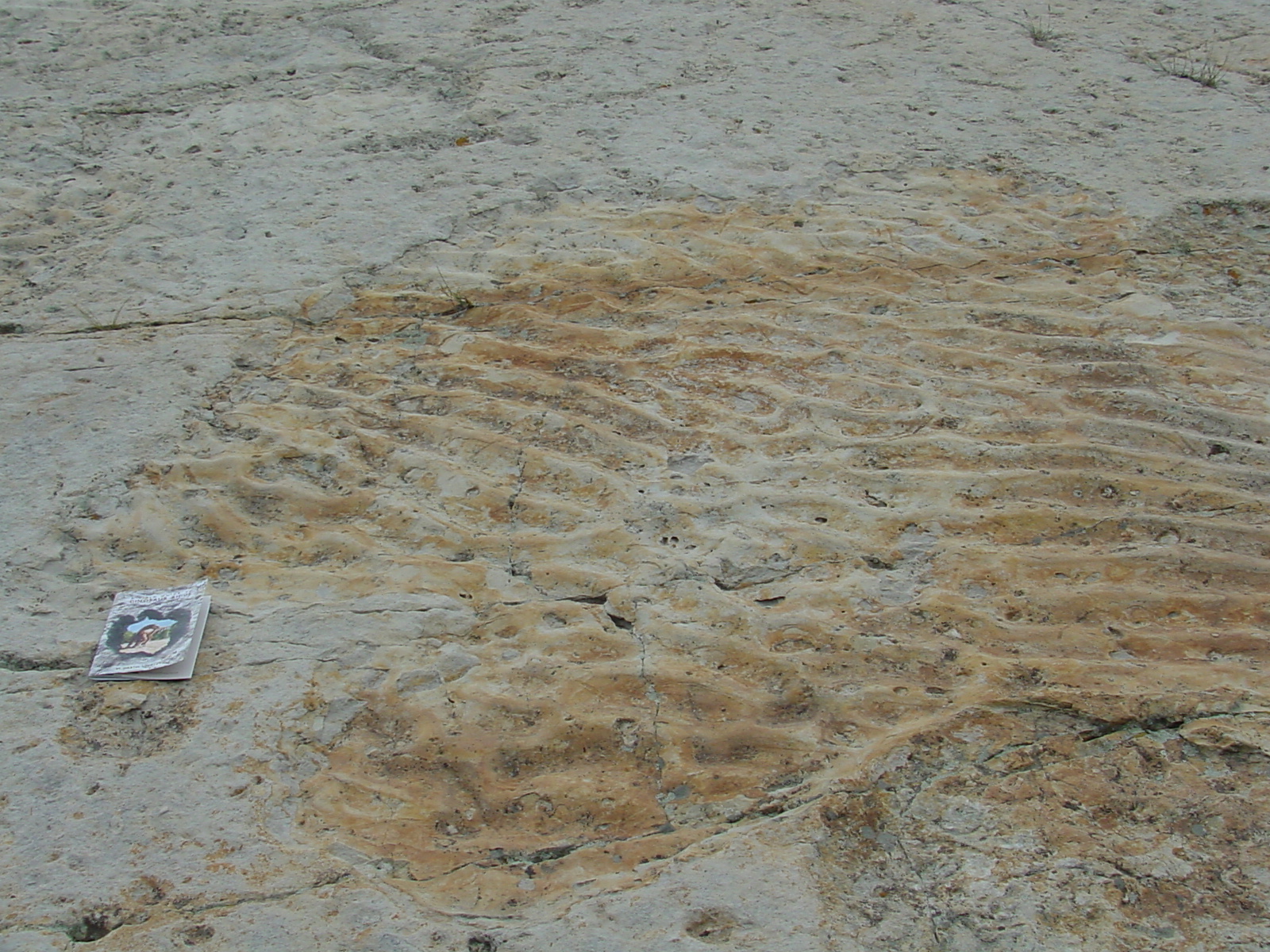
Wave ripples in surface view (scale is 40 cm long). The crests are straight and regularly spaced. However, the overlying thin layer (top of the picture) shows a more disorganized pattern, partly reflecting the underlying crest orientation but probably indicating changing wave conditions. The preservation of these bedforms (that typically form in shallow water) can help to reconstruct the environment of deposition of sedimentary layers. Outcrop of the Cretaceous Dakota Sandstone, exposed along Dinosaur…
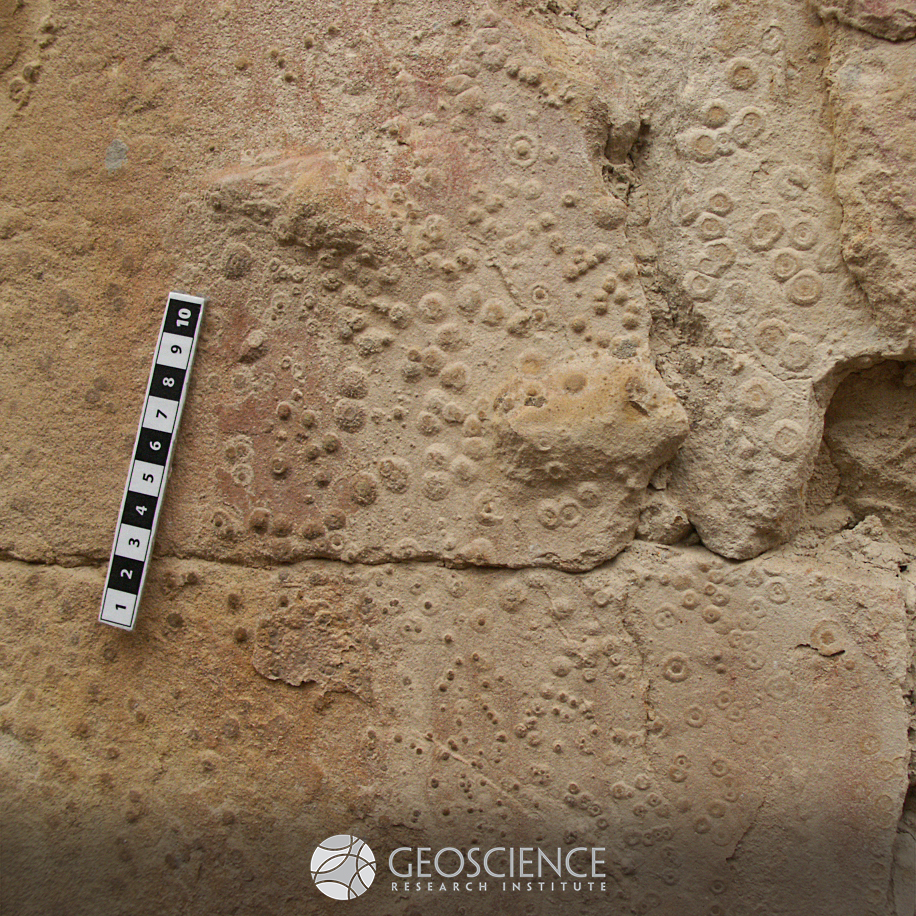
Raindrop impressions?
These circular impressions, exposed on the underside surface of a layer of fine sandstone, have been interpreted as raindrop impressions. Sedimentologists have cautioned that similar impressions can form in muddy substrates by the ascent of bubbles through the sediment, or by interaction with air bubbles trapped in the overlying fluid. Scale in cm. Outcrop of the Maastrichtian Laramie Fm., exposed along the Triceratops trail Golden, CO, US.
CountyRd301
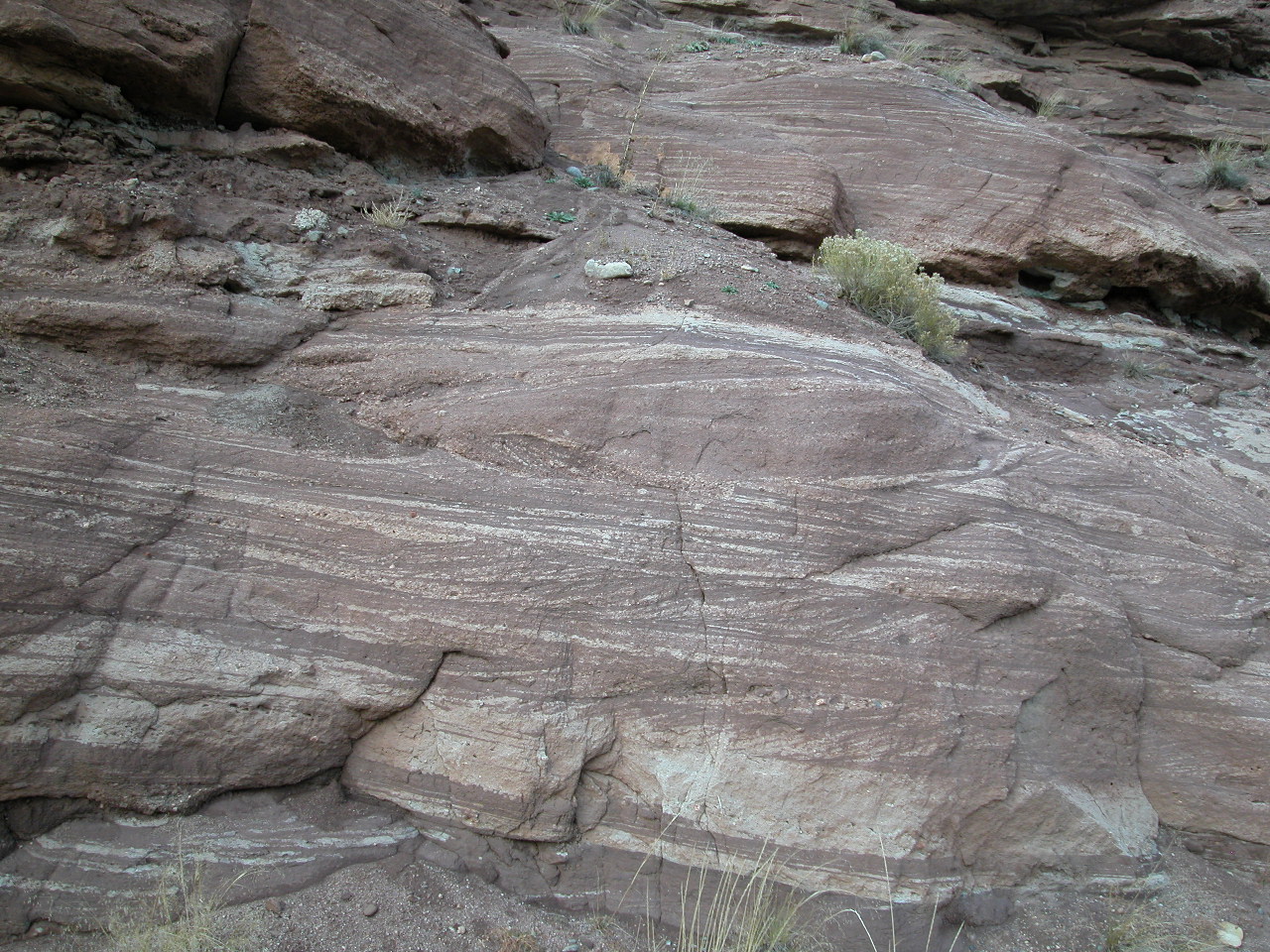
Cross-bedding, Co. Rd. 301 near McCoy --- About one third of the way up the picture are beds at an angle to the main layers.
Clastic dykes
Clastic dykes are sedimentary features consisting of seams of sediment truncating the surrounding host rock or deposit. These dykes can form through different processes. For example, fluidized sand can be injected through fractures, cutting through underlying and overlying deposits. Alternatively, pre-existing open cracks can be passively infilled by accumulation of a different kind of sediment. This picture shows three sub-vertical sandstone dykes, with parallel orientation, cutting through sub-horizontal…
Hyperpycnite
You may have heard of turbidites. This type of deposit forms from pulse-like flows, where sediment travels rapidly down a slope because of a gravity contrast with the surrounding fluid. Turbidites typically show an upward decrease in gain size and a vertical succession of structures (massive/planar laminated/ripple cross-laminated) indicative of decreasing energy of the flow. There are, however, some deposits that differ from turbidites by showing a symmetric internal organization, with increasing…
Sole marks
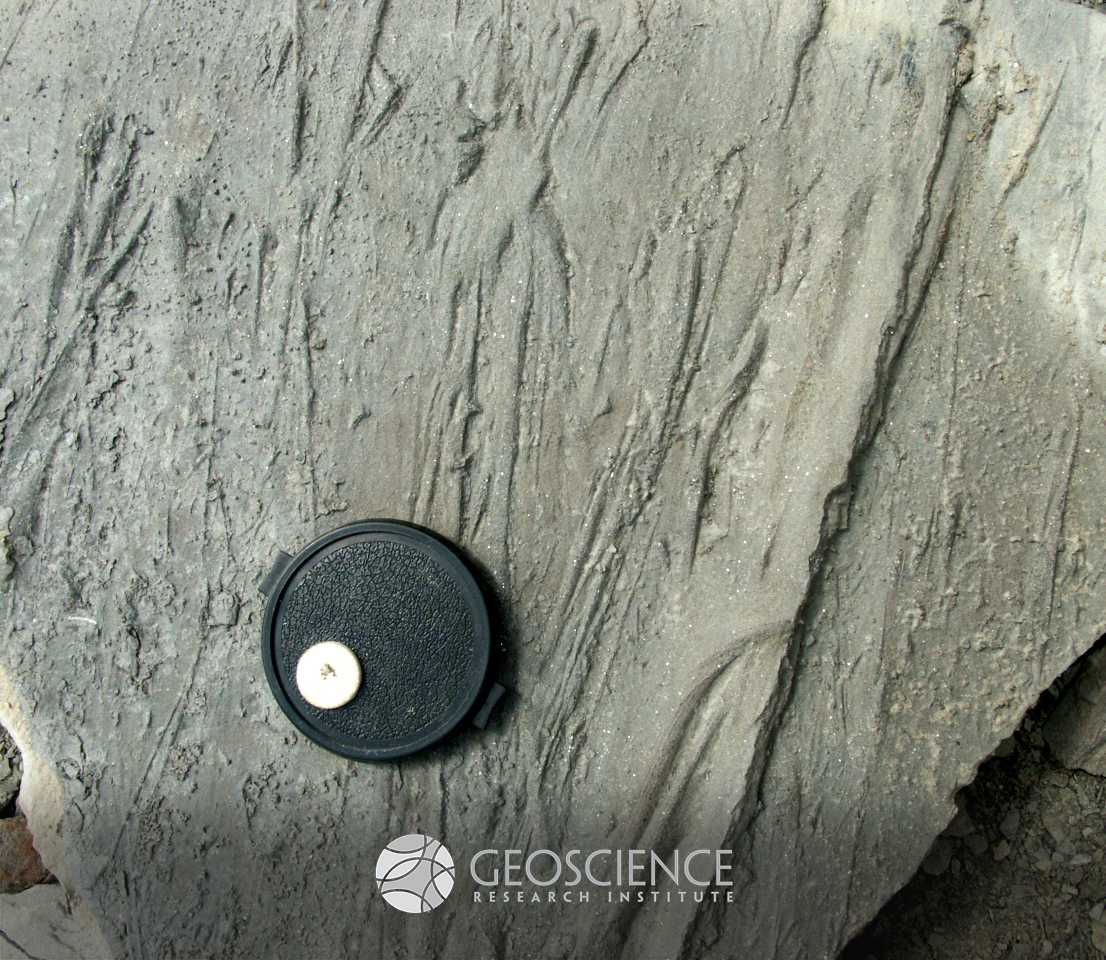
Sole marks are sedimentary structures found at the base of beds, best seen in surface view. They are typically preserved as casts of incisions/depressions created at the top of the underlying bed and filled with sediment of the overlying bed, often with a grainsize contrast between the beds (sand over mud). Sole marks are common in deposits of sediment gravity flows (like turbidites), where turbulence or bedload transport in an energetic flow can erode or leave marks on the underlying substrate in…
Bedforms
Bedforms are morphological patterns that form at the interface of flowing fluid and a bed of moving sediment. Typical examples include dunes and ripples. Lateral migration of bedforms can generate sedimentary structures, like ripple cross-lamination or cross-stratification. Geology students often mix up the concept of bedform and sedimentary structure: ripples are bedforms (not sedimentary structures) and ripple cross-lamination is a sedimentary structure (not a bedform). Sometimes, like in this…
Normal grading
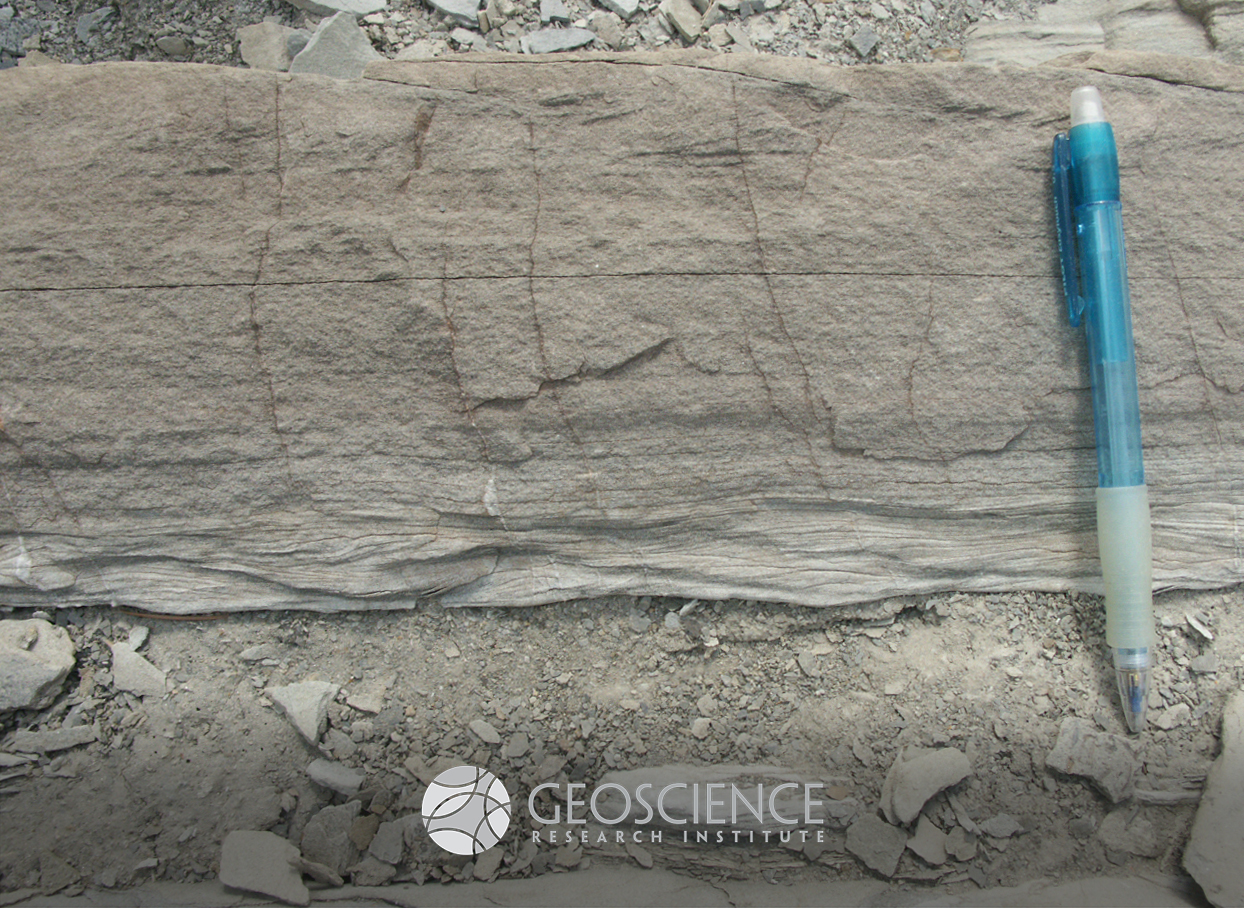
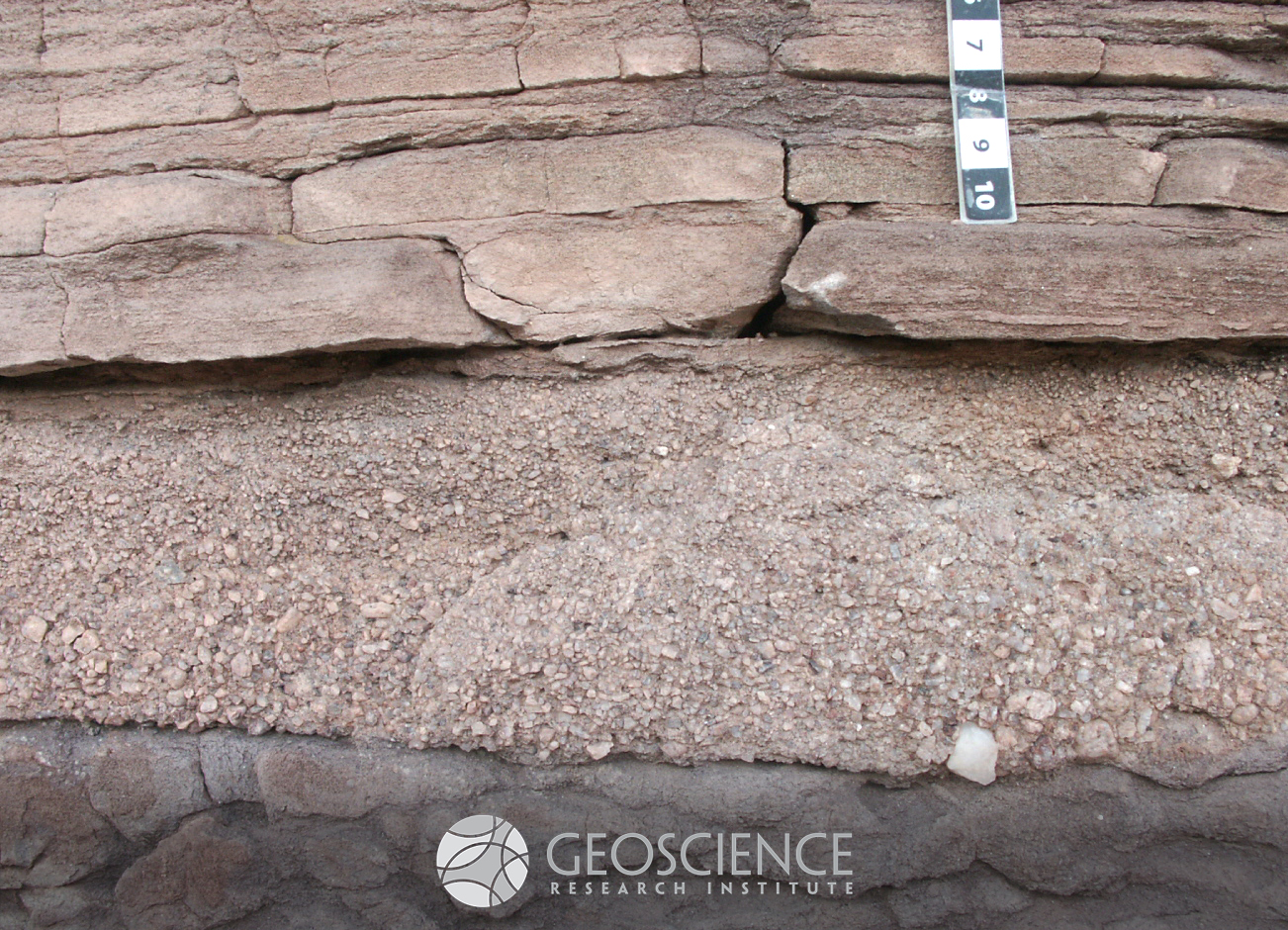
Normal grading is a type of arrangement of particles in a sedimentary bed, where coarser grains lie at the bottom and finer grains at the top, resulting in a general fining-upward size distribution. Several physical processes can produce normal grading, but most commonly it is indicative of a decrease in the energy of the flow transporting the particles. The bed in the lower half of this picture shows normal grading from microconglomerate angular pebbles to granules to coarse sand at the top. Pennsylvanian…