








©Copyright 2018 GEOSCIENCE RESEARCH INSTITUTE
11060 Campus Street • Loma Linda, California 92350 • 909-558-4548

All Galleries
All Images











Climbing ripples
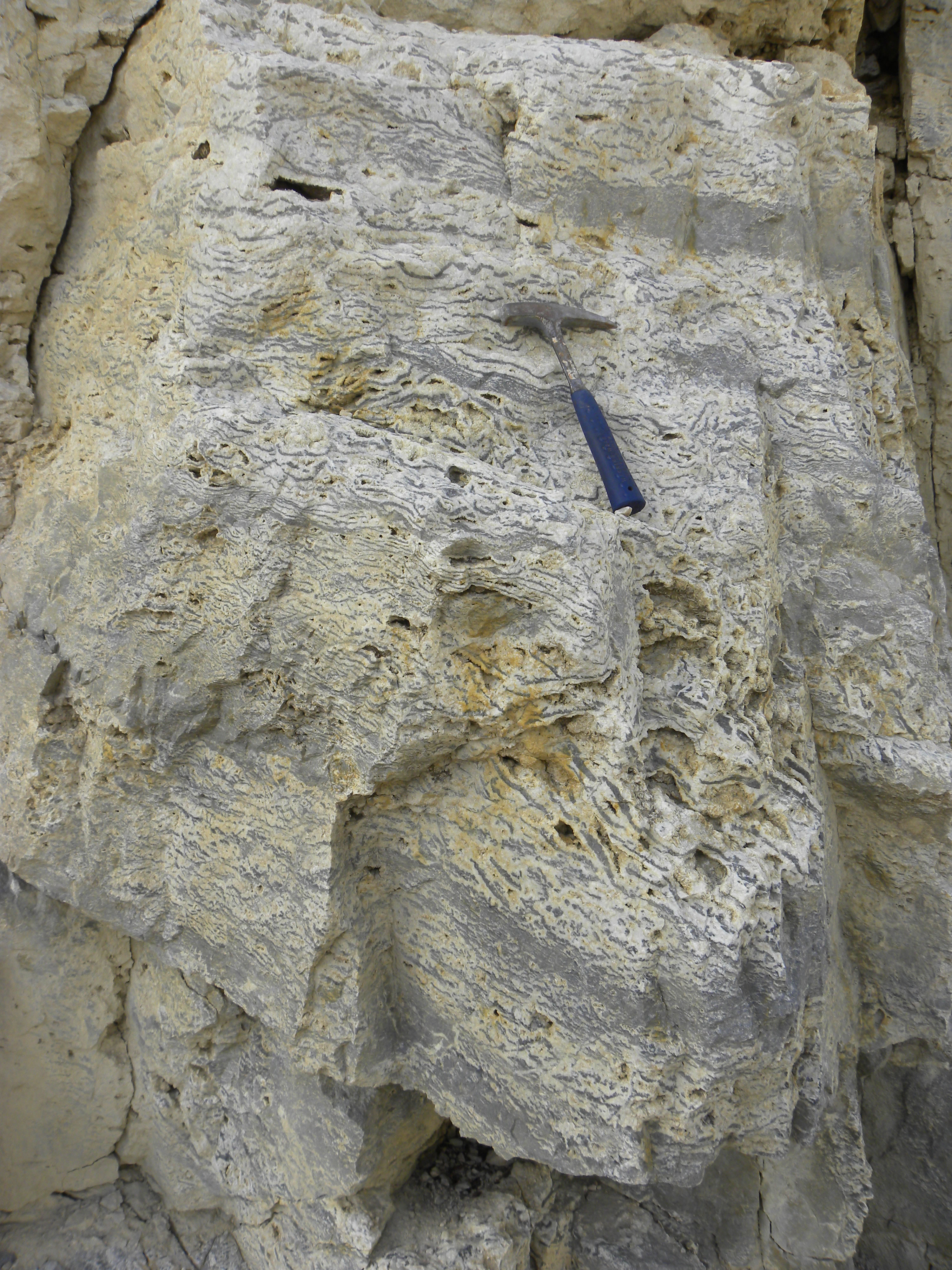
When a fluid laden with sediment rapidly drops some of its load as it is flowing, a sedimentary structure named "climbing ripple lamination" can form. It is characterized by superimposed ripple crests (or ripple cross-sets) migrating in the direction of flow. Photo taken at the Varvito Park, Ito, Brazil, with exposures of Permian strata from the Itararé Group. Scale in cm.
Bioturbation
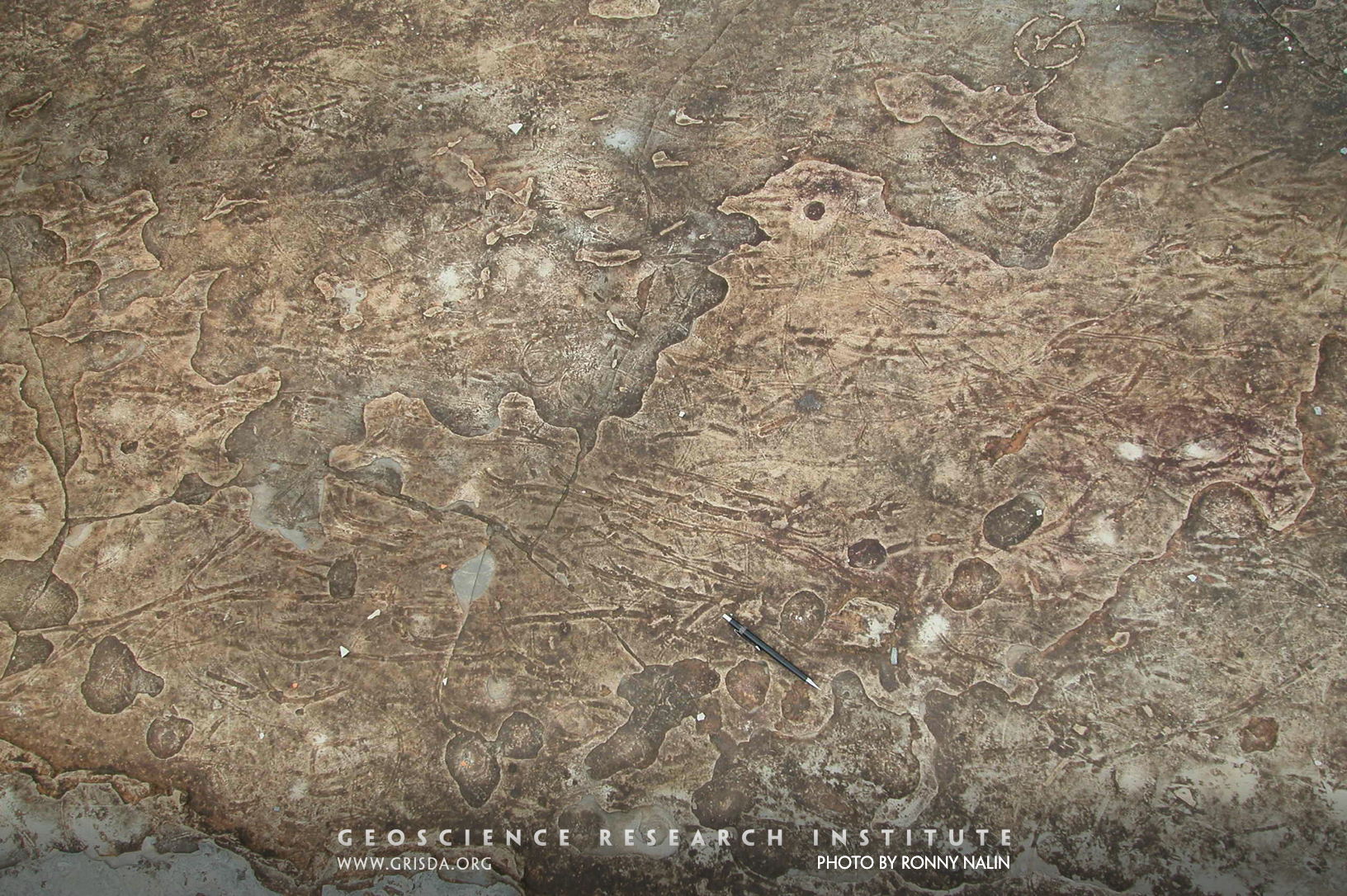
The distinctive linear patterns observed on the surface of this sandstone bed are trace fossils produced by crustaceans as they were moving in the originally loose sediment. The technical term for this type of biogenic structures is bioturbation. Photo taken on a sandstone slab at the Varvito Park, Ito, Brazil, with exposures of Permian strata from the Itararé Group.
White Ranch Andalusite
METAMORPHIC: Andalusite crystals, White Ranch Park, northwest of Golden --- These large metamorphic crystals (some a foot long) formed deep in the earth under high pressures and temperatures.
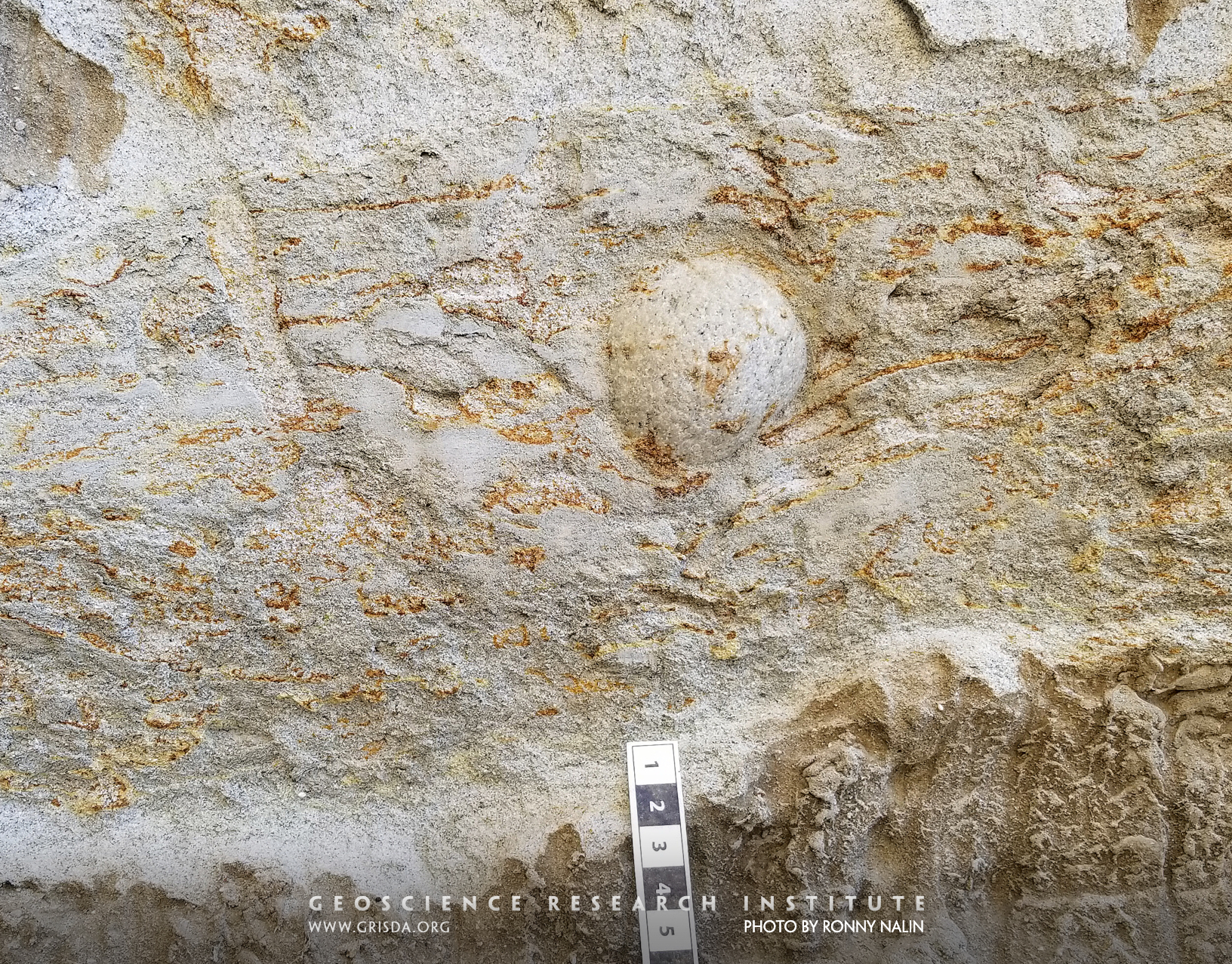
Dropstone
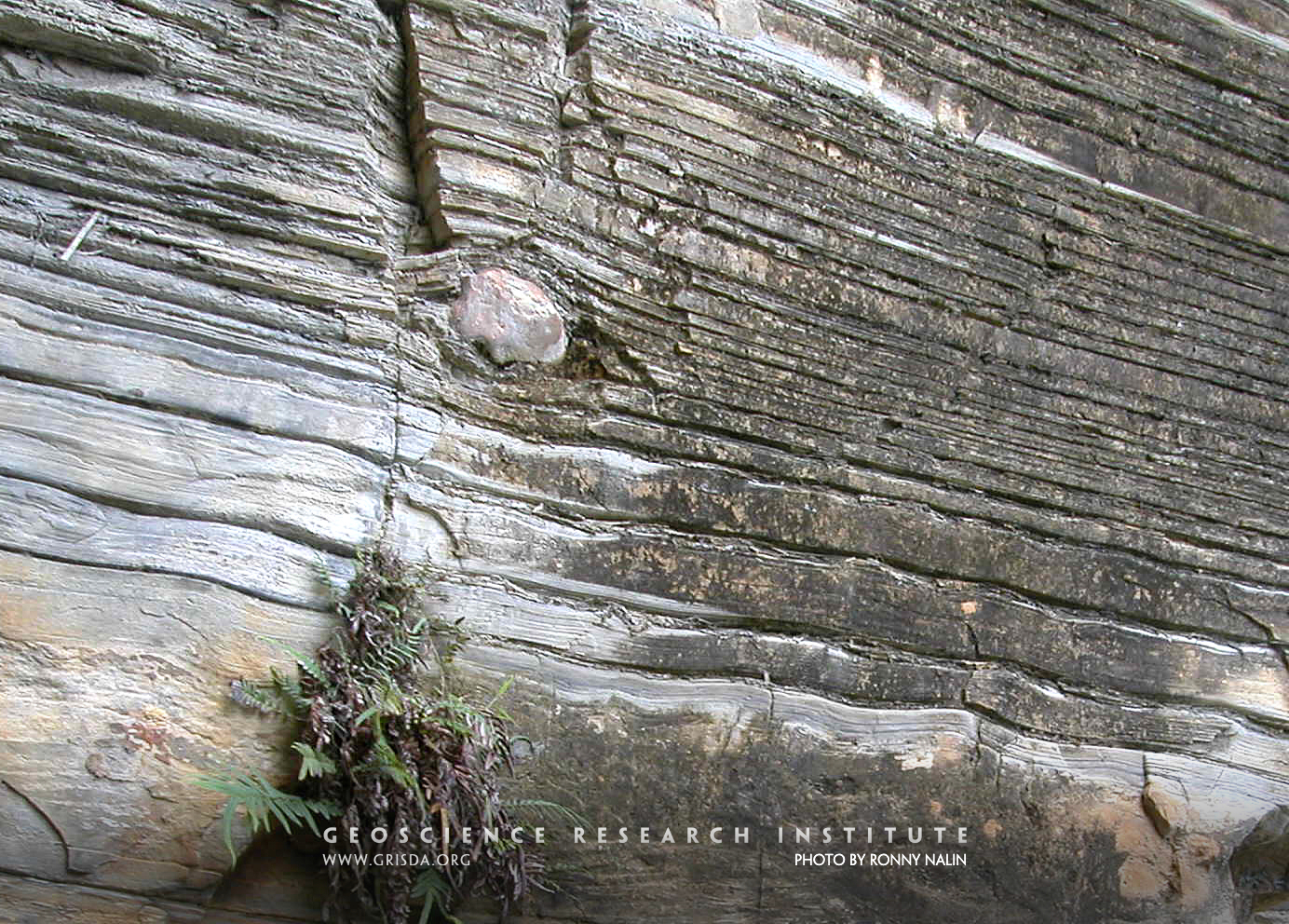
Dropstones are outsized rock clasts much larger than the average grain size of the surrounding sediment. Rather than being laterally transported by a flow, they show evidence (in the form of displacement of underlying lamination) of vertical sinking onto the substrate. The dropstone in the picture has a diameter of about 20 cm and is included in turbiditic deposits (Permian Itararé Group, Itu, Brazil).
Mesosaurus
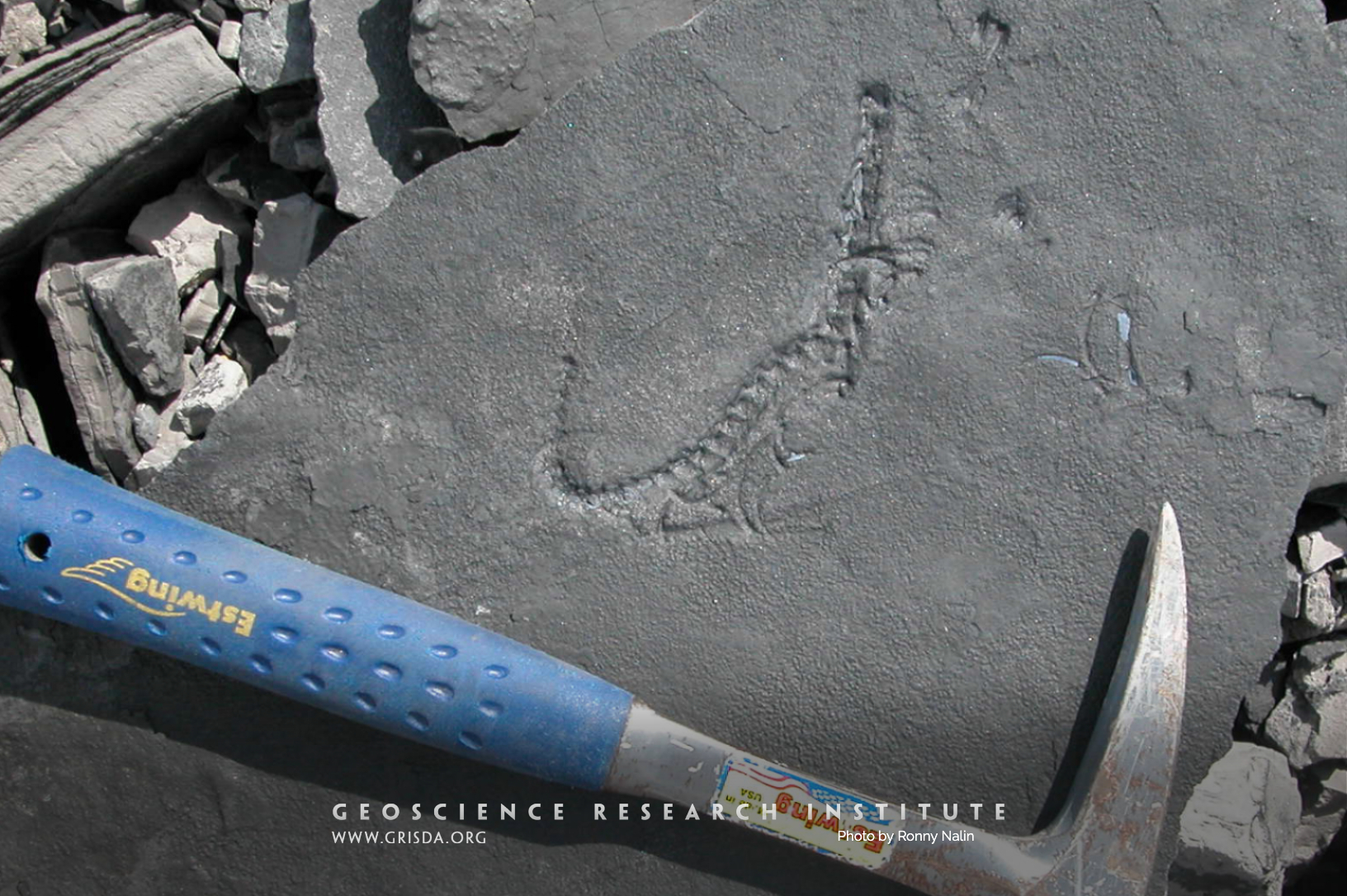
Mesosaurus is an extinct, small-sized, Permian marine reptile. It is very important for the history of geology because its disjunct distribution (eastern South America and western Africa) was used to argue in favor of continental drift (an early version of plate tectonics). These impressions of a vertebral column and a few ribs were photographed at the Cruziero Quarry, where strata of the Irati Formation of the Paraná Basin of Brazil are exposed.
Rt 34
METAMORPHIC: Gneiss, Big Thompson Canyon --- In this high-grade metamorphic rock, the lighter colored layers melted and recrystallized between the darker colored layers.
Outsized clast
Outsized clasts are isolated rock fragments encased in much finer sediment and their mode of transport and deposition is therefore puzzling. One way to explain their occurrence is the "dropstone" model (vertical sinking from floating rafts or icebergs). However, gravity flows can also carry outsized clasts in sand-laden waters. This picture shows a well-rounded granitic outsized pebble encased in bioturbated sandy turbidites of a submarine channel complex of the Mio-Pliocene Capistrano Formation…
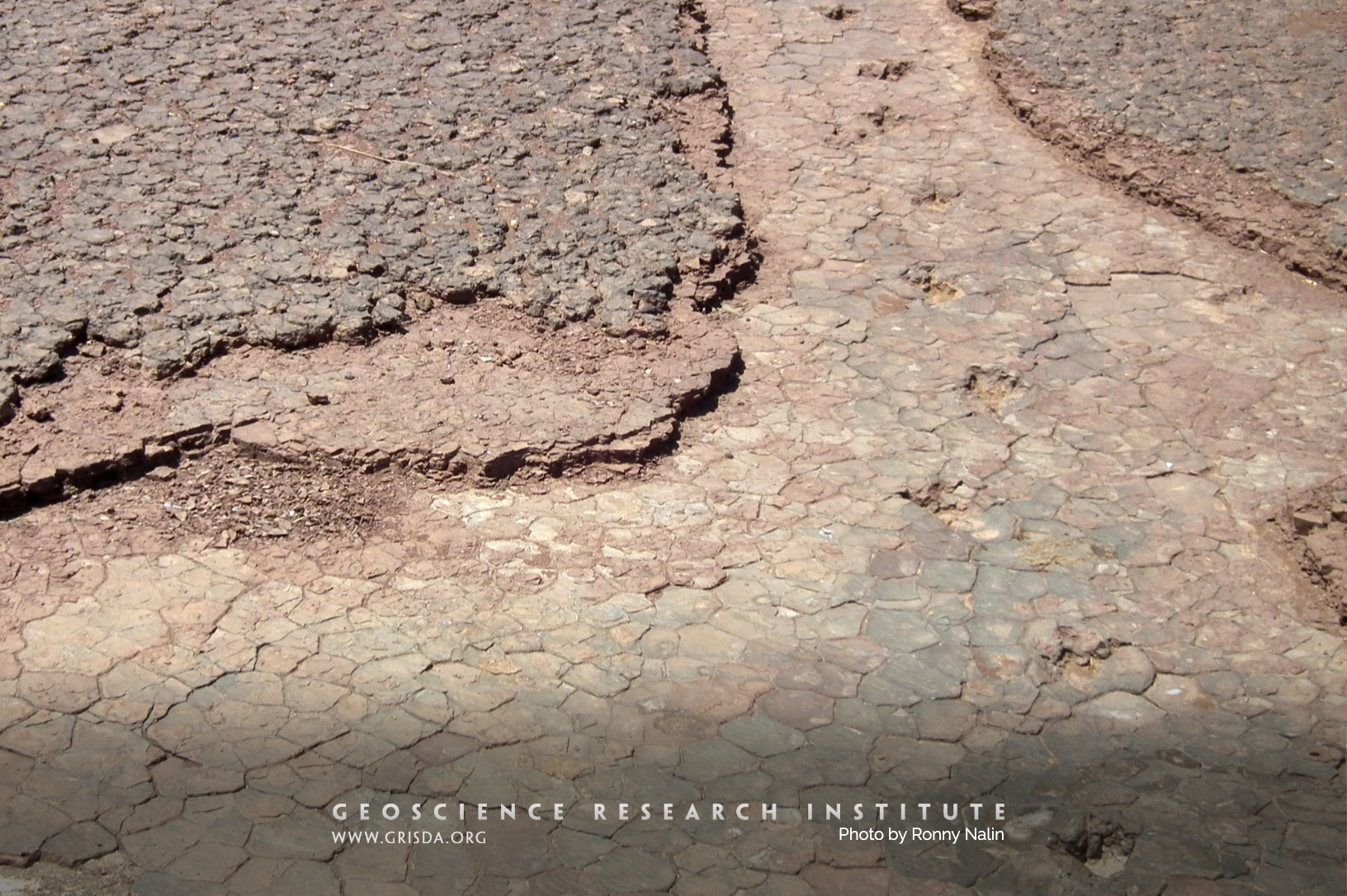
Carnosaur trackway
Walking on mudcracks. A dinosaur left this track in muddy sediment that shrank, forming polygons upon desiccation. Trackway exposed in Cretaceous layers from the Sousa Basin of Brazil, at the Vales Dos Dinossauros geosite.
Garden Of Gods Red Lyons
UPLIFTED: Garden of the Gods, Colorado Springs --- Layers of Lyons Formation sandstone were tilted vertically when the Rocky Mountains were uplifted.
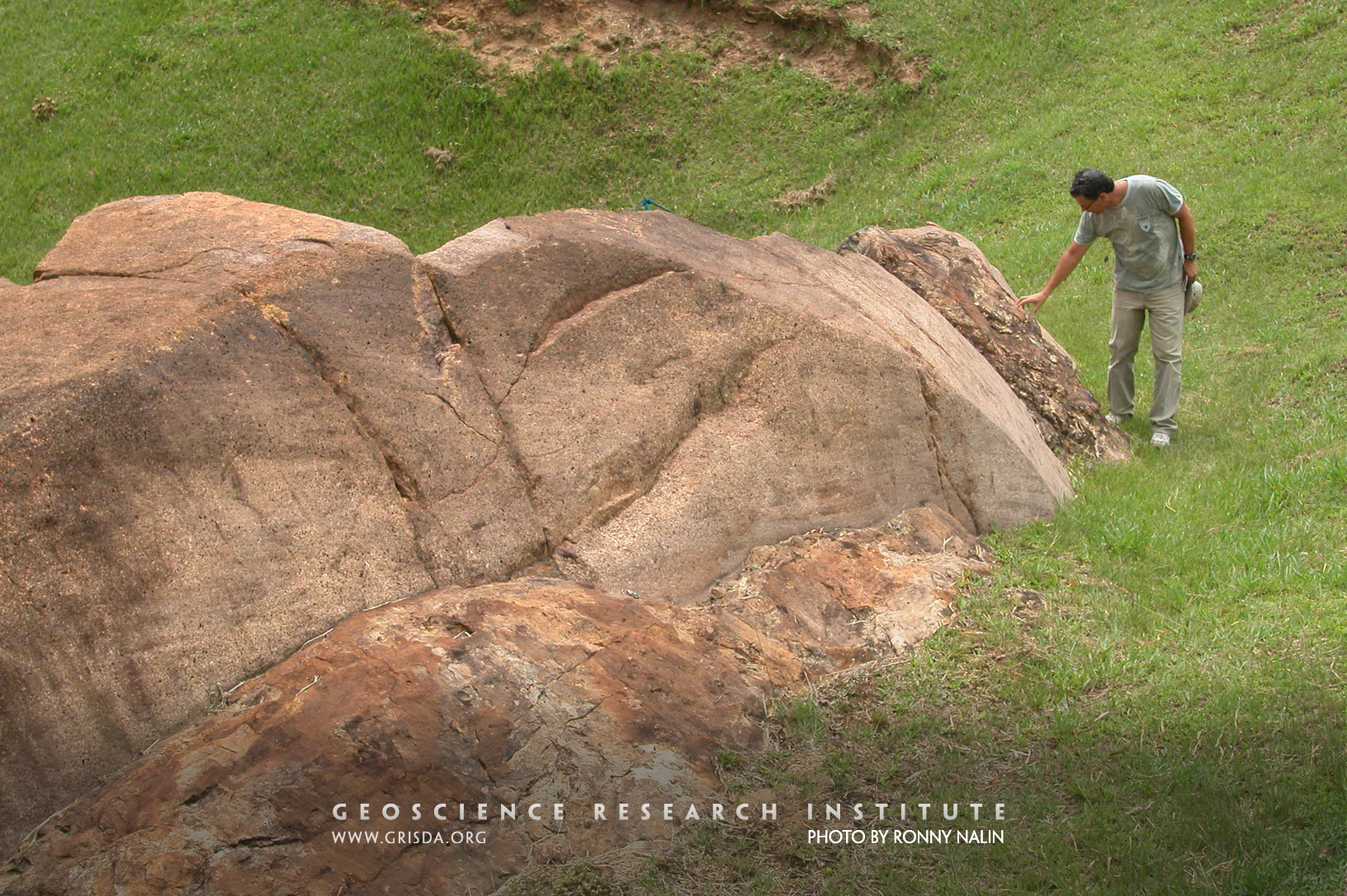
Bedrock abrasion
Glaciers can levigate the bedrock over which they flow, smoothing irregularities into a glaciogenic landform called "roche moutonnée." This example from the rock record (Paranà Basin, Brazil) is interpreted as evidence for Permian glacial activity. The bedrock is granitic and it is overlain by patches of diamictite (reddish deposit). Several sedimentary processes can generate bedrock abrasion and a glaciogenic origin for features in the rock record should be presented with caution and based on a…
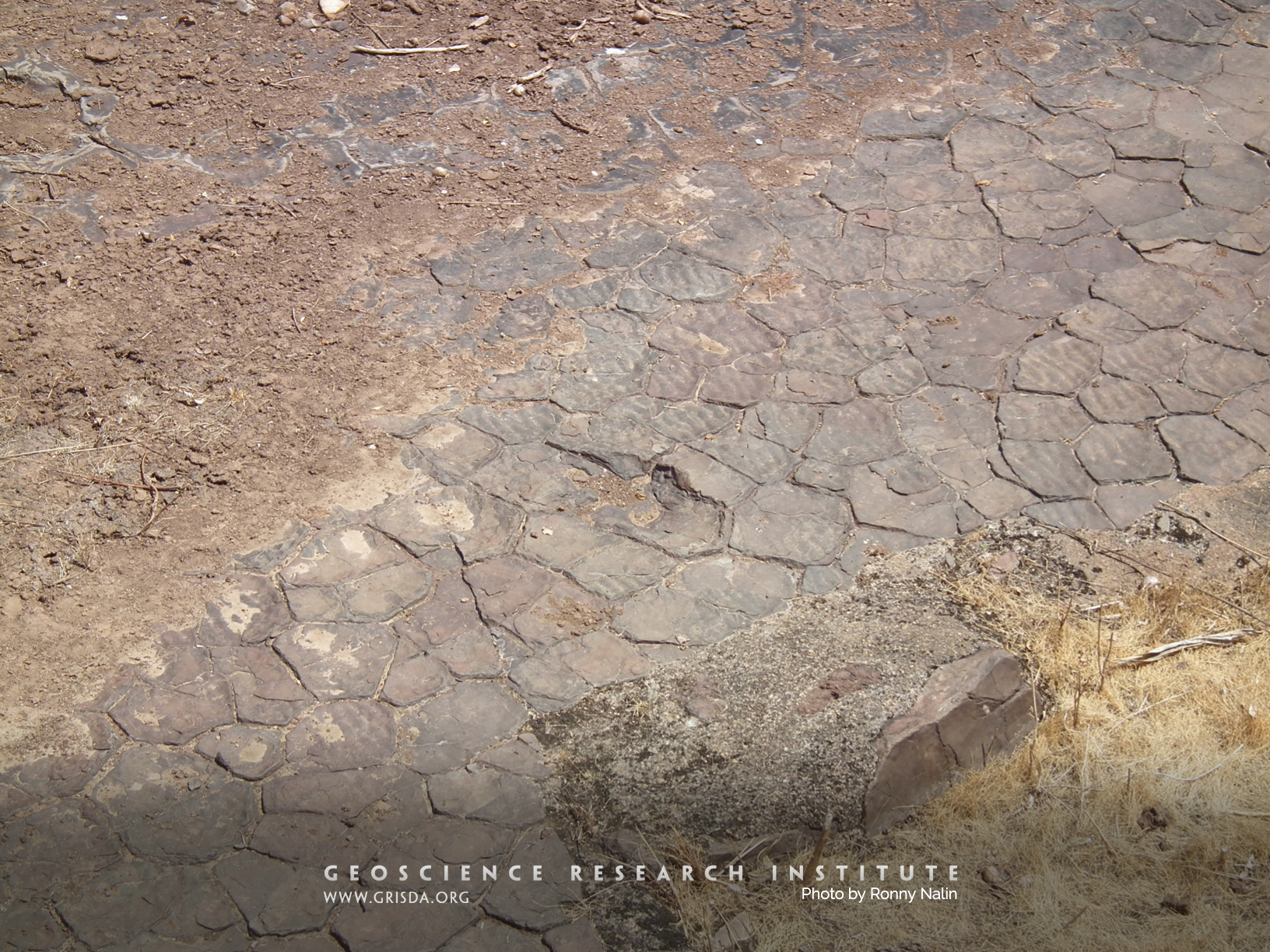
Mud cracks and ripples
On the surface of this Cretaceous mudstone bed from the Sousa Basin of Brazil, one can see both polygonal cracks (indicative of subaerial exposure) and wave ripples (indicative of a thin cover of water).