





©Copyright 2018 GEOSCIENCE RESEARCH INSTITUTE
11060 Campus Street • Loma Linda, California 92350 • 909-558-4548

All Galleries
All Images










Nonconformity
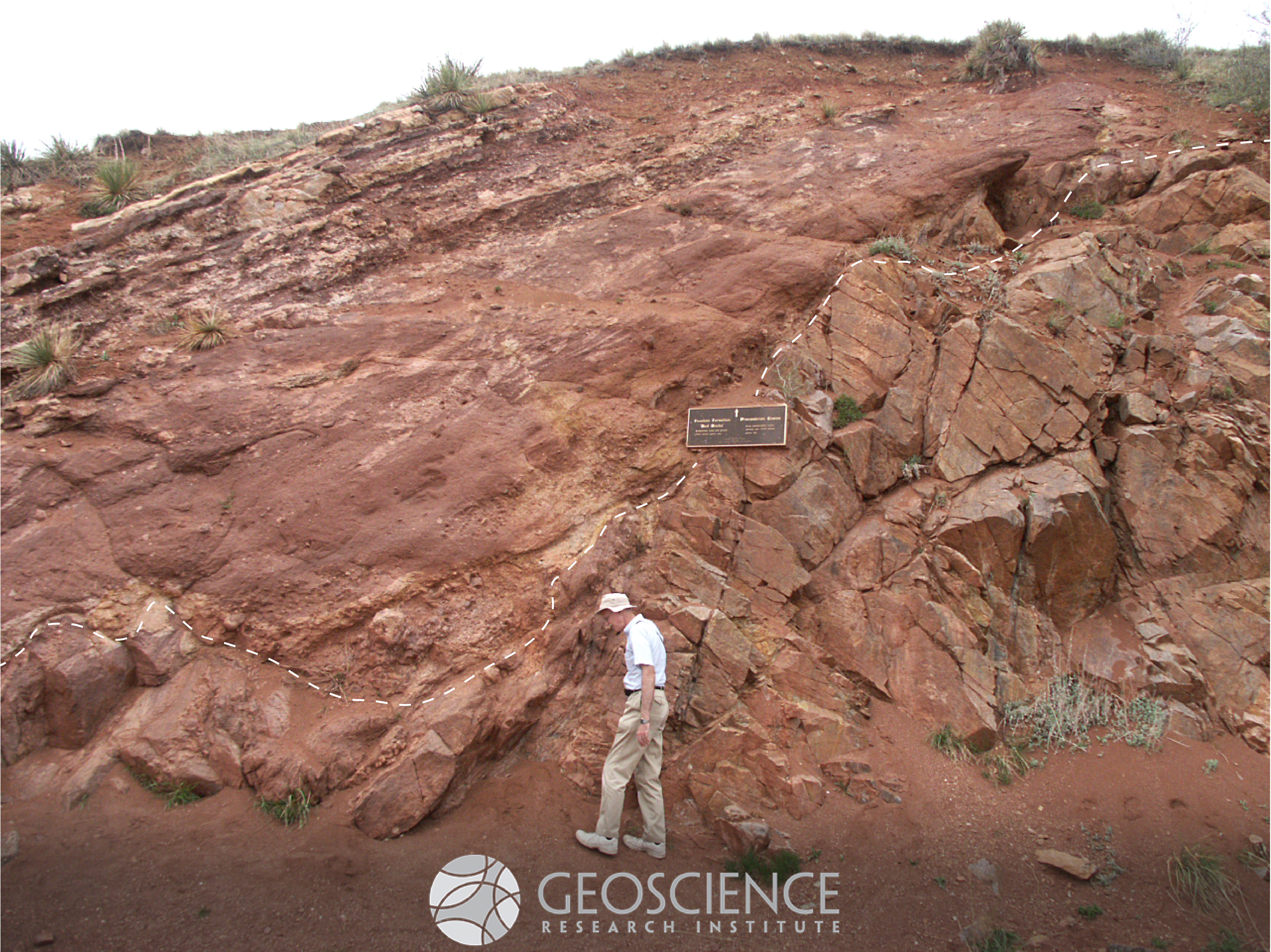
A "nonconformity" is a type of discontinuity surface where sedimentary rocks lie above crystalline rocks. The dashed line in the picture marks a nonconformity between the Mesoproterozoic Pikes Peak Granite (bottom/right) and the Pennsylvanian conglomerates of the Fountain Formation (top/left), near Denver, CO. The contact in this outcrop (near Red Rocks Amphitheater) is marked by a plaque.
Acer
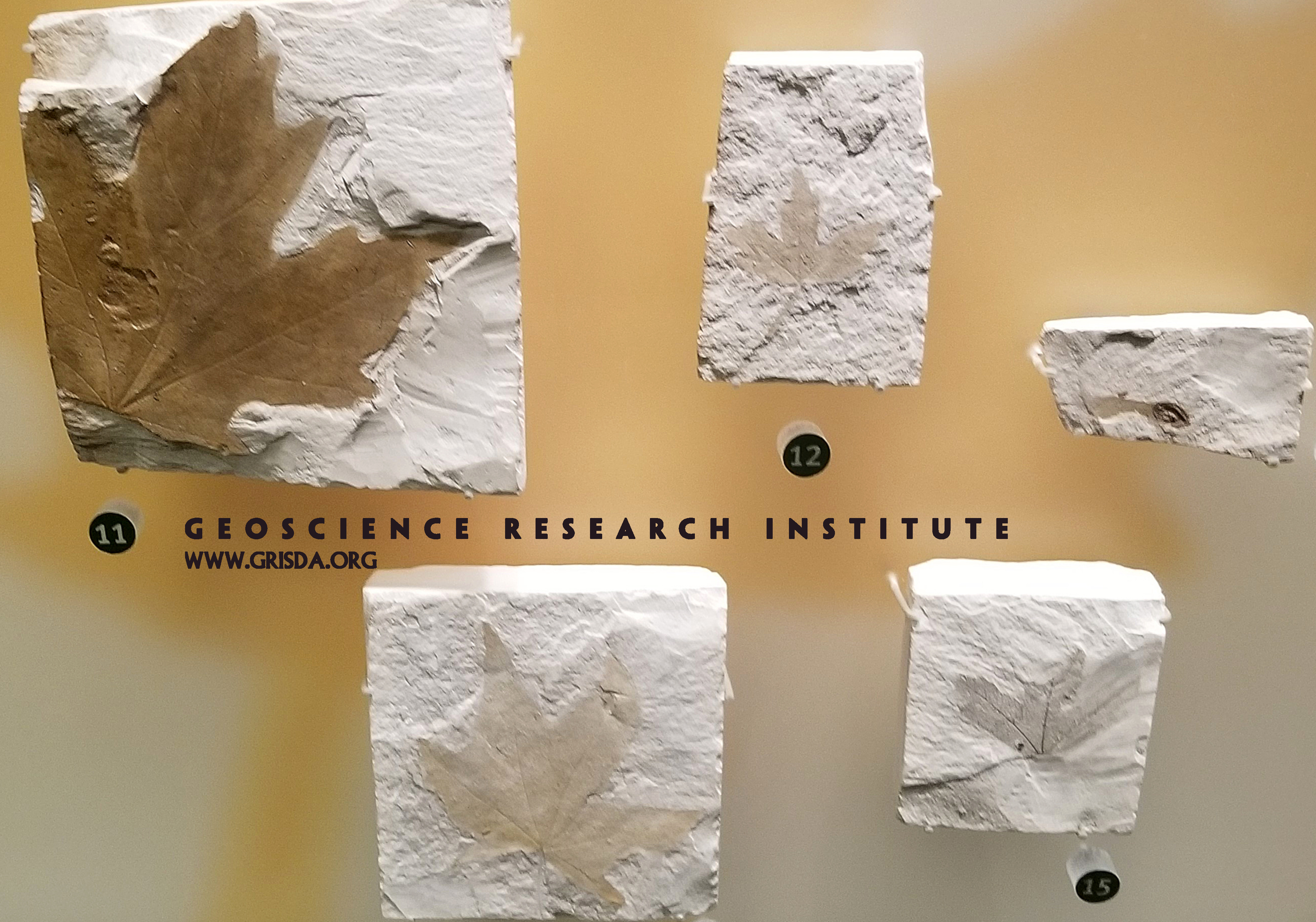
Stasis and plants: specimens of fossil maple leaves and fruit from the Miocene of Oregon. On display at the Field Museum of Natural History, Chicago
Principle of inclusion
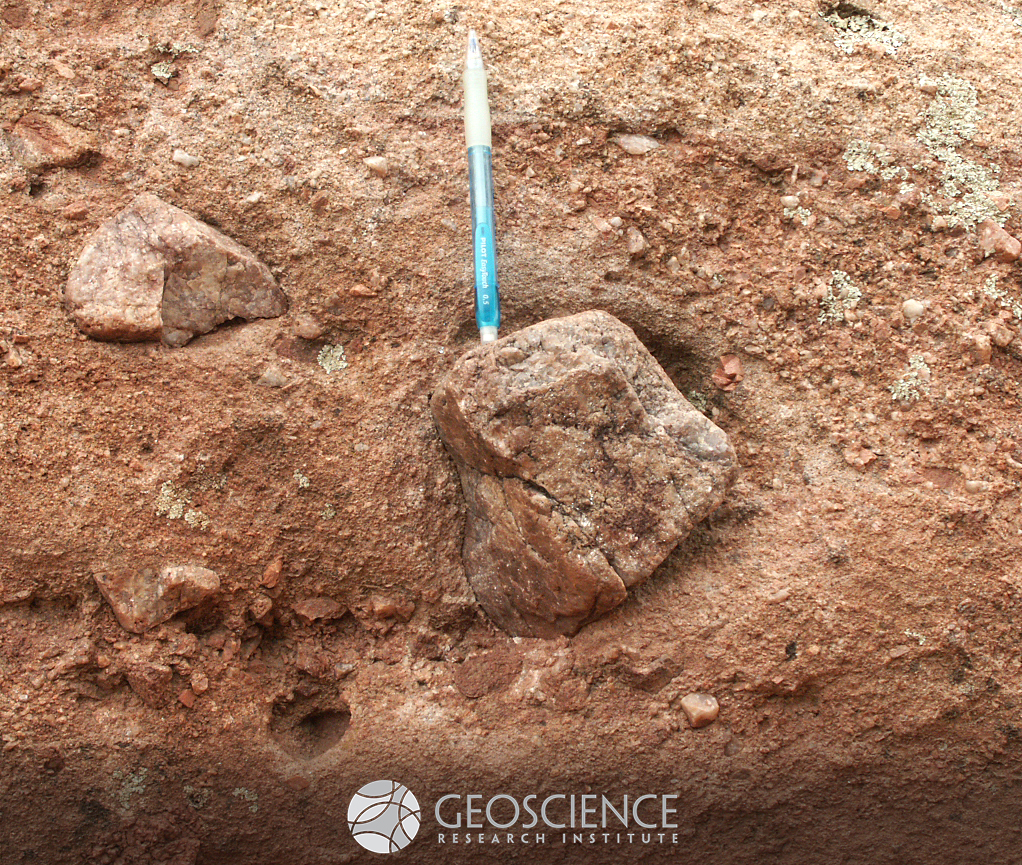
One of the basic principles of stratigraphy is the "principle of inclusion." The principle states that if fragments of a rock unit are found included in a second rock unit, the second unit is younger than the first. In this picture, fragments of the Mesoproterozoic Pikes Peak granite (like the clast on which the pencil is resting) are included in a conglomerate layer of the Pennsylvanian Fountain Formation, CO. We infer that the granite must have existed as a solid rock body that was broken and eroded…
Marginocephalians
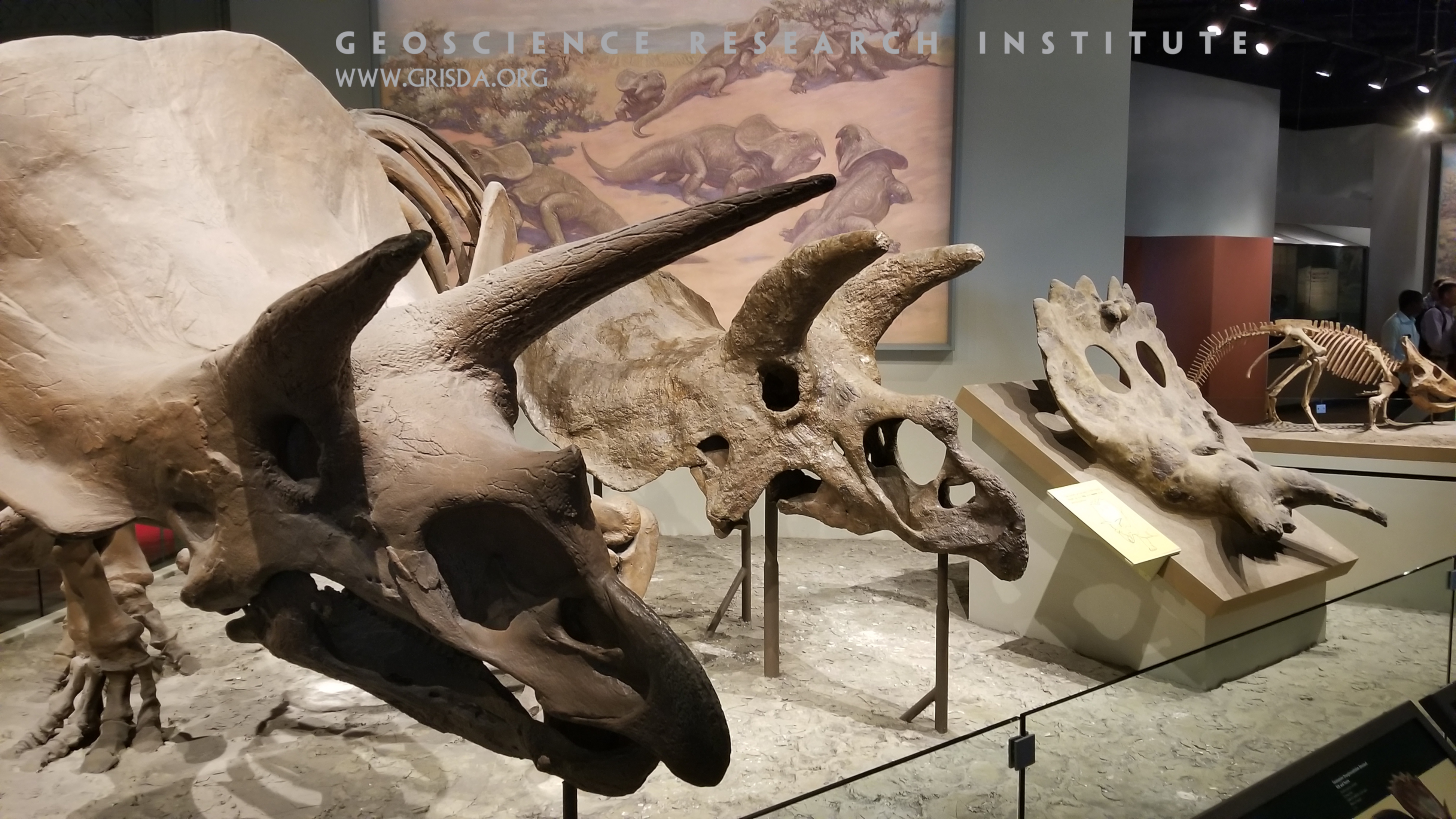
Marginocephalians are a group of herbivorous dinosaurs found in Cretaceous layers and characterized by a bony frill at the back of their skull. This photo shows specimens of 4 different species within this group, on display at the Field Museum of Natural History, Chicago.
CountyRd301
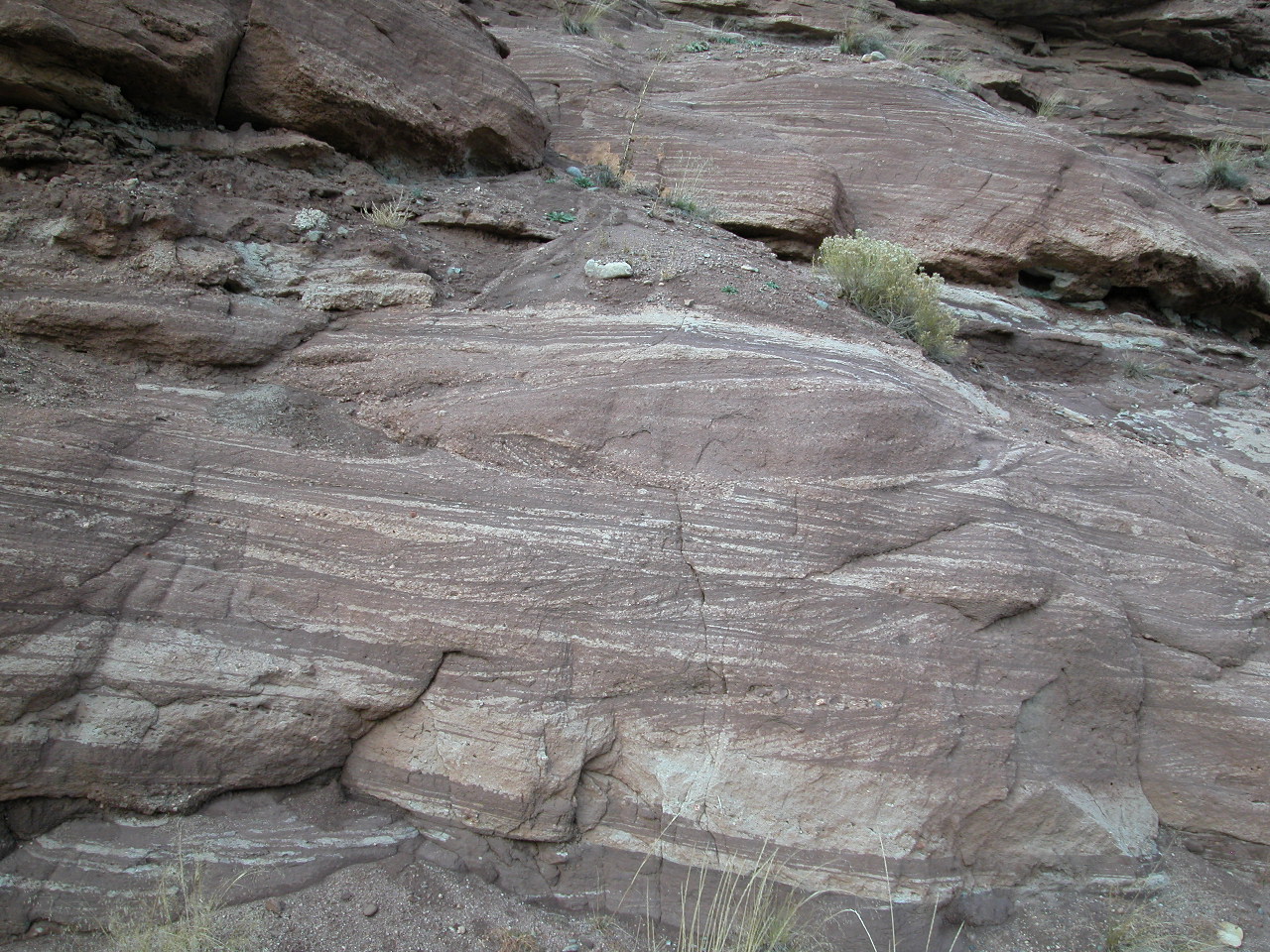
Cross-bedding, Co. Rd. 301 near McCoy --- About one third of the way up the picture are beds at an angle to the main layers.
Clastic dykes
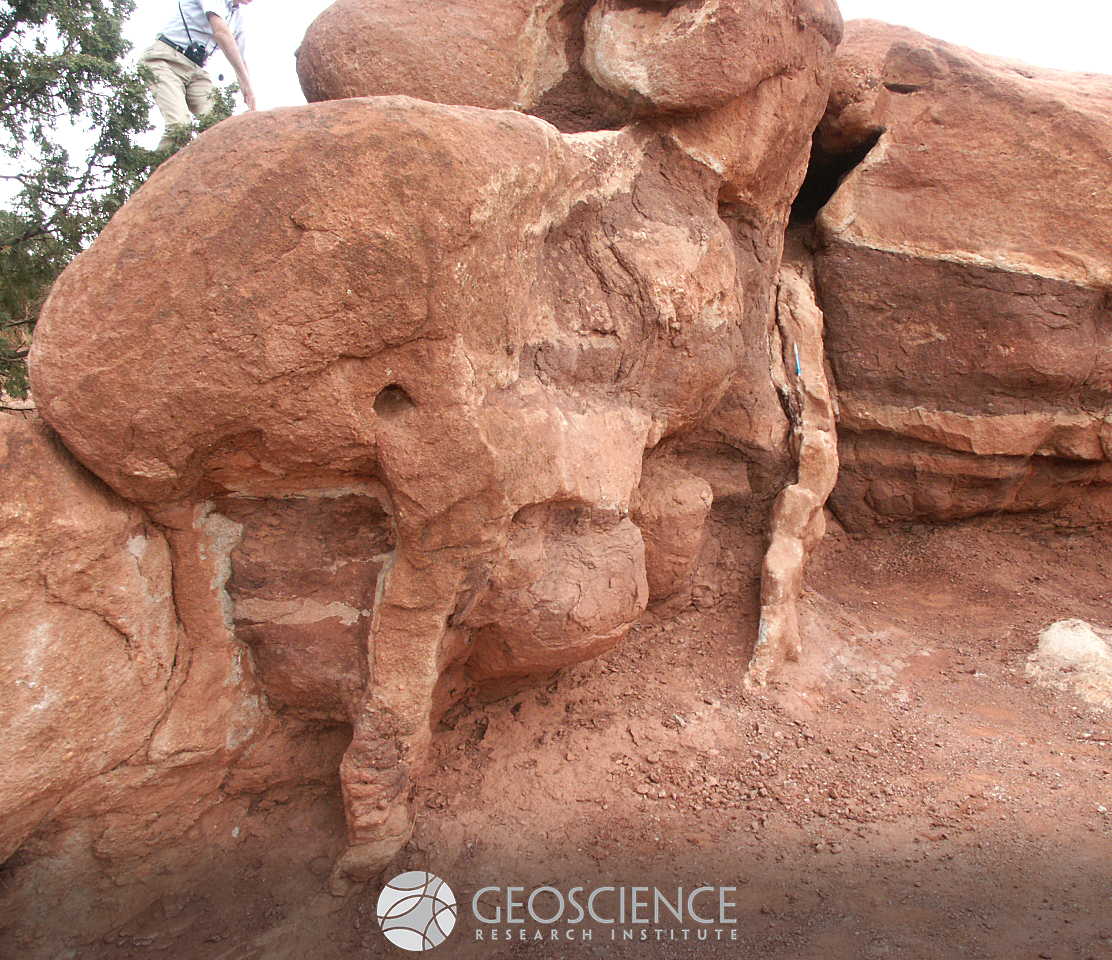
Clastic dykes are sedimentary features consisting of seams of sediment truncating the surrounding host rock or deposit. These dykes can form through different processes. For example, fluidized sand can be injected through fractures, cutting through underlying and overlying deposits. Alternatively, pre-existing open cracks can be passively infilled by accumulation of a different kind of sediment. This picture shows three sub-vertical sandstone dykes, with parallel orientation, cutting through sub-horizontal…
Megatherium
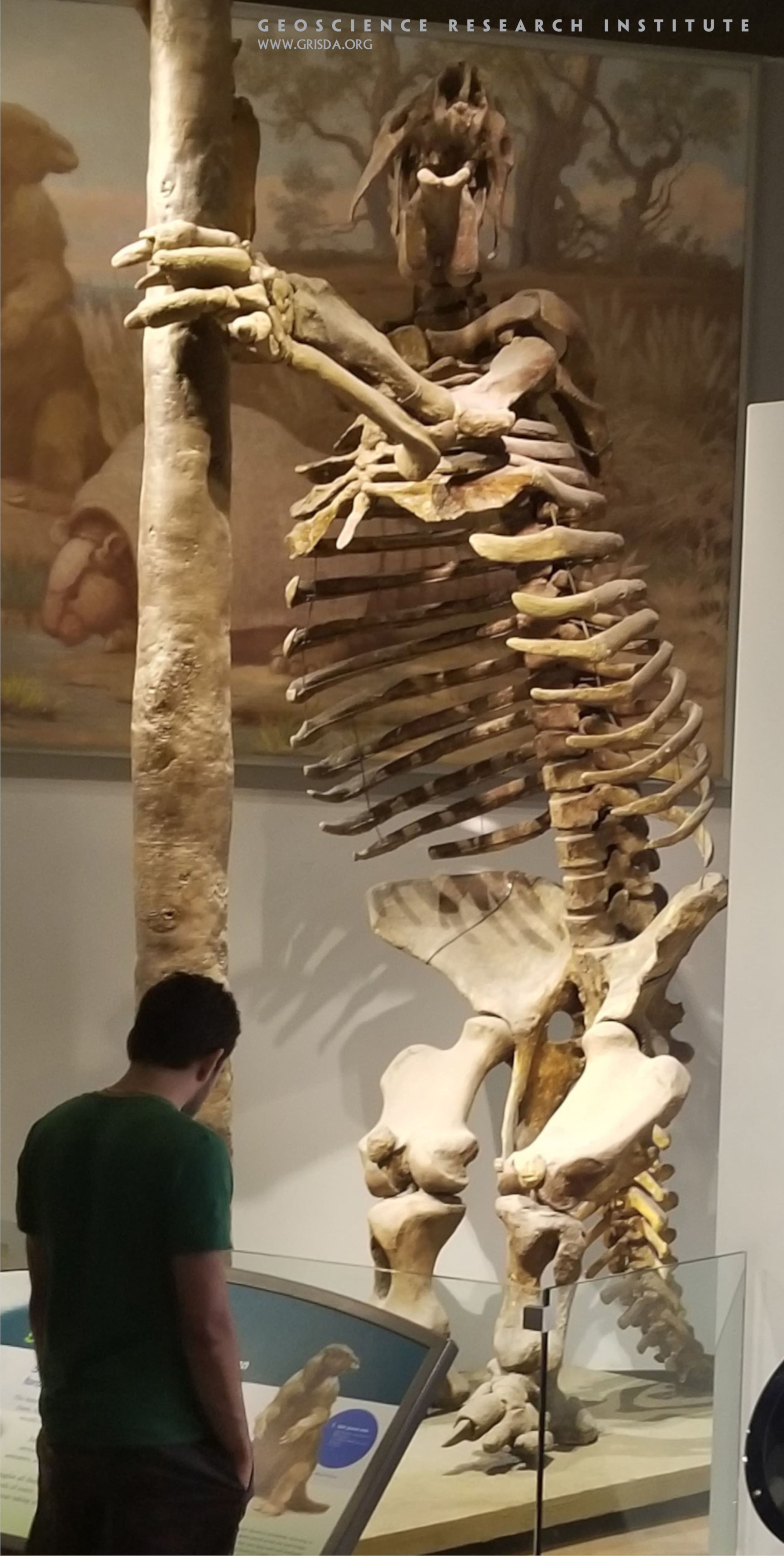
Megatherium is one of the largest land mammals known to have existed and is part of the Pleistocene megafauna. This ground sloth was endemic to South America. Specimen on display at the Chicago Museum of Natural History
Rt13
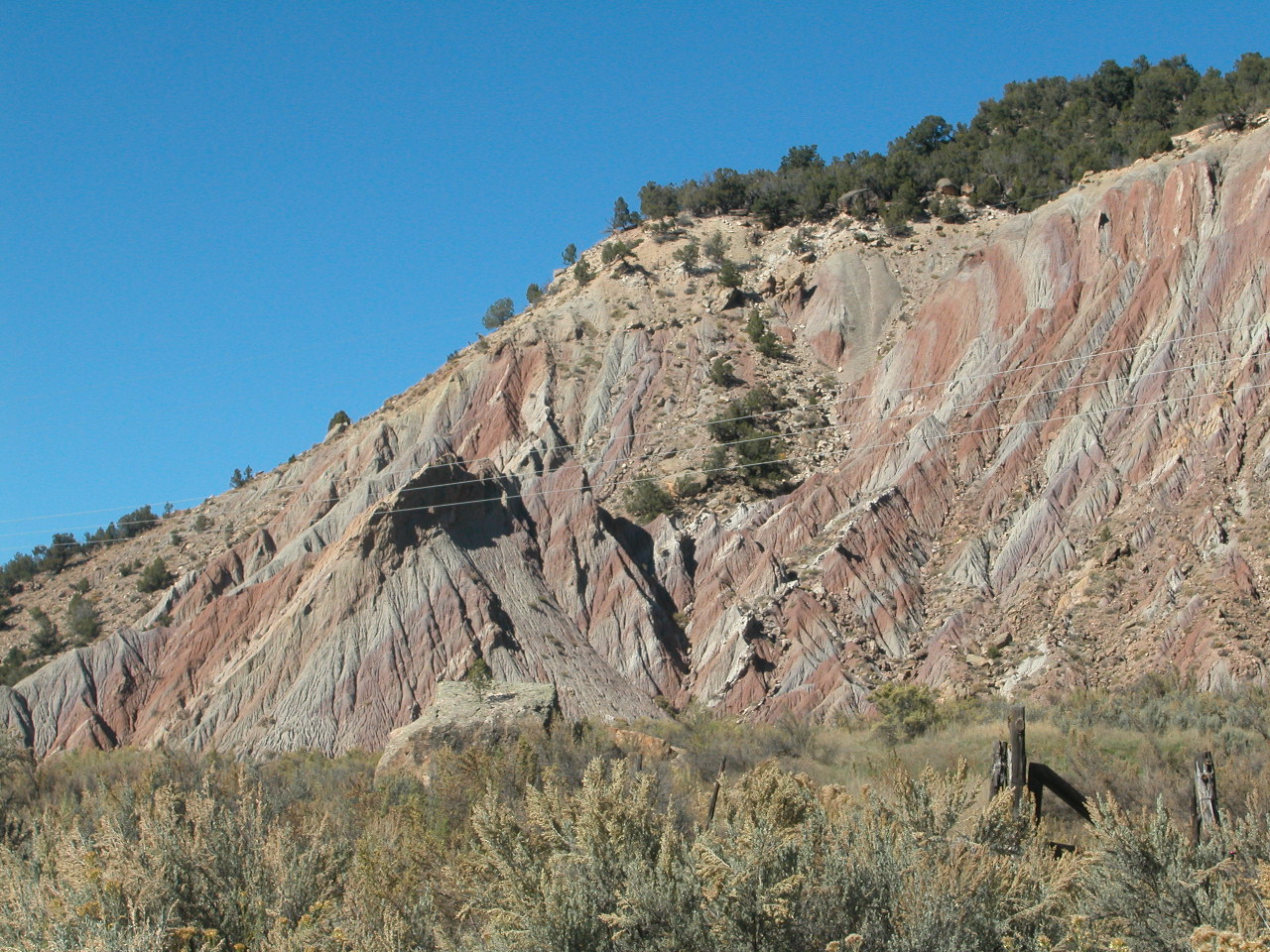
Badlands, Wasatch Formation, Rt.13 north of Rifle --- The sandstone has been eroded into badlands and teepee-shaped mounds.
Cambrian quartzite
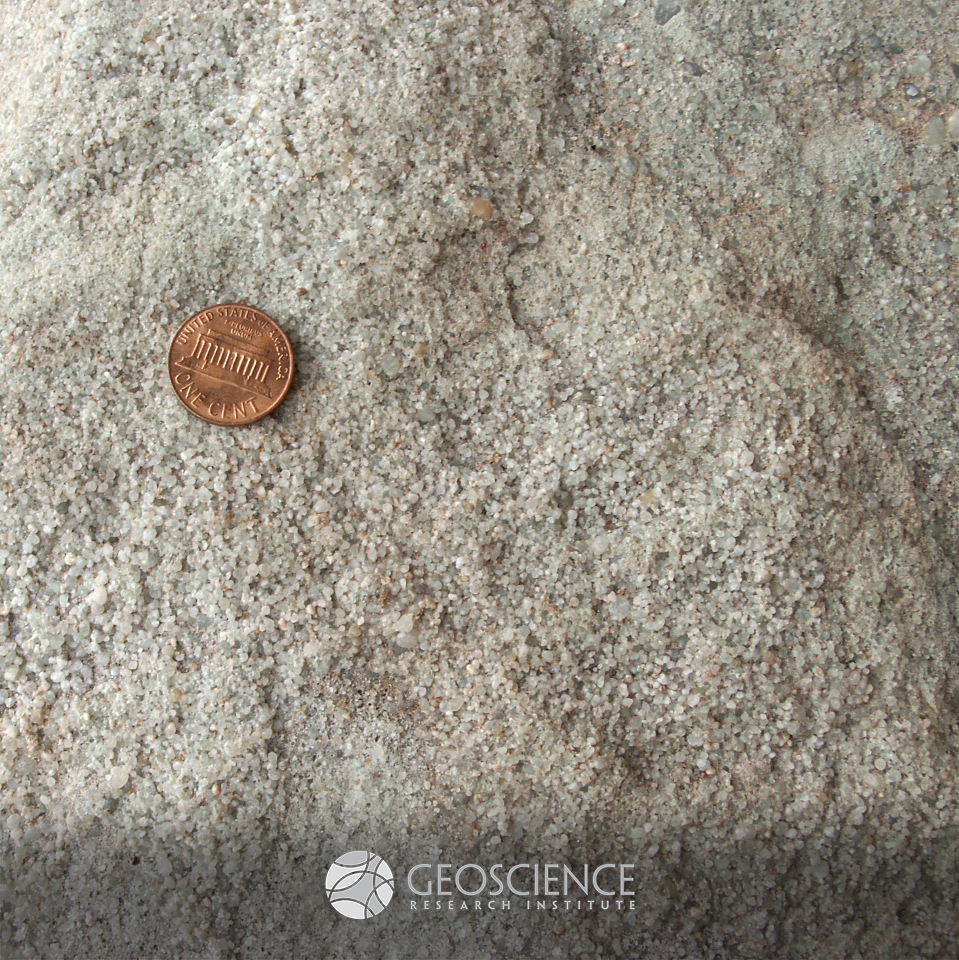
This sandstone, made up mostly of quartz grains, is an example of Cambrian quartzite. This type of deposit is very widespread in North America (and in other areas of the world), where it blankets the "Great Unconformity," the erosional surface marking the contact between crystalline basement and overlying sedimentary rocks. Sawatch Formation, vicinity of Colorado Springs, CO, USA
Fish and frond
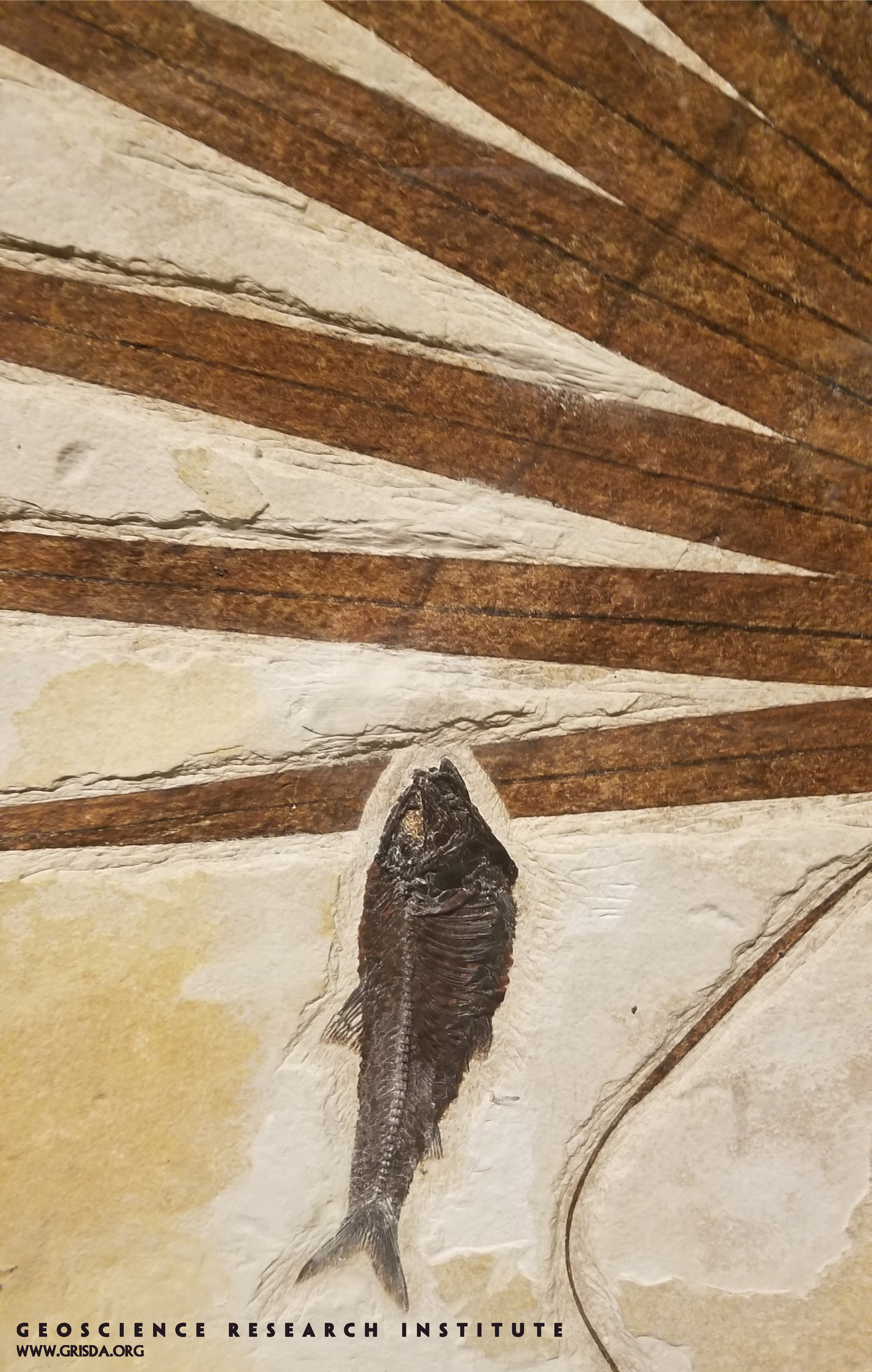
A perfectly preserved fish resting by a perfectly preserved palm frond...This slab on display at the Field Museum of Natural History, Chicago, comes from Fossil Lake Basin, Wyoming, a locality that has yielded exquisite specimens of a variety of organisms. Special conditions are required for this kind of uncommon preservation.