



©Copyright 2018 GEOSCIENCE RESEARCH INSTITUTE
11060 Campus Street • Loma Linda, California 92350 • 909-558-4548

All Galleries
All Images


Clastic dykes
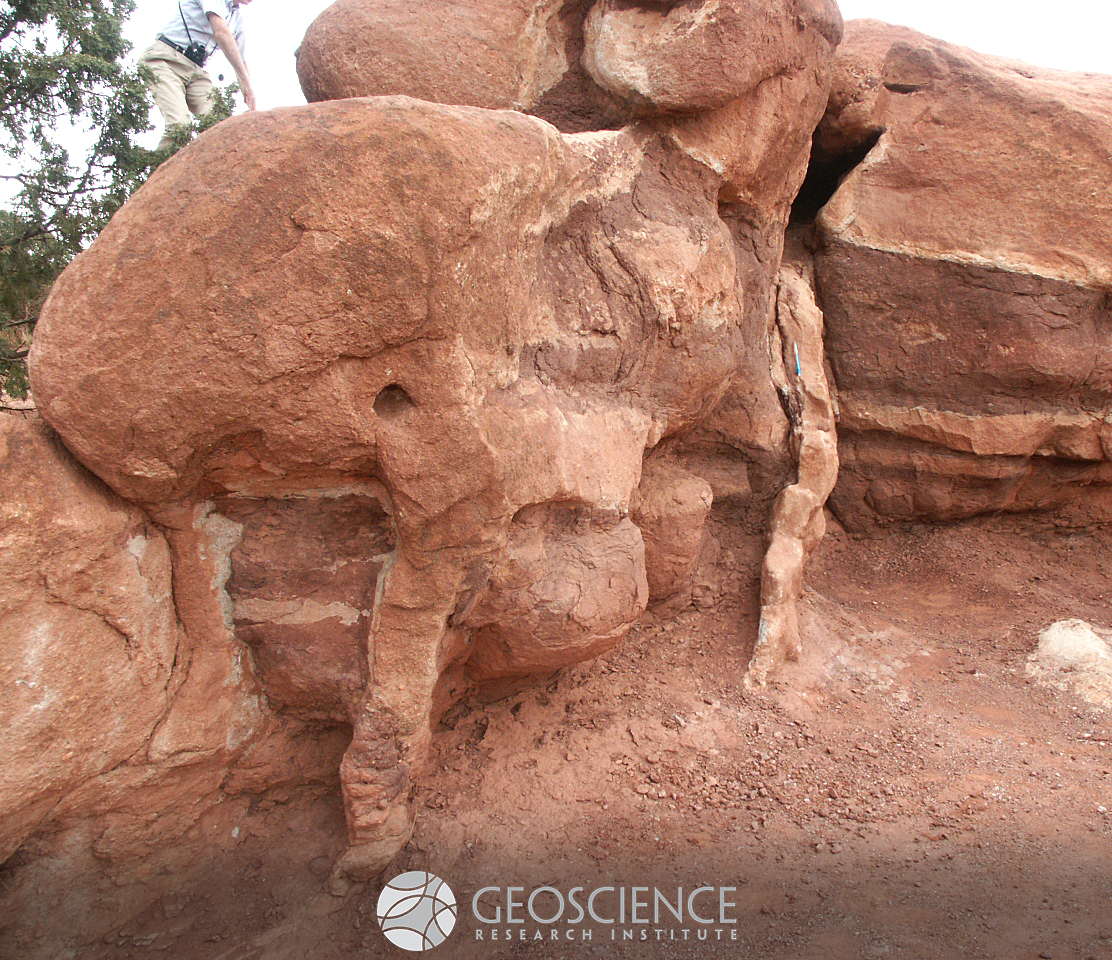
Clastic dykes are sedimentary features consisting of seams of sediment truncating the surrounding host rock or deposit. These dykes can form through different processes. For example, fluidized sand can be injected through fractures, cutting through underlying and overlying deposits. Alternatively, pre-existing open cracks can be passively infilled by accumulation of a different kind of sediment. This picture shows three sub-vertical sandstone dykes, with parallel orientation, cutting through sub-horizontal…
Normal grading
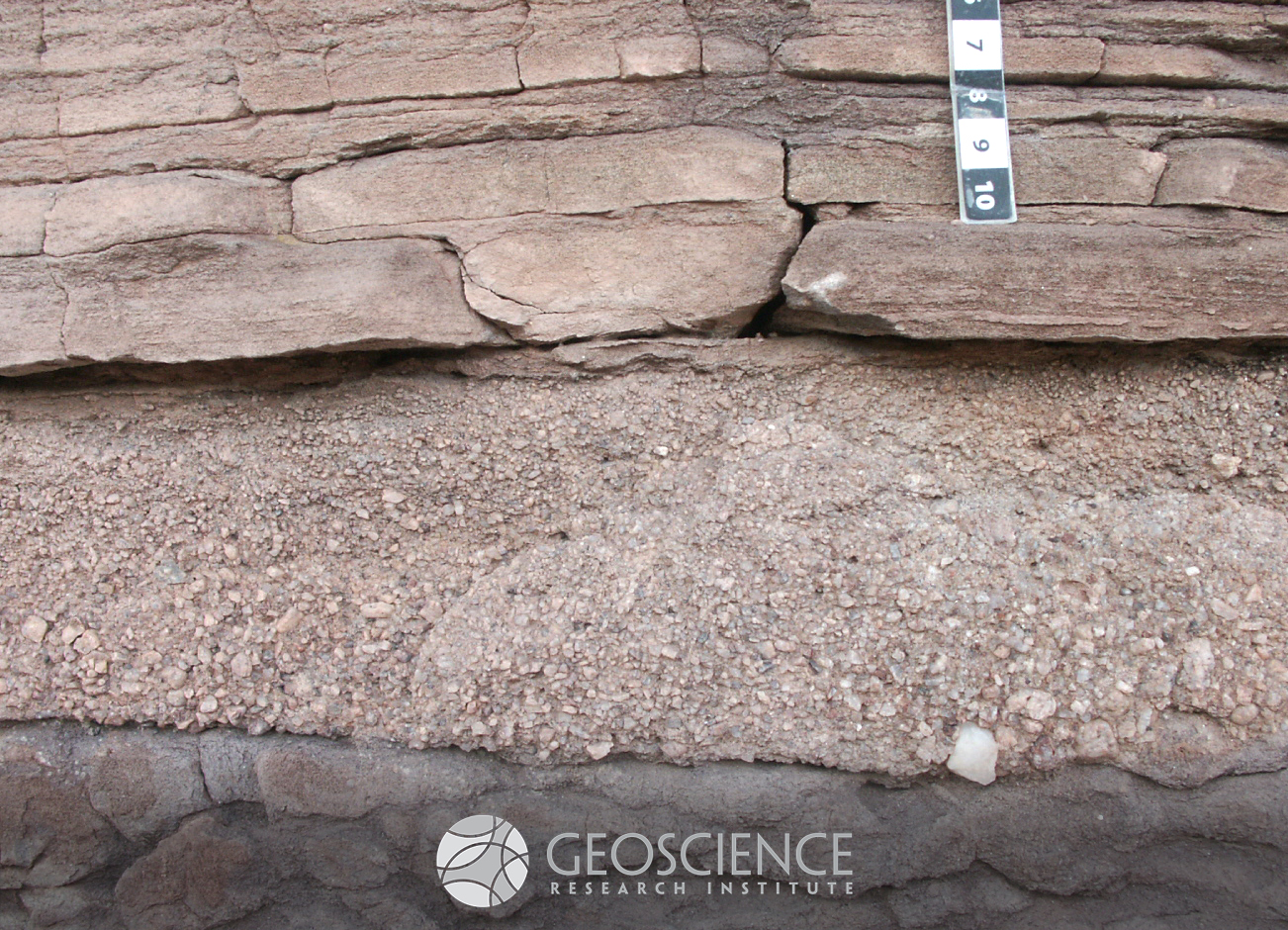
Normal grading is a type of arrangement of particles in a sedimentary bed, where coarser grains lie at the bottom and finer grains at the top, resulting in a general fining-upward size distribution. Several physical processes can produce normal grading, but most commonly it is indicative of a decrease in the energy of the flow transporting the particles. The bed in the lower half of this picture shows normal grading from microconglomerate angular pebbles to granules to coarse sand at the top. Pennsylvanian…