









©Copyright 2018 GEOSCIENCE RESEARCH INSTITUTE
11060 Campus Street • Loma Linda, California 92350 • 909-558-4548

All Galleries
All Images









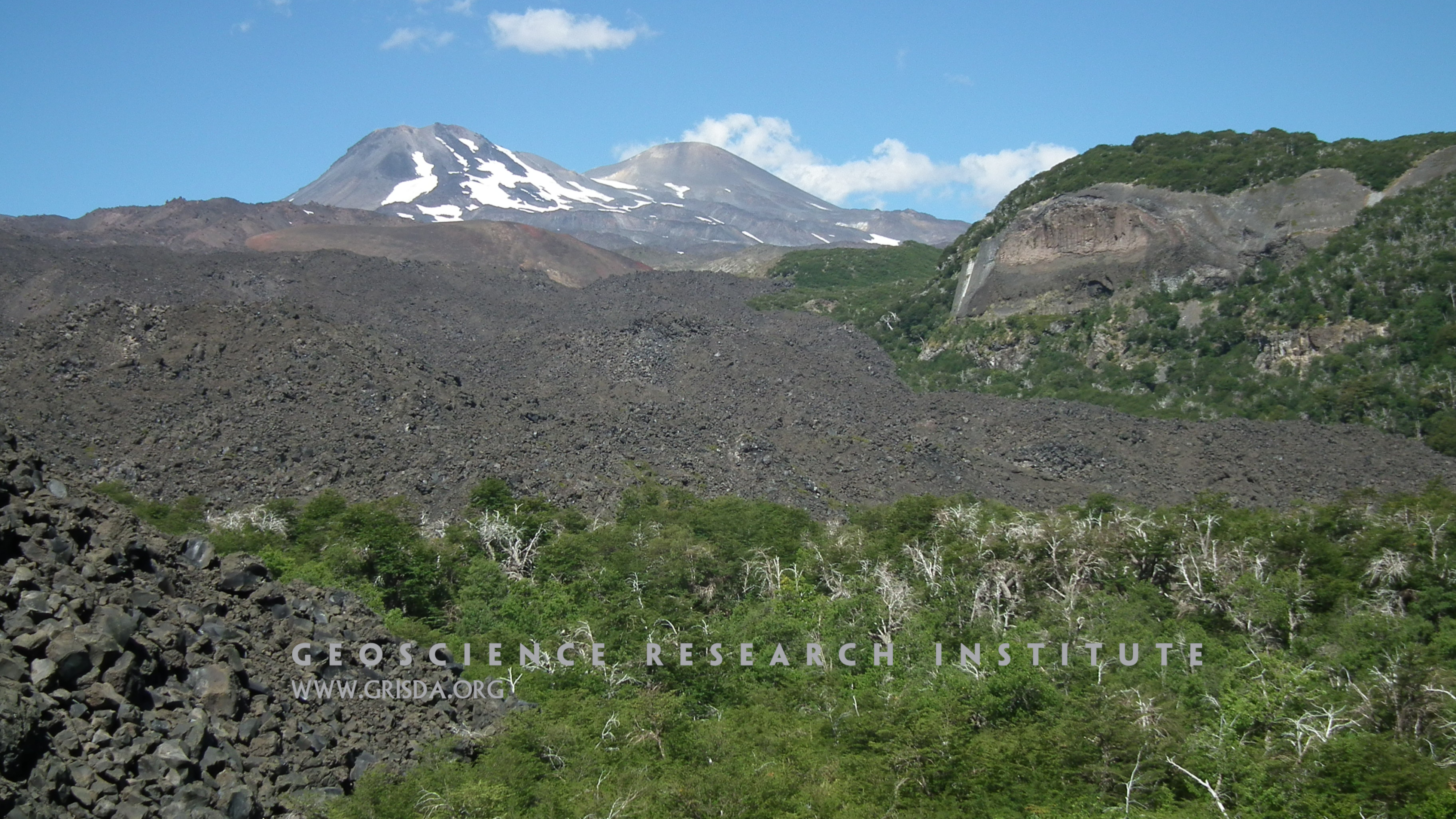
Nevados de Chillan
Basaltic rubble at the front of a lava flow with the stratovolcanoes of the Nevados de Chillan, Chile, in the background.
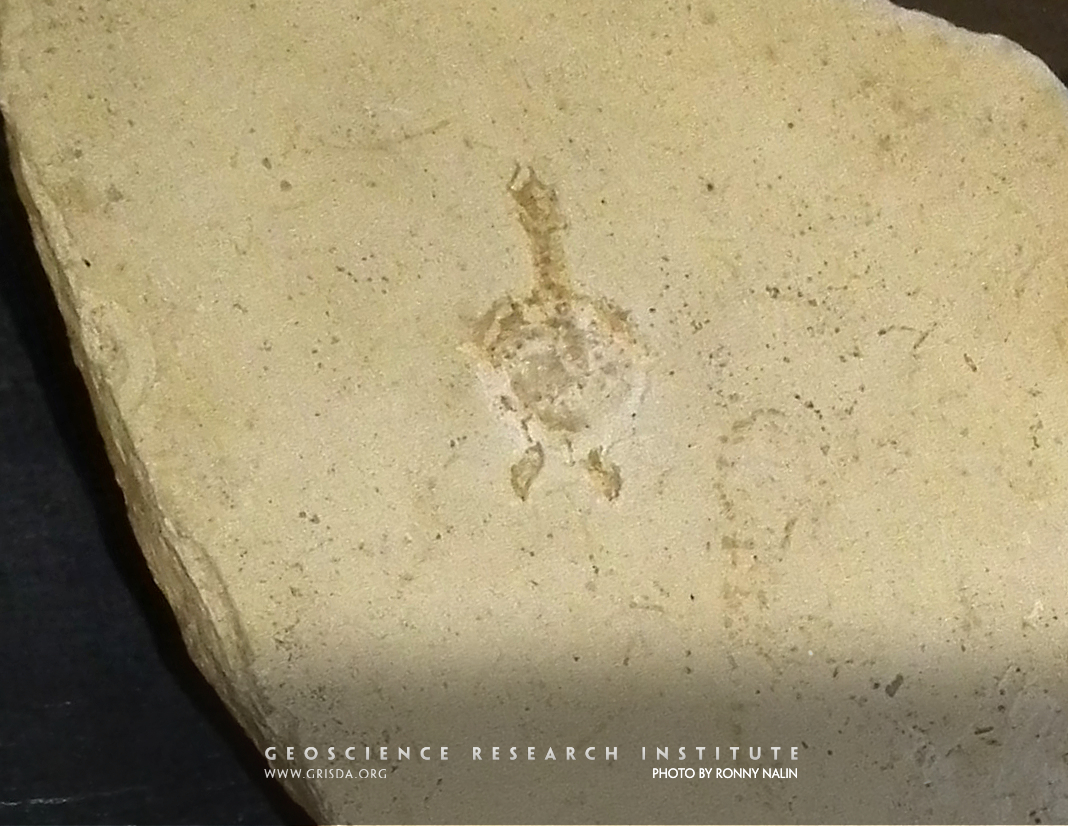
Araripemys barretoi
Fossilized hatchling of a Cretaceous pleurodiran turtle from the Araripe Basin, Brazil. Specimen on display at the Paleontological Museum in Santana do Cariri, few cm in size.
AngularUnconformity
ANGULAR UNCONFORMITY: Along Interstate-70, New Castle --- Rock layers were deposited, hardened, uplifted at an angle, eroded flat, and then more rock was deposited on top.
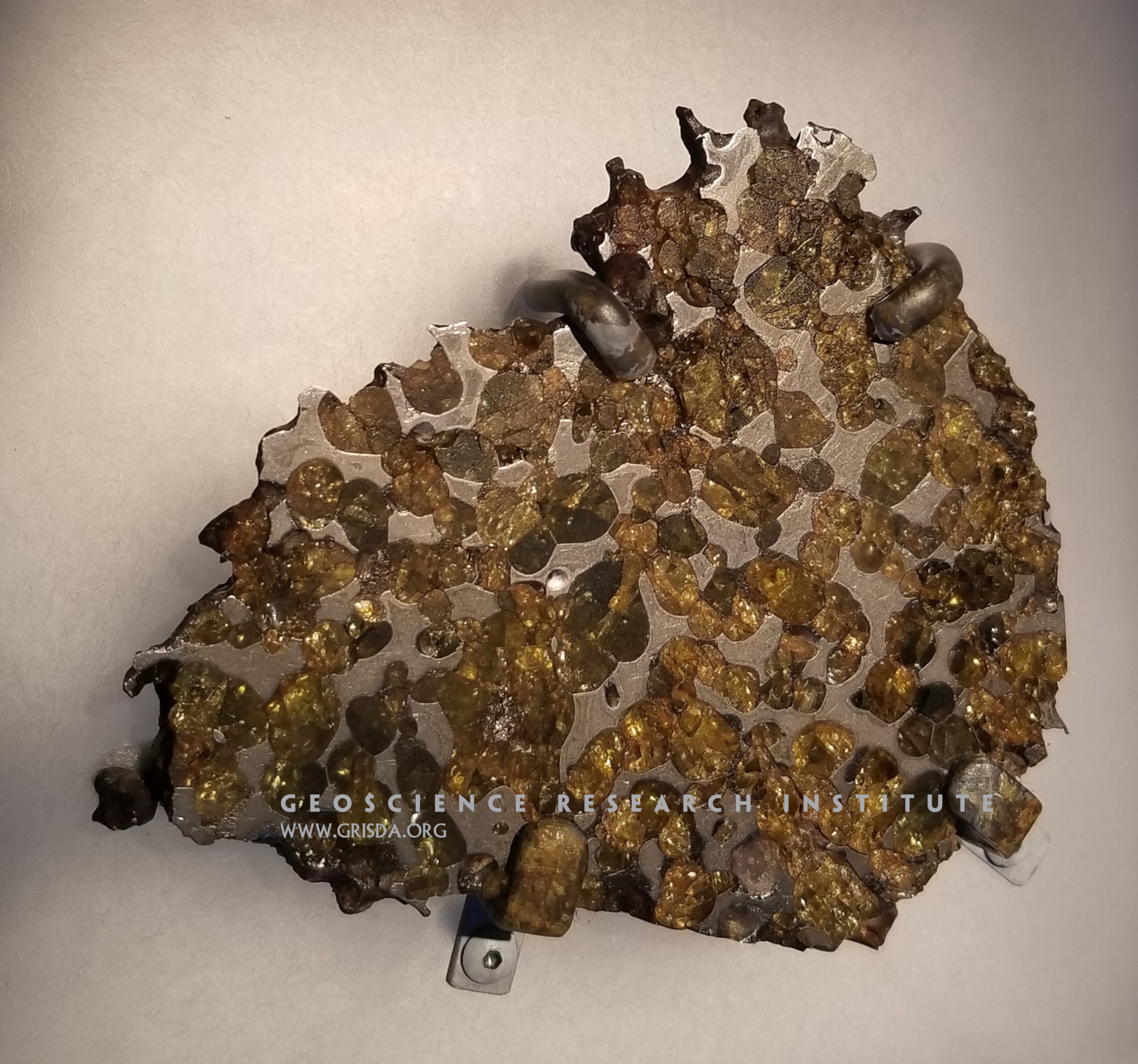
Pallasite
Meteorites are fragments of solid material coming from space, found on earth after surviving passage through the atmosphere. There are two general categories of meteorites: stony meteorites and iron meteorites. However, stony-iron meteorites also exist. For example, the meteorite in this image shows olivine (a silicate mineral) embedded in an iron-nickel matrix. This type of meteorite (known as pallasite) was found in the Thiel Mountains of Antarctica. Specimen on display at the Chicago Field Museum…
Hyracotherium
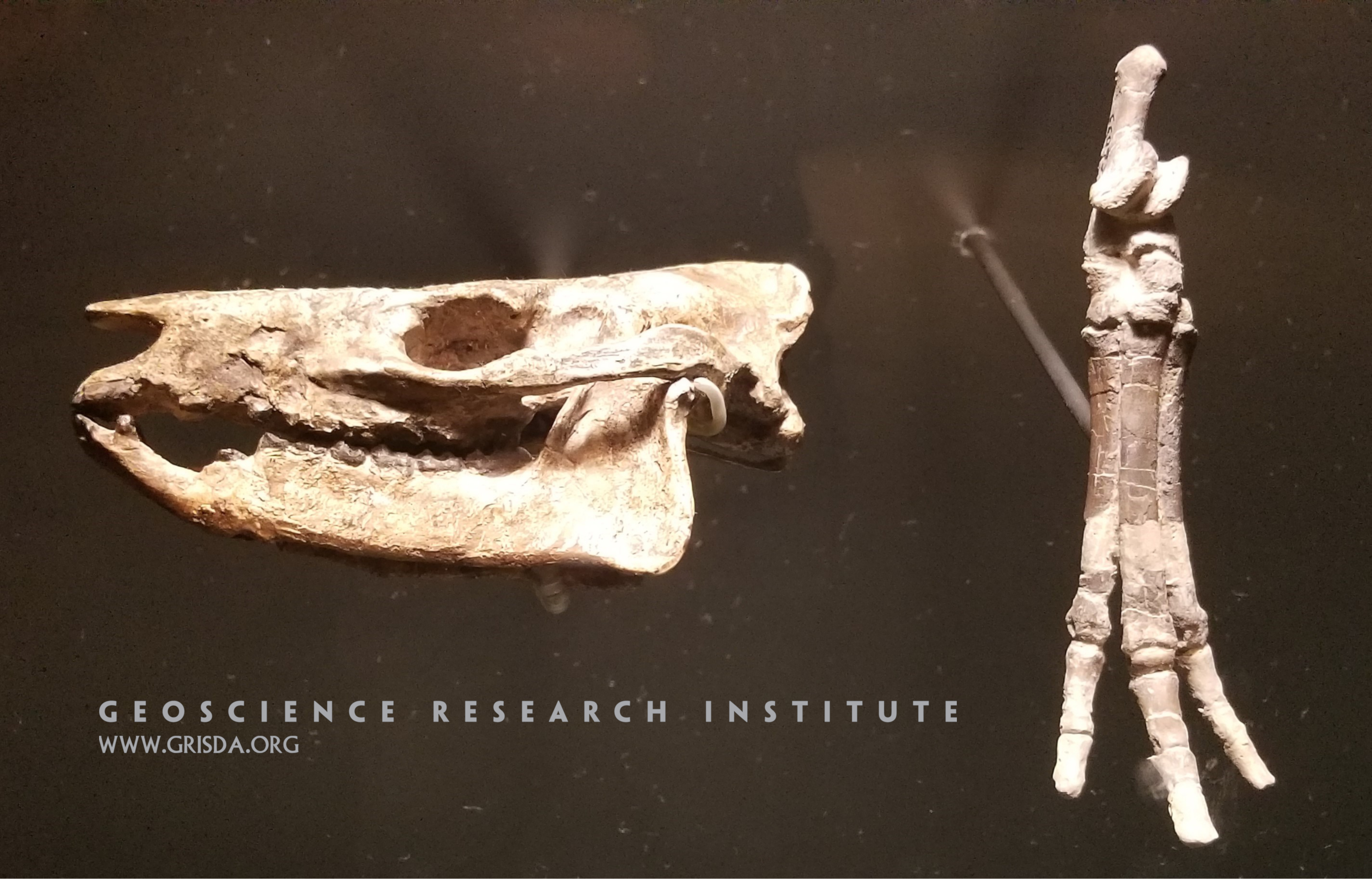
Skull and foot of Hyracotherium, a small horse with 3 hooves on its hind feet. Specimens from the Paleocene of Colorado, on display at the Field Museum of Natural History, Chicago.
El Peñón de Guatapé
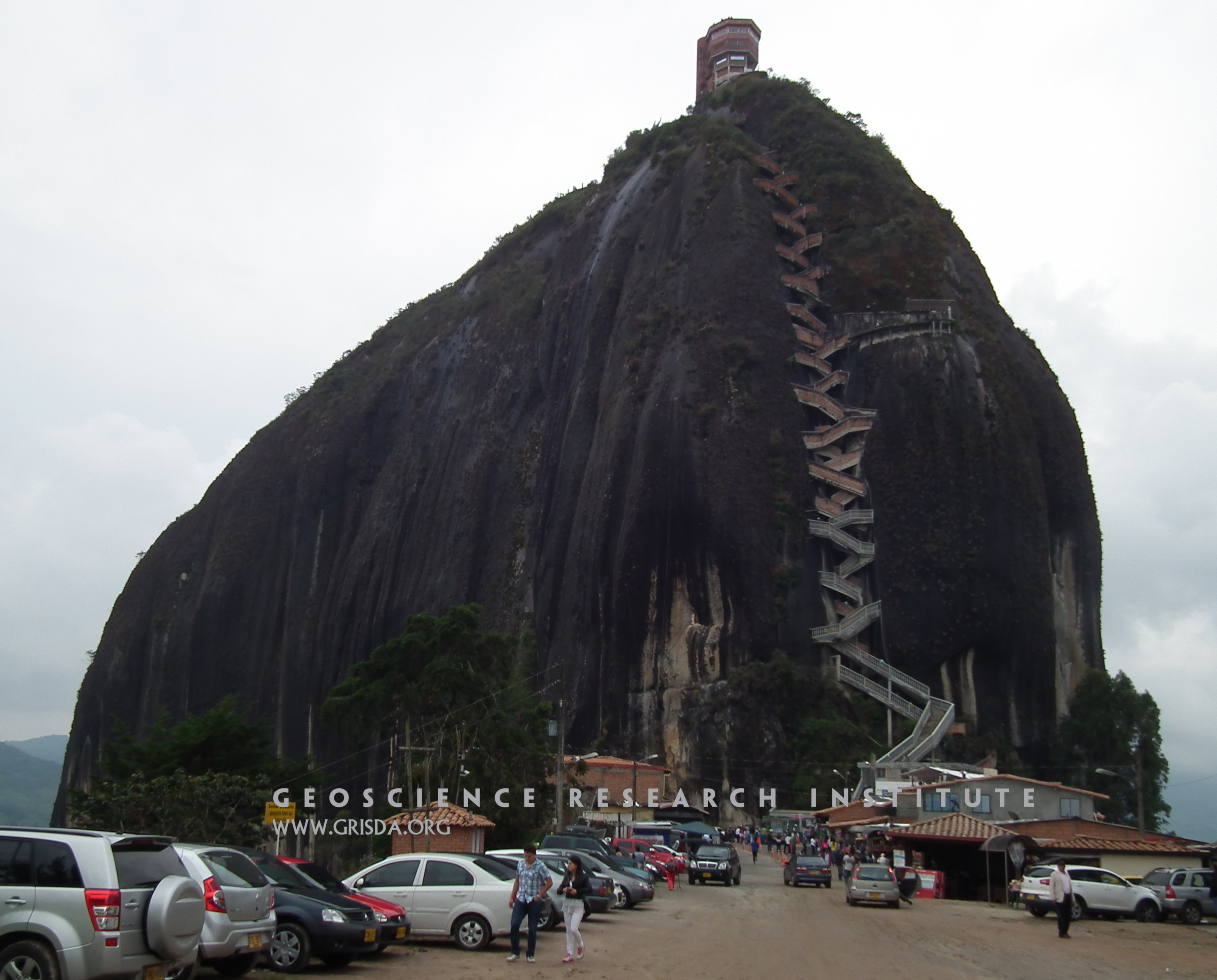
El Peñón de Guatapé is a granitic monolith that rises about 200 m above the surrounding landscape, in the Antioquia region of NW Colombia. These isolated landforms are also known as "inselbergs" and are typical of granitic rocks in tropical regions.
Lizard and fish
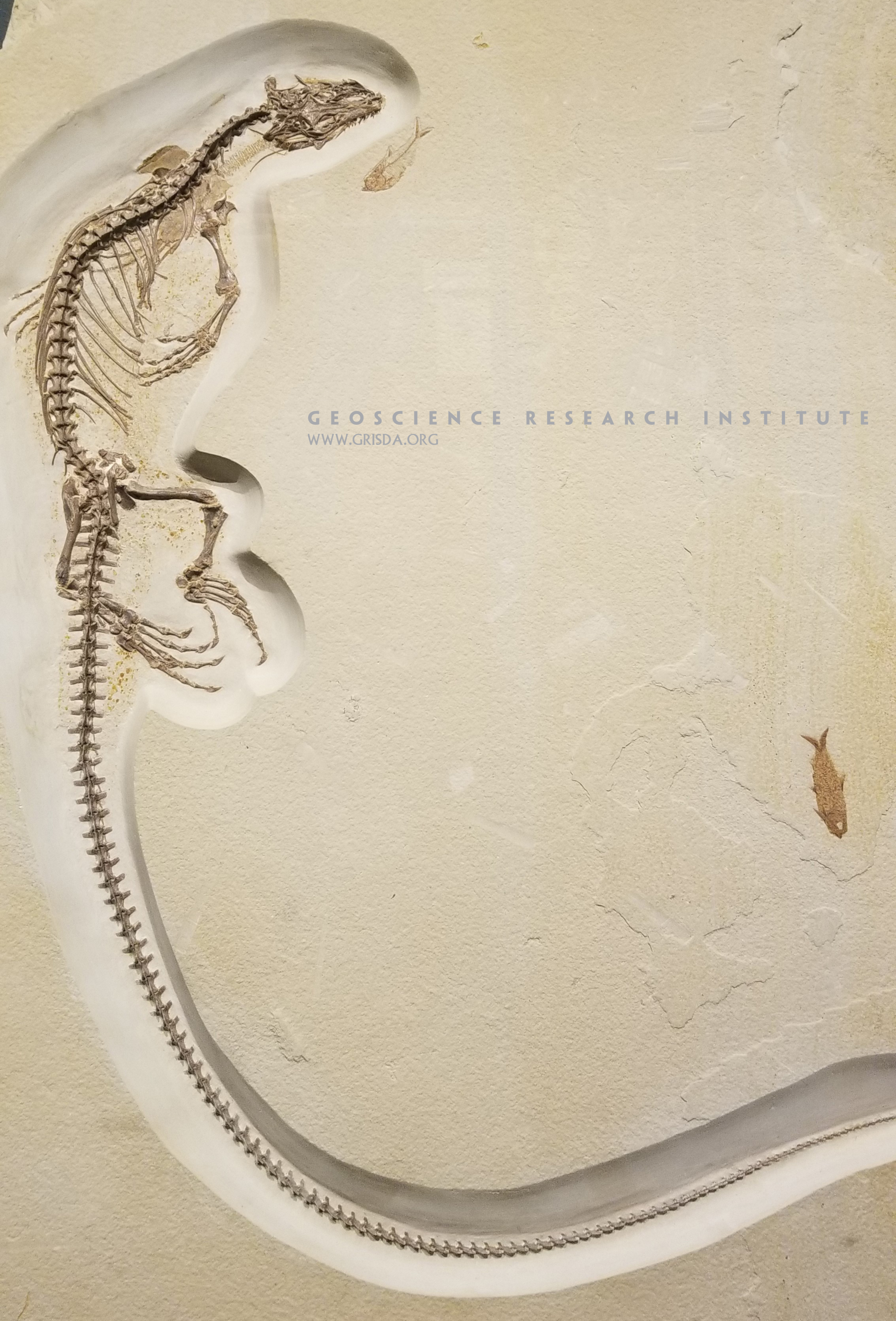
This iguanid lizard, on display at the Field Museum of Natural History, Chicago, is perfectly preserved in full articulation. Minimal decay after death is necessary for this type of fossilization. Specimen from the Eocene of Fossil Lake Basin, Wyoming. Note the close association with some fossil fish also perfectly preserved.
Tyrrell Museum
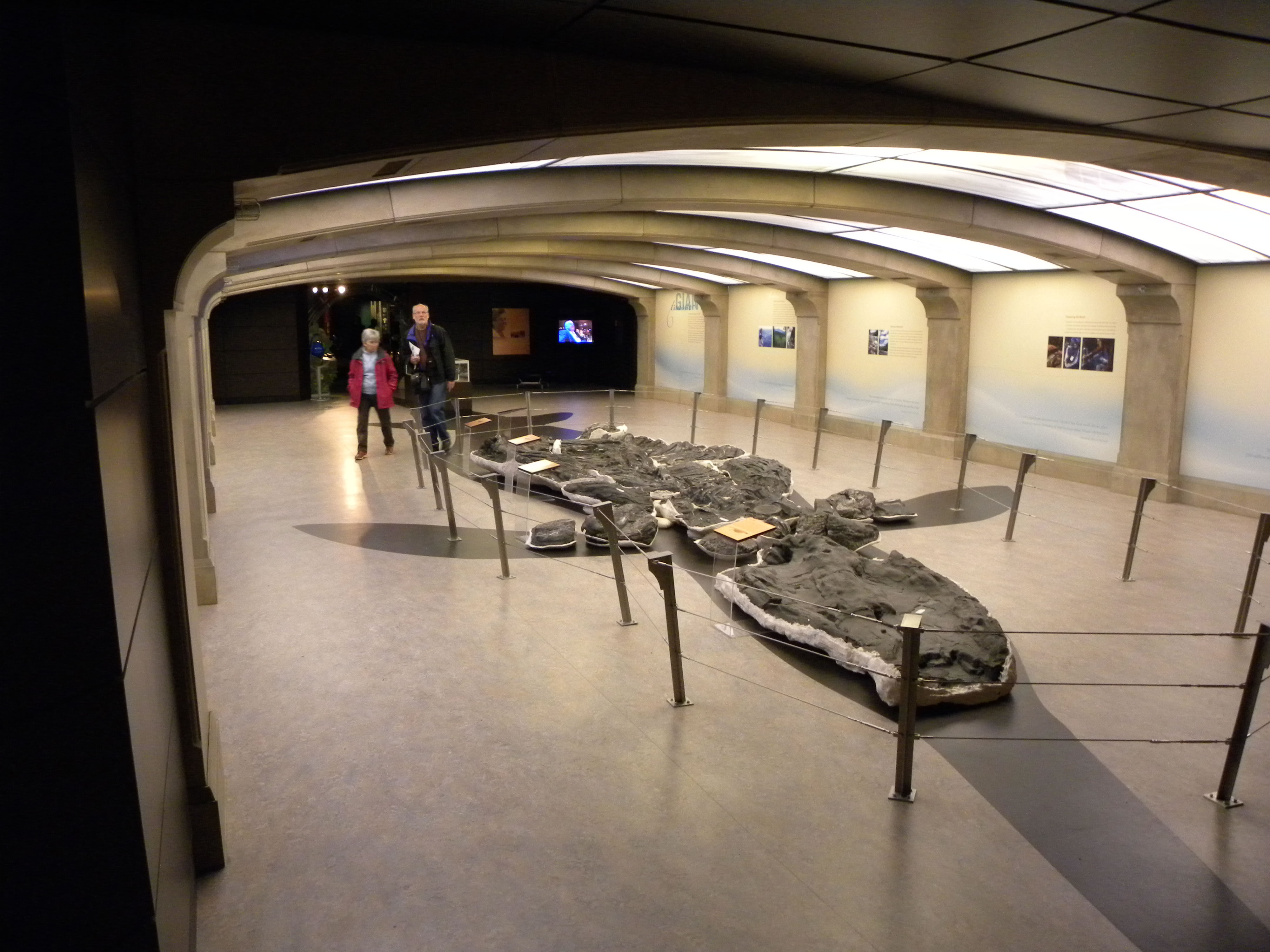
Tyrrell Museum, Shonisaurus sikanniensis the world’s largest-known marine reptile (21 m long)
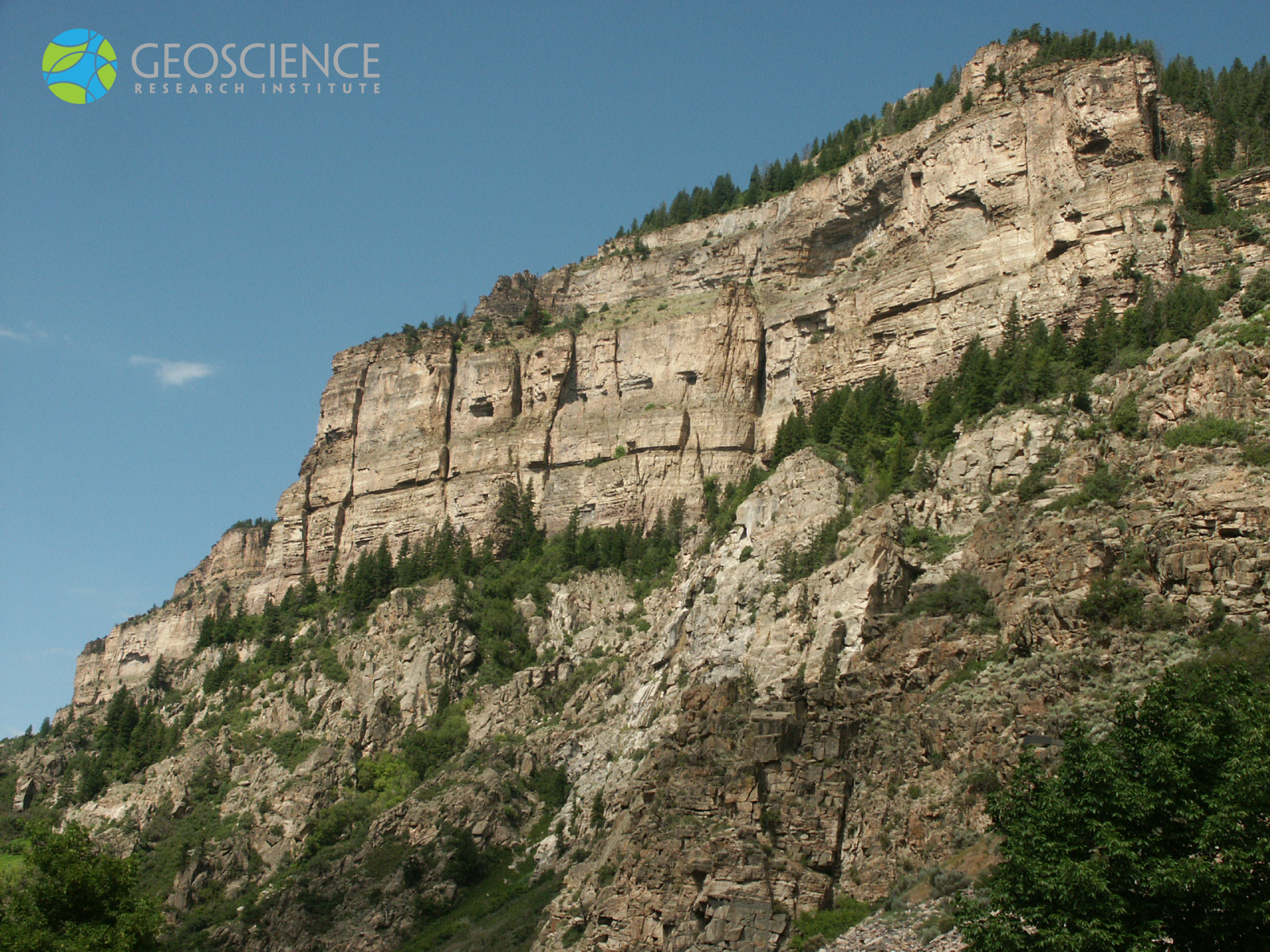
Great Unconformity_2
View of the contact between Precambrian basement and the Cambrian Sawatch Quartzite (marked by the tree line, mid-way through the picture), in the vicinity of Glenwood Canyon, CO, US. This important contact, an erosional discontinuity called "the Great Unconformity," is found over large sections of the North American continent.