








©Copyright 2018 GEOSCIENCE RESEARCH INSTITUTE
11060 Campus Street • Loma Linda, California 92350 • 909-558-4548

All Galleries
All Images










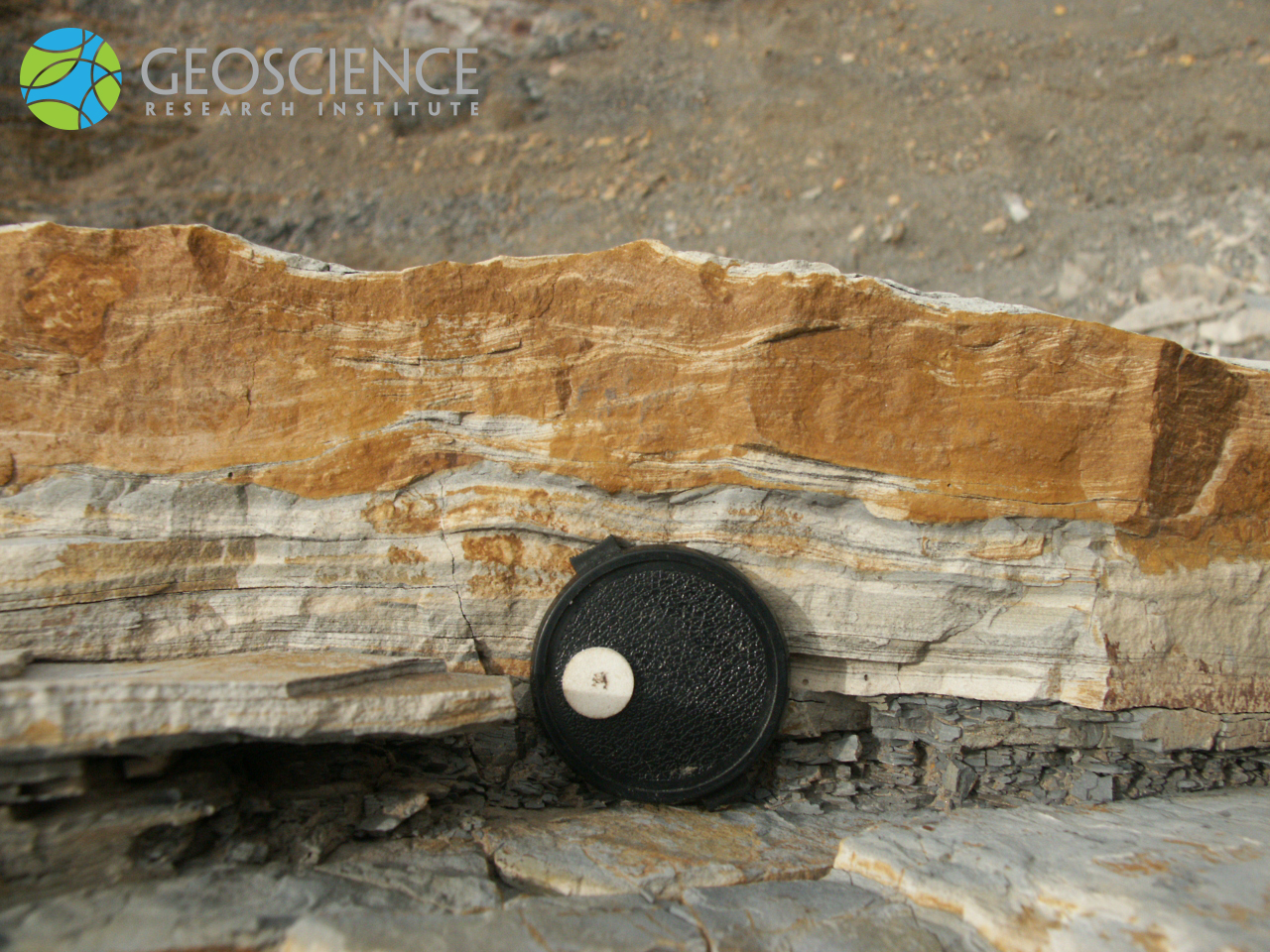
Ripple cross-lamination
Cross-sectional view of a calcareous mudstone to fine-sandstone bed, showing planar lamination passing upward to ripple-cross lamination. The symmetric shape of the ripples, the presence of foreset laminae dipping in opposite directions, and some lamina draping suggest that the cross-lamination was likely generated by wave-ripples. The sequence from planar lamination to ripple cross-lamination can be indicative of decreasing velocity of bottom currents (or changes in sediment grainsize and supply…
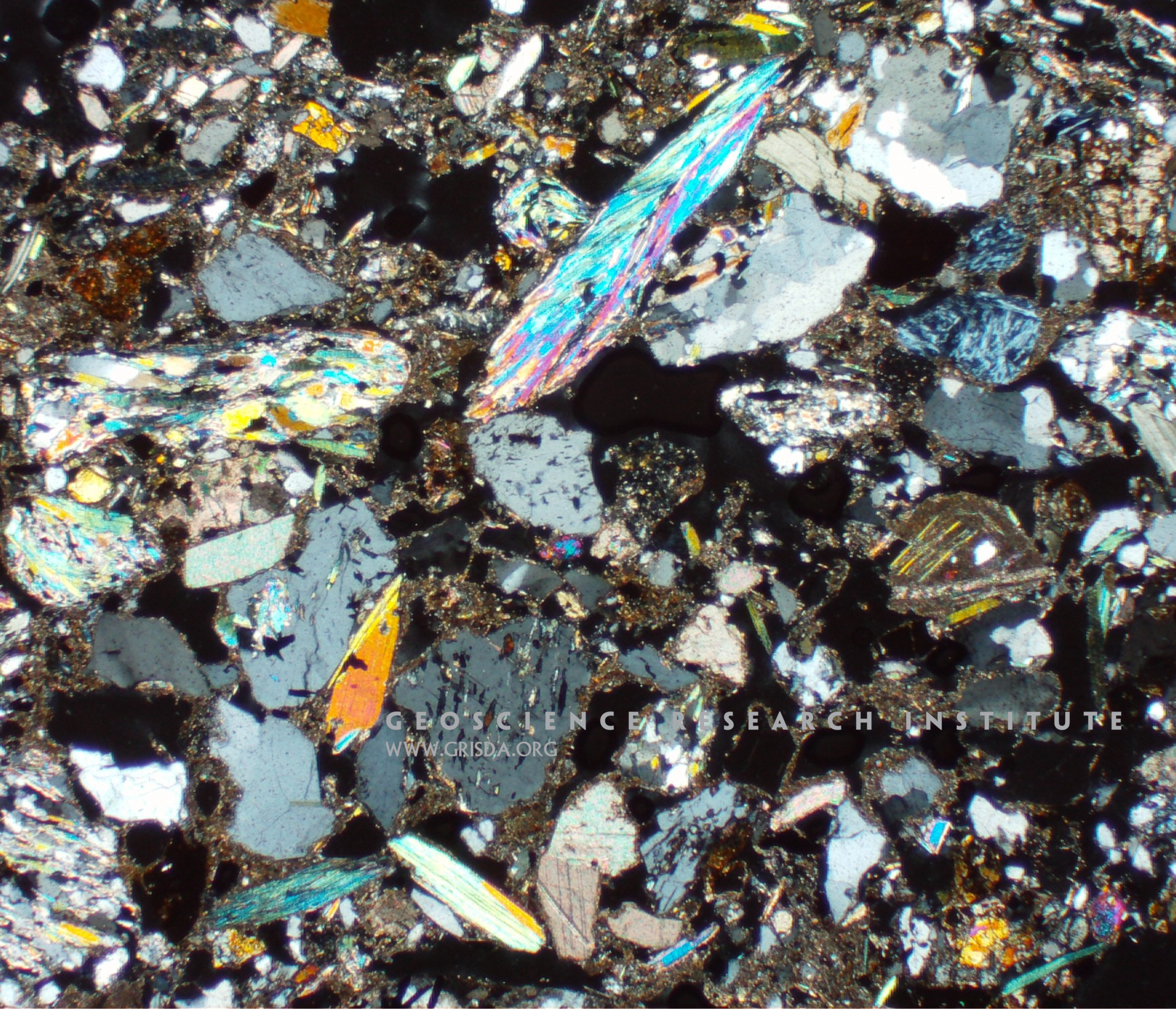
Sandstone
Thin section microphotograph (in cross-polarized light) of a poorly sorted sandstone from Pliocene strata of the Sorbas Basin, Spain, containing lithic fragments of metamorphic rocks and gypsum clasts. The high birefringence colors of muscovite contrast with the gray colors of quartz. Field of view is several cm wide.
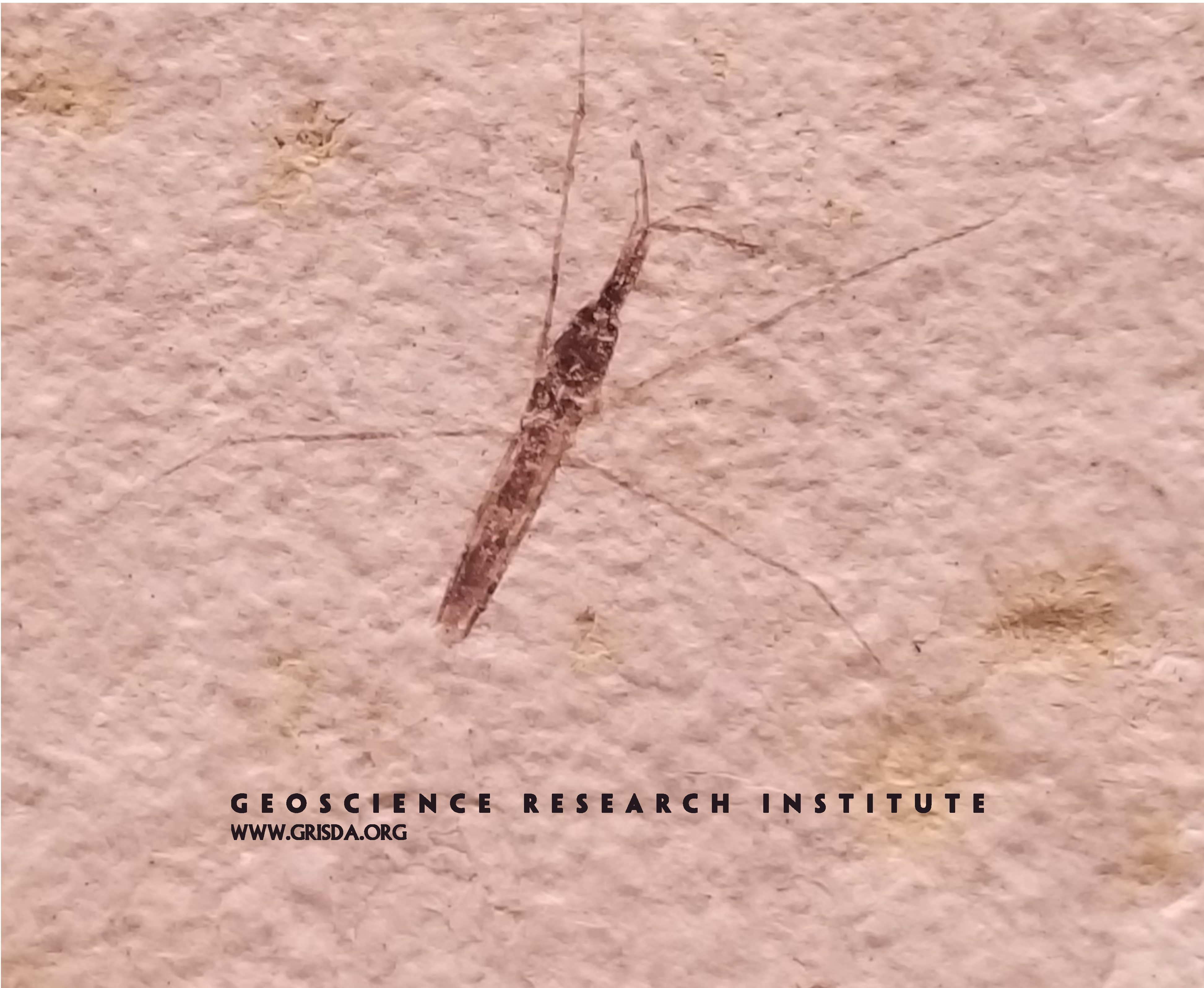
Telmatrechus
An example of exceptional preservation of a fossilized water strider (Telmatrechus parallelus). Slab, a few cm in size, on display at the Chicago Field Museum of Natural History, from the Eocene of Fossil Lake, Wyoming.
MaroonFmDike
Clastic dike in the Maroon Fm at Vail Pass along Interstate-70 --- The Maroon Fm on the west side of the Ancestral Rockies corresponds to the Fountain Fm on the east side. Both were deposited from the outwash of the erosion of the ancestral Rockies. The sand in the diagonal cross-cutting dike had not yet been turned to rock when it was intruded into a crack in the horizontal sandstone layers.
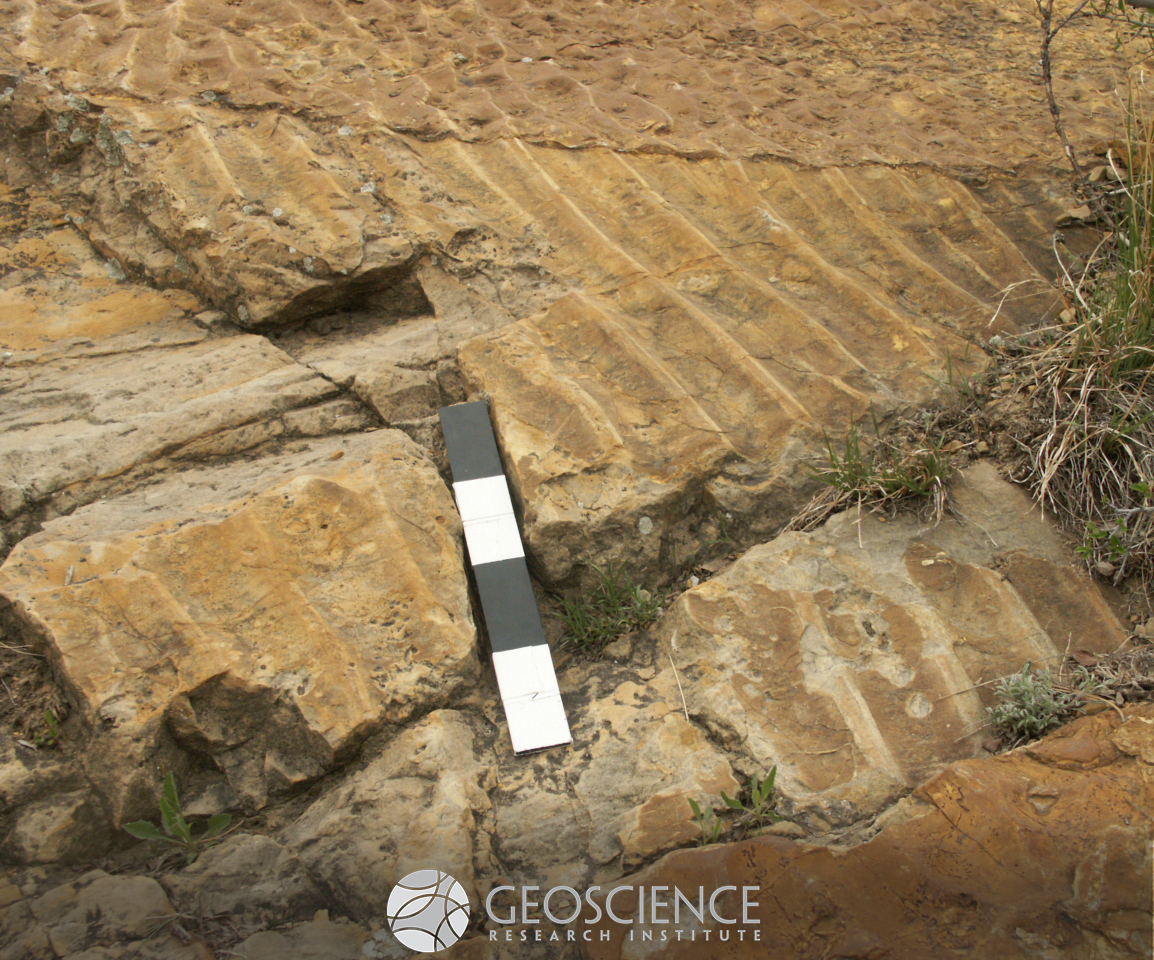
Wave ripples
Wave ripples in surface view (scale is 40 cm long). The crests are straight and regularly spaced. However, the overlying thin layer (top of the picture) shows a more disorganized pattern, partly reflecting the underlying crest orientation but probably indicating changing wave conditions. The preservation of these bedforms (that typically form in shallow water) can help to reconstruct the environment of deposition of sedimentary layers. Outcrop of the Cretaceous Dakota Sandstone, exposed along Dinosaur…
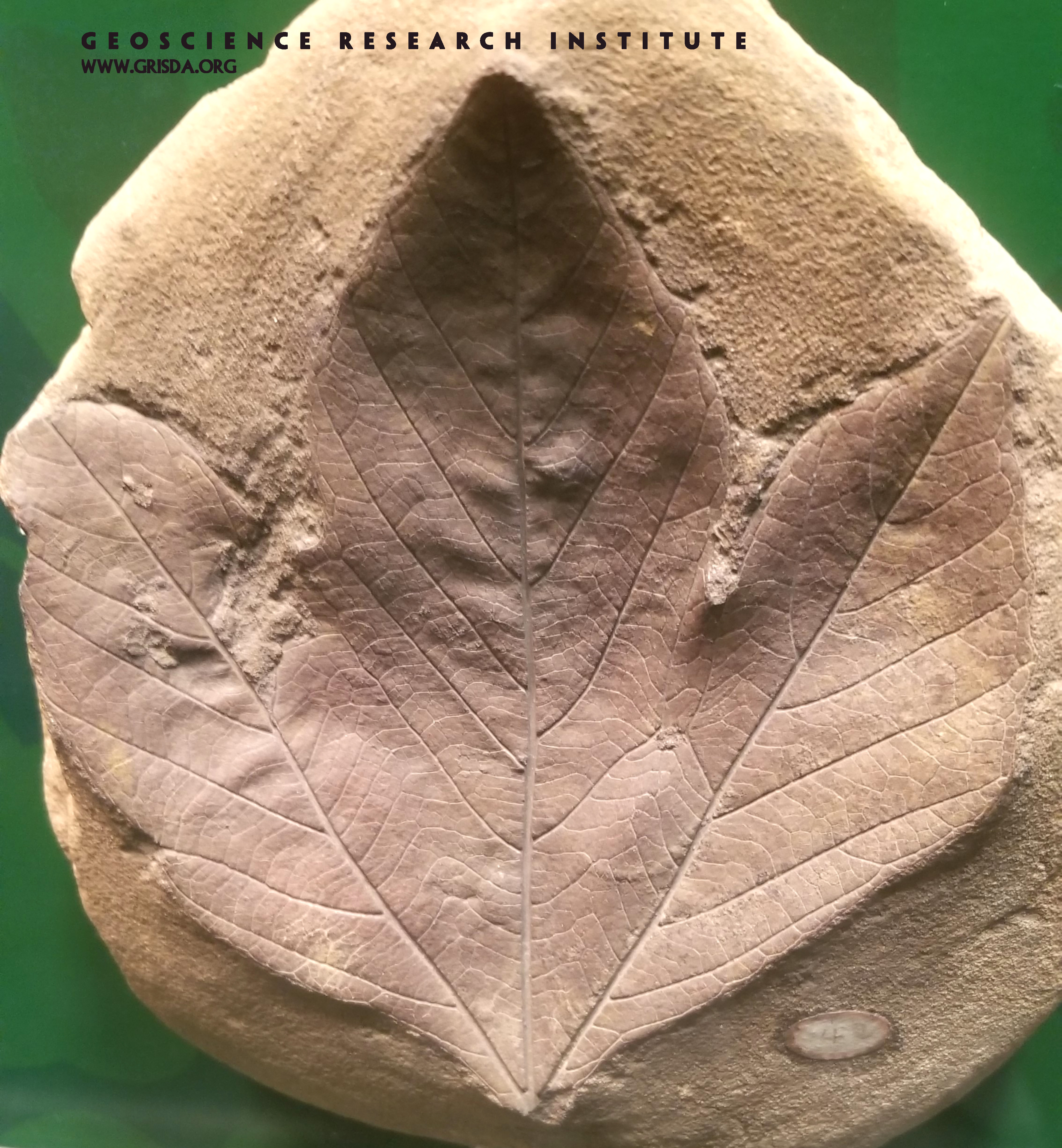
Aspidiophyllum obtusum
Flowering plants appear abruptly in the fossil record in Mesozoic strata. Here is an example of an exquisitely preserved sycamore-like leaf from the Cretaceous of Kansas. Specimen (several cm in size) on display at the Field Museum of Natural History, Chicago.
Trail14ClastInLimestone
Reworked clasts in the Morgan Fm, Harpers Corner, Dinosaur N.M. --- Quartzite (metamorphosed sandstone) from the Precambrian Uinta Mountain Group was eroded, rounded during transport, and deposited in what is now the Morgan Limestone.
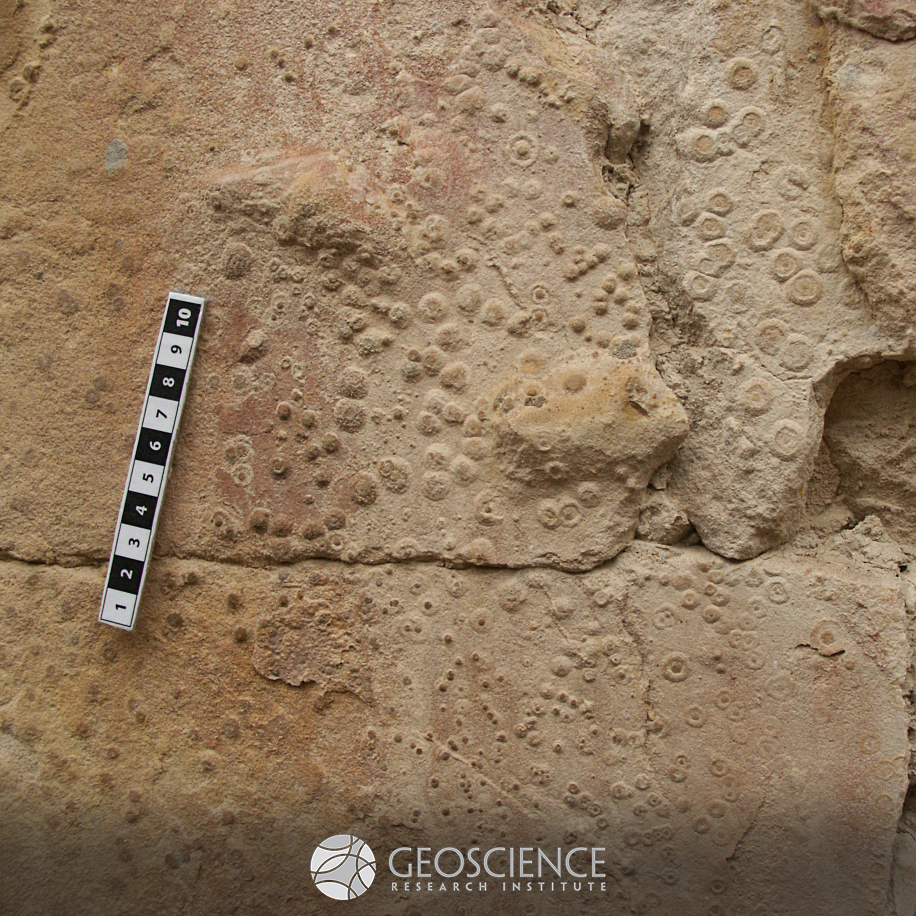
Raindrop impressions?
These circular impressions, exposed on the underside surface of a layer of fine sandstone, have been interpreted as raindrop impressions. Sedimentologists have cautioned that similar impressions can form in muddy substrates by the ascent of bubbles through the sediment, or by interaction with air bubbles trapped in the overlying fluid. Scale in cm. Outcrop of the Maastrichtian Laramie Fm., exposed along the Triceratops trail Golden, CO, US.
Lystrosaurus
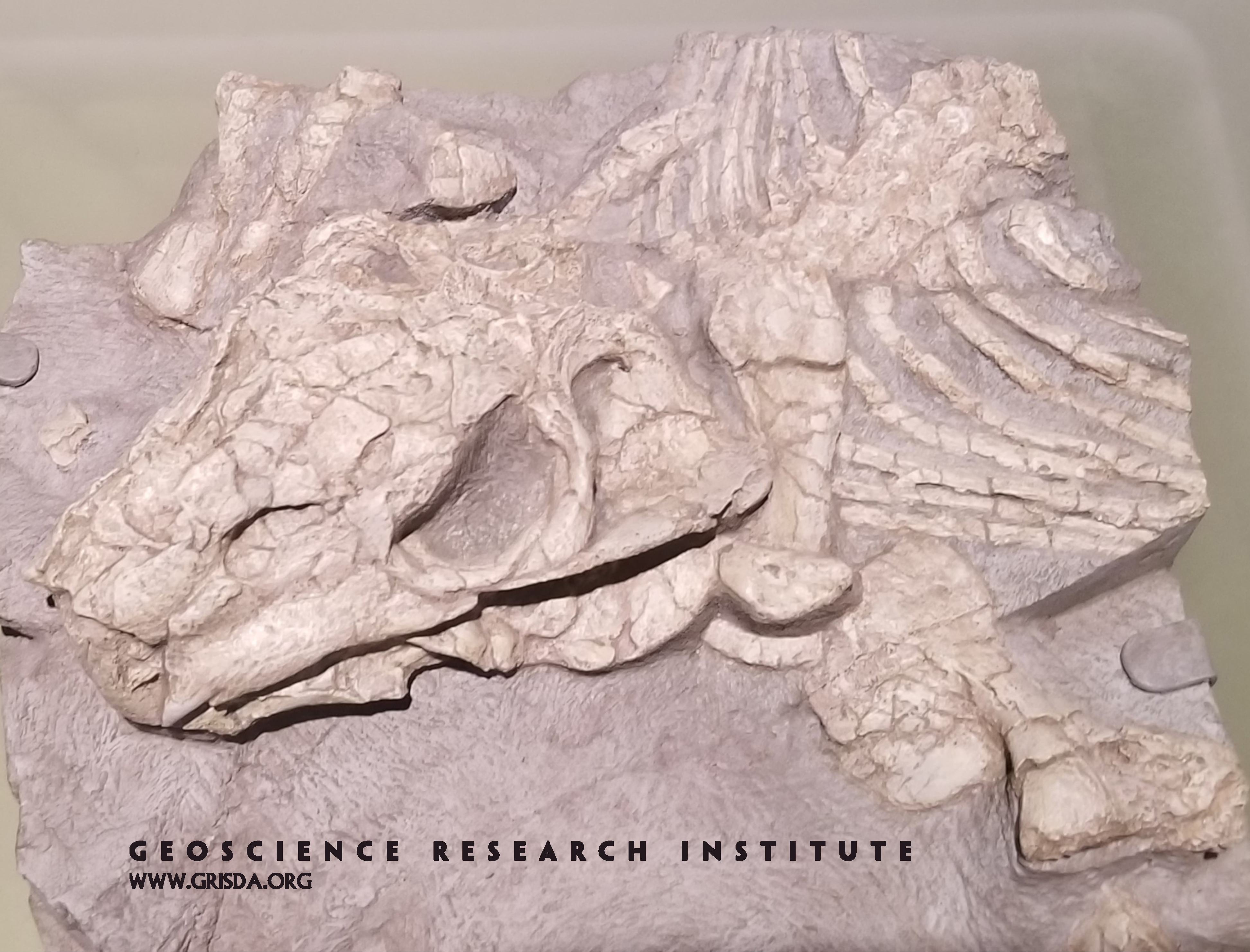
This incomplete but articulated skeleton is a specimen of Lystrosaurus, an extinct terrestrial vertebrate (synapsid) the remains of which are found in several distant locations in the southern hemisphere, including Antarctica. The widespread distribution of Lystrosaurus was used by early proponents of the continental drift theory to suggest the existence of a once unified supercontinent, Pangea. Hence, its iconic status in geology and paleontology. Specimen on display at the Chicago…
FossilTraceRaindropsClose
Surface features interpreted as raindrop impressions, Parfet Prehistoric Preserve, Golden (west Denver).